Yes, yes, I know, it’s an old feud that’s half joking and half just longstanding tradition and there’s no real malice between the two Nordic siblings anymore but there’s a history and since I had to hear “I did not know any of this” from someone who partook in a conversation about all this, and since I’m in Denmark right now (at time of publication but not writing), I thought it might be interesting to delve into because I don’t think you can blog quite as extensively as I do about Iceland and then go to Denmark and never mention that relationship.
I’m not going to even look at the relationship between Denmark and Greenland, the Faroe Islands or its territorial claims in Antarctica. Let’s stick to Iceland here.
Settlement and Commonwealth 874 – 1262 (aka happy Iceland)
The Settlement of Iceland began around 874, with the arrival of Ingólfur Arnarson, credited as Iceland’s first permanent settler, although he came with his entire household, including his Irish and/or Scottish slaves and his brother/half-brother/brother-in-law/foster brother/brother by blood Hjörleifur Hróðmarsson. People had lived on this weird cold remote island before, notably some Irish priests and Flóki Vilgerðarson who, in a fit of temper, gave it its name but Ingólfur was the first person to go there and stay there. He was Norwegian and at the time, the Norwegian king was giving everyone a bit of trouble, Norway was not in its happiest and most peaceful period, taxes were higher than people liked and arable land was short. So, realising that there was this island with no one in charge of it and a climate not entirely dissimilar to Norway, a lot of people moved there.
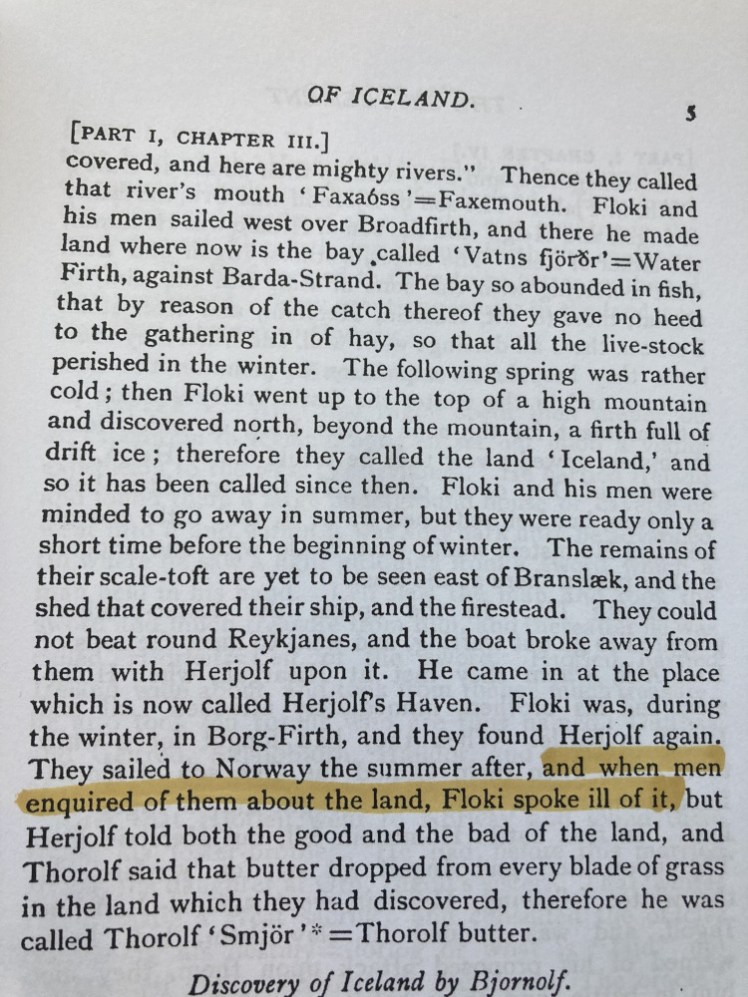
By 930, according to the Íslendingabók, Iceland was fully settled and they established Parliament that year. Yep, after going to Iceland at least in part to enjoy freedom and not having anyone ruling over them, they decided they needed a law and a law to be upheld after just 56 years.
Iceland lived quite happily for the next couple of hundred years. Many of the new Icelanders went viking for the Norwegian king – viking being a verb and not a noun; it was something you did, not a job title. If you read the sagas and the Book of Settlement, you’ll see a lot of Icelanders who seemed to be surprisingly close friends with the Norwegian king, who went out raiding for him or fought in battles for him. Olafur Tryggvason, who was King of Norway for the last five years of the 9th century, converted Iceland to Christianity in the summer of 1000, having already forcibly converted as much of Norway as he could, Orkney and sent a priest with Leifur Eiriksson to Greenland to convert them. He succeeded in Iceland thanks to his missionary Þangbrand and the practical nature of lawspeaker Gizur the White – Gizur wasn’t having Olafur or Þangbrand’s violent methods, thank you very much, but he talked calmly at Parliament and they agreed that they’d appear to convert outwardly but would secretly keep up with Thor and Odin and the rest of them at home. But despite the influence of the Norwegian king, Iceland was at that time still independent, still in its golden Commonwealth era.

Norway 1262 – 1380 (in which not much changes)
That came to an end somewhere around 1262 when clan infighting and more than a hint of civil war led to the signing of the Old Covenant, a union with the Norwegian king. Still fine. The shift towards Christianity had more of an effect on Iceland than Norwegian rule, as land and power gradually shifted away from chieftains and towards bishops.
Denmark 1380 – 1874 (dark times for Iceland)
Then came the Kalmar Union in 1380.
The King of Norway and Sweden, Haakon VI, died and his son, Olaf, had already inherited the throne of Denmark from his maternal grandfather and suddenly he became king of Norway and Sweden as well. This had happened before – one of my favourite medieval kings, the infamous Cnut or Canute of “turn back the tide” fame, took the English throne from Edmund Ironside all the way back in 1016 and proclaimed himself “King of all England and Denmark and the Norwegians and of some of the Swedes”. Isn’t that a great title? Two nations, a nationality and “some of” the Swedes. Norwegian and Danish kings and territories had swapped back and forth for centuries – the boundaries we know today would have been pretty alien up until at least the 19th century as bits of coastal region in particular belonged to this one, then that one, then another one.
Haakon’s father, Magnus Erikson, had been king of both Sweden and Norway but the original plan was that the older brother, Eric, would take Sweden and Haakon, the younger brother, would take Norway. That’s the sort of thing that’s ok to agree but when it came to actually doing it, a mix of brotherly rivalry and Haakon being the golden child meant that father and son yanked Sweden right out of Eric’s hands and gave it to Haakon. So his only son, Olaf, was already set to inherit two countries.
But when the son of the Norwegian-Sweden king marries the daughter of the Danish king, it’s inevitable that their only son is going to inherit all three. This is what happens when royal families marry each other; countries end up joined together that were perfectly happy on their own.
So Norway, along with its satellite Iceland, Denmark and Sweden all became united by this one king and an agreement between the three countries to out-power the Hanseatic League and block German expansion into the Baltic region. Denmark was the economic powerhouse in those days and it led the Union by the nose. You might think Denmark, as by far the smallest of the three, was the least likely to take charge but no.
These were dark days for Iceland. It wasn’t that another country ultimately owned it that was the problem. After all, Norway had started all this with the Old Covenant and nothing in particular had happened there. To this day, you never really hear an ill word from Icelanders to their first overlords. Might be because the original Icelanders mostly were Norwegians to start with or it might just be that they were benign owners. Denmark wasn’t.
No, what made Denmark different was the Danish trade monopoly. Being the wealthiest of the Kalmar nations, it didn’t need the trade in fish and wool with Iceland that Norway had needed, which meant Iceland’s economy rapidly went downhill. But it fell off a cliff, metaphorically, in 1602 when Denmark enacted the Danish trade monopoly. It restricted trade to 20 (later 25) ports around Iceland and only with Copenhagen, Malmö (which was in Denmark at the time) and Helsingør. Even that shrank. From 1620, it was just Copenhagen.
Iceland is not a great country to be self-sufficient in. The land is mostly lava with a thin layer of soil on it, not great either for agriculture or grazing. High levels of taxation meant the obvious answer, fishing, became financially unviable too. While it had been trading with Norway, importing everything it needed that it couldn’t make itself, things had gone fine, but Denmark put an end to that and since Iceland didn’t have a lot it needed, that meant Iceland didn’t get a lot in. It all went really bad in 1783 when Laki erupted. Laki is still one of the most devastating eruptions in Icelandic history. It was a fissure eruption in an unpopulated part of the south which, over eight months, poured out one of the largest lava fields in human history. That was fine. Iceland was a lot more sparsely populated back then than it is now and even now, there’s only one small town that would be in danger from a repeat of the Laki eruption. But it also poured out a catastrophic amount of volcanic gases which contaminated the thin soil. That killed half of Iceland’s livestock and the majority of its crops and the resulting famine nearly wiped out the Icelandic population. Denmark seriously considered evacuating the survivors – of an entire country – to a village in the Danish countryside. That’s how few people there were by the end of this. It was not what Iceland needed. The trade monopoly ended four years later.
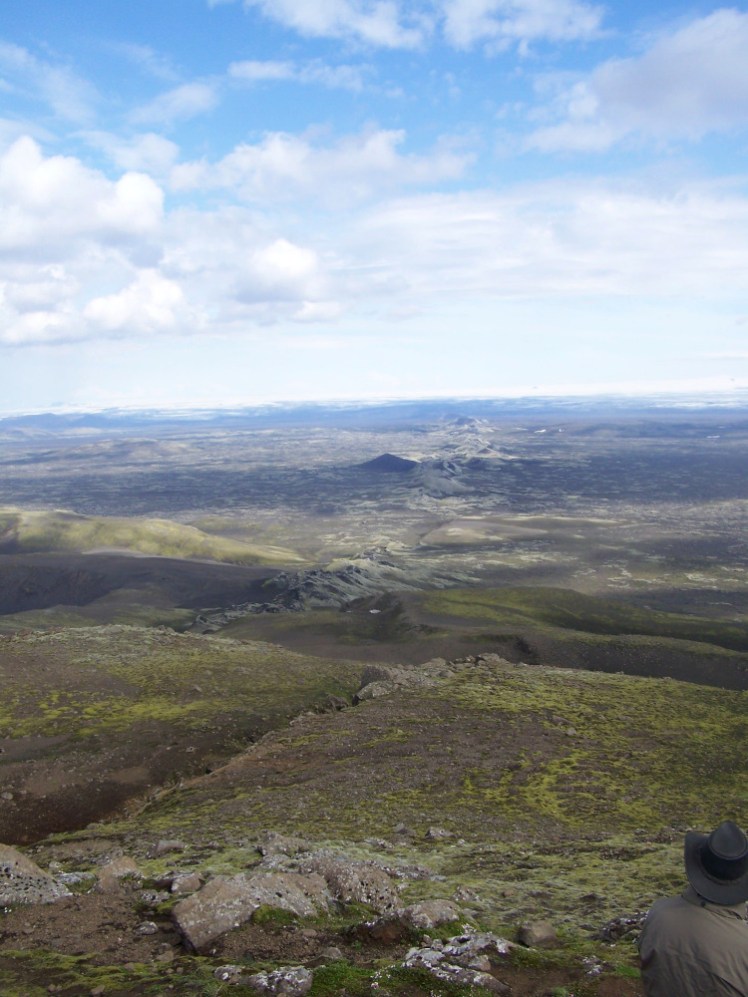
Not that it’s relevant to Danish-Icelandic relations but Laki also weakened the monsoon, reduced the flow of the Nile and caused a famine in Egypt, is claimed to be the cause of the famine that ultimately led to the French Revolution and caused a volcanic winter in North America.
Sweden left the Kalmar Union in 1523 but Norway and Denmark stayed together, eventually forming a state called Denmark-Norway in 1606, with Denmark clearly as the dominant partner. This lasted until 1814 when Norway switched sides to Sweden and eventually became independent in 1905 when that union was dissolved.
Home rule and independence 1874 – present (freedom through global war)
But to go back to Iceland. So, it became Norwegian in 1262 and ultimately became Danish in 1380 and finally gained full independence in 1944, 564 years later.
There were a few things that led up to independence. The first was that in 1874, Denmark gave Iceland a constitution and home rule. Parliament was reestablished as a consultative assembly after being suspended under the Danish absolute monarchy and then disbanded altogether in 1800 and then given back its legislative powers under the new constitution in 1874. Iceland then became a sovereign state, albeit one “in free association through a personal union with the Danish king in 1918”, thanks to Iceland’s competent self-governance while Denmark was distracted by the Great War.

WWII helped it along too – as it sat in the middle of the Atlantic, it was occupied by both British and US soldiers (at what later became Reykjavik Domestic Airport and Keflavik International Airport respectively) and they accidentally gave the Icelandic economy a massive boost. You wouldn’t have thought a war would good for anyone’s economy but the occupiers brought money and employment into the country and transformed Iceland from a cold, windy, occasionally explosive rock in the middle of the ocean into the prototype of the modern progressive nation we know today. In 1943, with this money and a newfound confidence backing them, Iceland voted overwhelmingly to walk away from Denmark and became independent on 17th June 1944.
Today, relations are cordial. Most Icelanders learn Danish (although they’ll criticise their incomprehensible accent compared to Norwegian), they’ll go to Copenhagen for university or for jobs, they’ll marry Danes, they’ll go on holiday to Denmark. The ties these days between Iceland and their bad overlord, Denmark, is far stronger than the ties these days between Iceland their good overlord and ancestral homeland, Norway. I presume it’s a case of “better the devil you know”; Norway having not been actively involved in day-to-day life in Norway since Denmark took control in 1380.
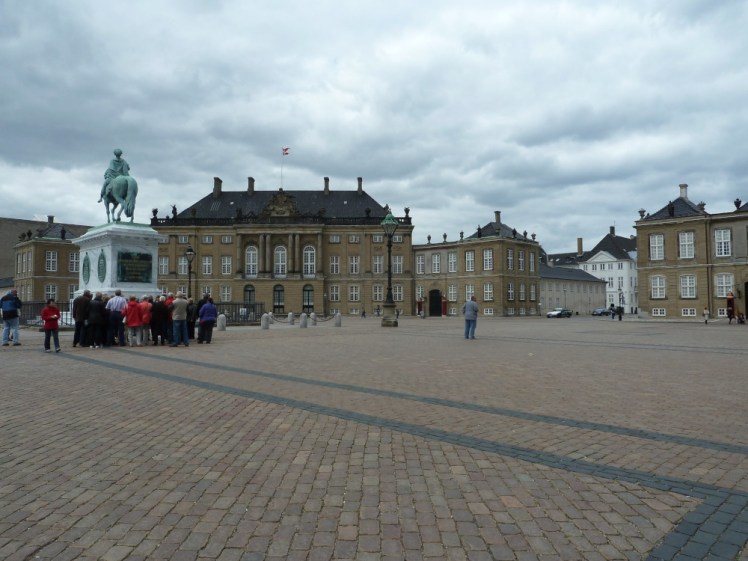
But in the same way England and France will always have a rivalry (years of wars, battles and wrestling for control) which is now more tradition than real active animosity (except in the case of football matches), Iceland will never quite let go of those dark Danish days. The Danes, I suspect, neither remember nor care.
 I Am A Polar Bear