Have I mentioned recently that I’ve joined a Facebook group dedicated to answering the same questions about a first-time trip to Iceland? What brand of rain pants should I get? Are these waterproof socks ok? Can we tip in dollars? Is this itinerary ok? The itinerary is never ok. It features a month’s worth of sights and stops crammed into a few days, with the occasional note like “10 minutes here”, “5 minutes here” – it’s definitely quantity over quality, ticking things off a list with next to no real interest at all. Or the question is just “I’m going on my dream bucket list trip to Iceland next week! What should I do??” Well, why is it your dream if you have literally no idea what to do?
So here’s my itinerary for you.
Day one – arrival
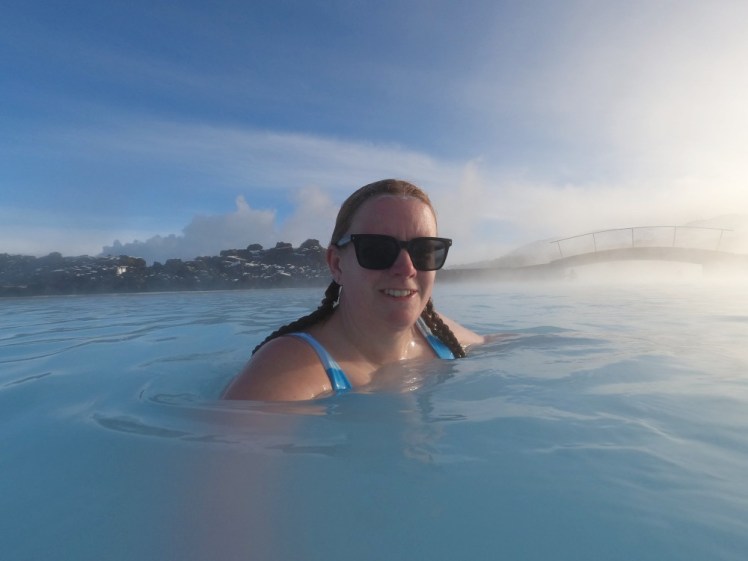
These flights invariably arrive around 6 or 7 in the morning from the US. The earliest I’ve ever got in from London is about 4pm and it’s more often between 9 and 11 at night so your first day is very different from mine. Go to the Blue Lagoon. It’s on your tick list and you might as well do it while you’re too tired from the overnight flight to do anything else. Getting out of the airport can be as quick as twenty minutes or it could take two hours if there are a lot of people at passport control or baggage is slow to arrive. I personally would allow at least an hour and a half between scheduled landing time and Lagoon transfer, which will probably take 20-30 minutes (more if an eruption has damaged the road in the last few days) and then by the time everyone’s got off the bus and taken their luggage to the storage building in the car park, it’ll probably be another 20 minutes before you get to check in. If in doubt, make the booking later. You can always waste time getting a drink and brunch in the cafe overlooking the Blue Lagoon but if they’re strict about entry times and you miss your slot, you might be scuppered. Yes, you need to book in advance. At high season, book as early as you possibly can – it can sell out days or even weeks in advance.
Because the Blue Lagoon is expensive (and you’re tired), you’re going to want to maximise your time in there. Reckon on at least two hours in the water. I can happily stay for eight. There’s a bar in the Lagoon for drinks and there’s a poolside cafe just inside for snacks – think crisps, sushi, bagels etc.
When you’re done, it’s probably ok to make your accommodation your next port of call. It’ll take 45-60 minutes to reach Reykjavik. You’ll be delivered to the BSÍ, the big ugly bus station. If you’ve booked a bus to your hotel door, this is where you transfer onto the shuttle buses. If not, either pull up Google Maps’ walking route or get a taxi. Check in, drop your luggage and go and get your bearings in Reykjavik. Just wander around enjoying the atmosphere. I’ll give you a whole day in Reykjavik later, so just figure out things like where the shore road is, where the main shopping street is, where Hallgrimskirkja is. Maybe find the Bonus supermarket on Laugavegur if you’re self-catering, or find a cafe or restaurant. I’ll list some below and you can find them on the map at the top of this itinerary.
- Cafe Loki
- Brauð & Co
- Reykjavik Roasters
- 101 Reykjavik Street Food
- Laundromat Cafe
Day two – Golden Circle
Today is your Golden Circle day. Yeah, it’s touristy but these places are popular for a reason. All tours will cover Geysir, Gullfoss and Þingvellir, plus at least a couple of other stops, depending on the season, the guide’s preferences and the deals the tour company has with various businesses. If you’re driving yourself, don’t miss those three but you can go at your own pace and see what you like. This is how I’d do it.
- Geysir
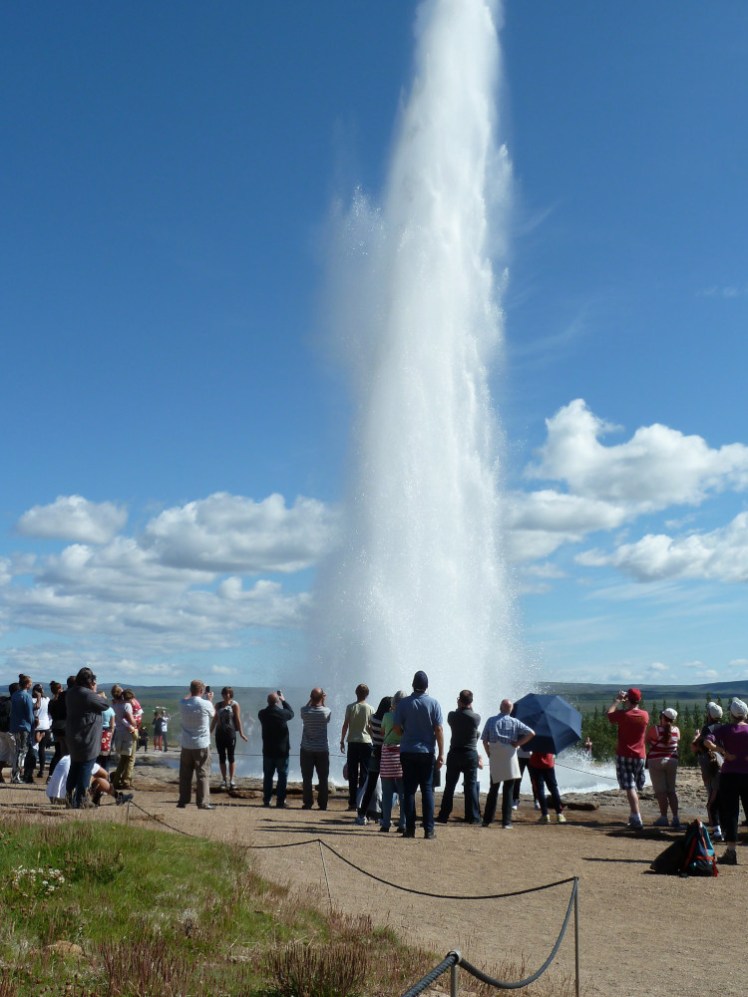
First, I’d run straight up to Geysir (gay-seer in Icelandic, not guy-zer). The first tour coaches tend to arrive just after 9am in summer, so if you can get here by 8.30, you can watch Strokkur erupt without a crowd of several hundred circling it. Strokkur is Geysir’s big attraction, ever since Geysir itself stopped erupting, but it’s interesting to look at the other hot pools, some translucent turquoise, some opaque silver, some simmering, some sloshing. From here, it’s a ten minute drive to Gullfoss.
- Gullfoss
Gullfoss is a big double waterfall which takes two steps down into the chasm, turning at dramatic angles as it goes and throwing up enough spray that you have no idea how deep it is. There are three main viewpoints: the one at the top of the steps accessed from the top car park; the one looking directly across, accessible from the lower car park if you don’t fancy the steps; and the one from the middle of the falls, if it’s open, which is down the path alongside the chasm. Take note of Gullfoss’s role in Icelandic ecological activism while you’re here – it’s all up on a board.
- Secret Lagoon or Laugarvatn Fontana
The Golden Circle actually isn’t a circle but as you’re going to finish with Þingvellir, we’re going to put a geothermal pool in the slightly misshapen route across. The Secret Lagoon is a very natural, authentic pool, fed by a small geysir and formerly just the place the village kids learned to swim. On the plus side, it’s the cheapest lagoon in Iceland. On the minus, it’s the only one with no private shower cubicles for the mandatory naked shower. Fontana is nice in a slightly artsier way. It has a raised hot pot, a shallow natural pool for sitting in, a mini swimming pool and a long thin shallow pool with black stone art installations in it. It also has a steam room right over a (stinky) natural vent and you can swim in the cold lake if you want.
- Kerið
Kerið is a crater, a big red hole in the ground, nice to see but not essential and an object lesson in letting landowners charge for seeing nature. When I first went to Iceland in 2011, it was a big deal that there was an entry fee and most people were outraged. Now, as tourists outnumber locals and most don’t have the sense they were born with, you have to pay for parking at huge car parks that didn’t exist 13 years ago – effectively an entry fee.
- Þingvellir
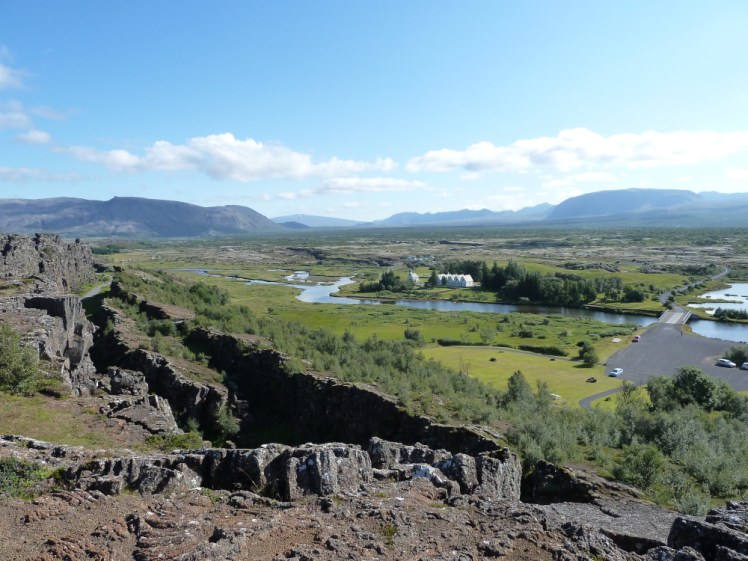
A lot of self-drivers skip Þingvellir, not understanding either its unusual geology or the place it holds in the heart of Icelanders. For the first, those black cliffs are the edge of the North American tectonic plate, the valley below is a kind of geological no-mans-land and the Eurasian plate is a couple of miles away. For the second, this is where the Icelandic Parliament was held and the Law enacted from 930 until Denmark suspended it during its days of control. Besides all that, it’s a nice place to walk around, seeing the waterfalls and all the places connected to Parliament, which wasn’t entirely unlike a massive festival.
If you have the time and inclination, you can also add any or all of these:
- Friðheimar tomato farm – the restaurant gets booked up but you can walk into the bar and have some homegrown tomato soup
- Efstidalur II, a cattle farm. Have a big burger overlooking the cows if you have the stomach for it or just get an ice cream
- Faxafoss, a waterfall remarkable for the “ladder” that runs up the side to let the salmon swim upriver to spawn
- Skálholt, the Canterbury of Iceland, complete with the murder of an Archbishop. Skálholt has been a religious and educational centre for centuries. Just don’t expect it to be a city like Canterbury – it’s a tiny place with a small church
Day three – South Coast
Today we’re off on a tour of the South Coast. This is going to be a long day, so make an early start.
- Your first stop will probably be either Hveragerði, Hella or Hvolsvöllur for a “comfort break” at the roadhouses. They all have a shop so grab some snacks.
- Seljalandsfoss – the waterfall you can walk behind. It will be muddy and you’ll get pretty wet from the spray. If you only put your waterproofs on once, make it now. Walk past famous Seljalandsfoss to the only slightly less well-known by now Gljúfrabúi, a waterfall inside a kind of roofless cave.
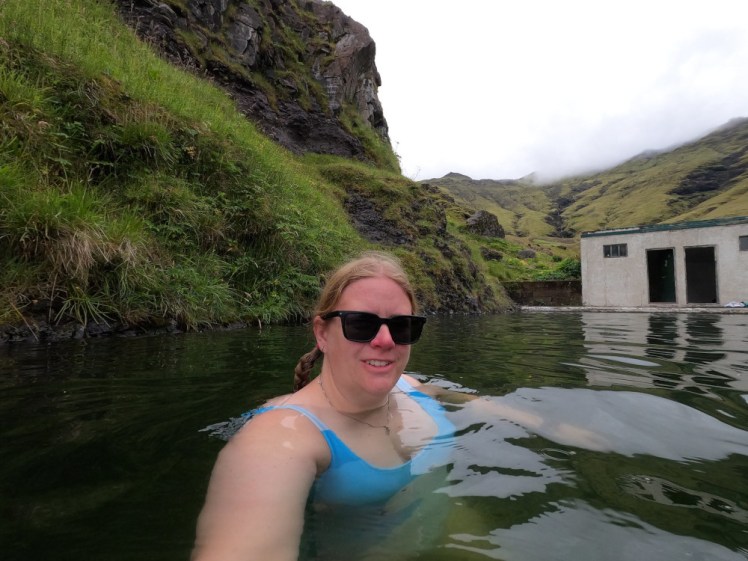
- Seljavallalaug – if you want an unusual geothermal swimming, Iceland’s oldest pool is hidden a surprising distance up a narrow valley, following a babbling stream. It’s a bit on the wild side but looks great on Instagram.
- Skógafoss – twenty minutes down the road from Seljalandsfoss, this big square waterfall is less pretty but much more imposing. Climb the stairs to look down on it from above.
- Plane wreck. I just don’t get the appeal of this, the carcass of a plane that crashed on the beach in the 70s and is gradually coming to pieces under the weather and the effect of being poked and climbed on every day by tourists. It’s about a 40 minute walk across black gravel from the nearest car park.
- Reynisfjara, known to tourists but not to locals as “the black sand beach” (almost all of them are black! Like everything else in Iceland, they’re made of lava!), is the single most dangerous place you’ll visit in Iceland. The cliff of basalt columns is great and so is the cave, if you’re there at low tide but pay attention to the warning signs and don’t go anywhere near the water. Sneaker waves hunt on this beach and tourists regularly drown here because they don’t pay attention or they underestimate the power of those waves. They’re incredibly dangerous, hence the absolute forest of signs and lights.
- Vik – if you haven’t picnicked on the way, Vik makes a good lunch stop. Get a hot dog from the roadhouse for the most authentic Icelandic meal you’ll find. Walk down to the beach, which is much quieter on this side of the headland, and much safer. Go in the big tourist shopping warehouse/supermarket while you’re here.
- I’d personally probably turn round at Vik if I only had one day but if you’re making two days of it or you’re tougher than me, press on to Kirkjubæjarklaustur, a small town with not much to recommend it other than that you’ve been driving nonstop across a grey glacial floodplain for the best part of an hour and you’ve got another hour to Skaftafell.
- Skaftafell has one of Iceland’s best campsites so if you’re making two days of it, this is a good place to stay. If you’ve got time, it’s worth making the 70-ish minute return hike up to Svartifoss, a waterfall in a natural basalt-lined bowl in the trees.
- Jökulsárlón – it’s about a 50-minute drive to “the glacial lagoon” from Skaftafell. It’s a proto-fjord forming where glacial meltwater has filled the deep scrape in the ground made by the glacier and its rare mix of freshwater and seawater give it a turquoise tint. Of course, the real attraction is the multitude of stripy icebergs floating in it, which have calved from the end of the glacier. The blue stripes are winter ice, the white stripes summer ice and the black stripes are ash from eruptions, mostly from nearby Eyjafjallajökull.
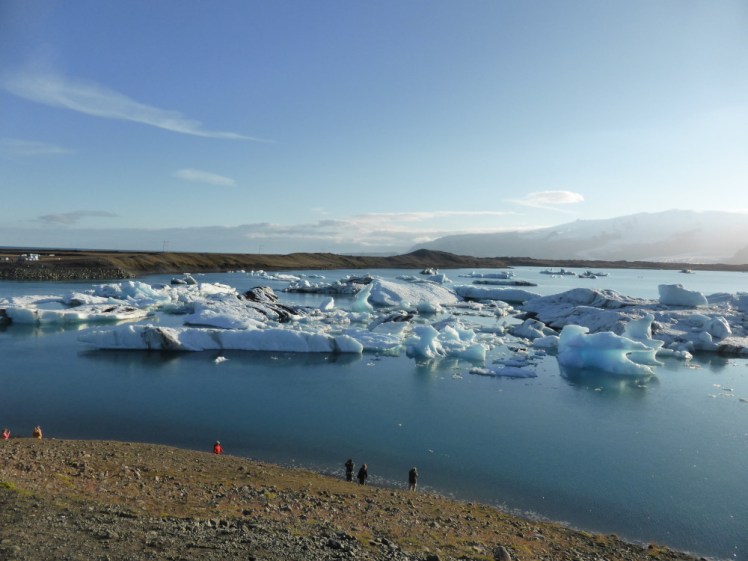
- Breiðamerkursandur, known to tourists as “Diamond Beach” because they’re all too lazy and self-centred to even learn that it has a name in its own local language, is where bits of icebergs wash ashore when the things break up enough to escape out to sea. Masses of ice chunks are by no means guaranteed – it depends on season, weather, tide and how many icebergs have broken apart nearby lately.
If you’re doing a day or even two, now’s the time to turn back. Any further and you should be looking at Ring Road itineraries.
Day four – Reykjavik
After a really long day yesterday, we’re going to have quite a chilled day in Reykjavik today.
Start off downtown with a visit to Hallgrimskirkja and take the elevator up to the top of the tower for views for miles.
Head towards Austurvöllur to see the current Icelandic Parliament and compare the modest church next to it, which is Iceland’s national cathedral, to Hallgrimskirkja, which is merely a parish church.
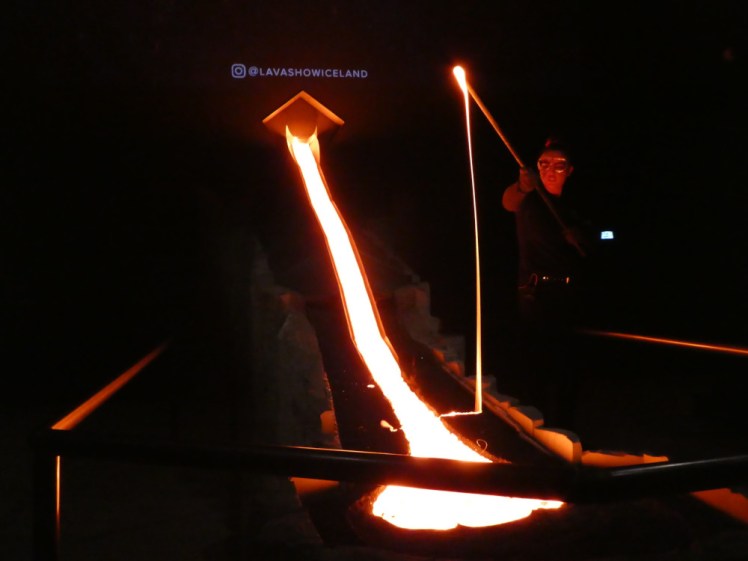
From here, get yourself to the Grandi district and take your pick from the Lava Show, FlyOver Iceland, Whales of Iceland, Aurora Reykjavik and the Saga Museum. I always recommend the Lava Show, which is the only place in the world you can see real lava, live and on demand, in a theatre for your entertainment and education.
Stop off for lunch at Seabaron, a celebrated seafood restaurant on the edge of the Old Harbour. If you want to go whale watching, now’s a good time because this is where most tours are based. If not, go back to downtown and either visit the Phallological Museum (yes, it’s exactly what you think it is) or the more family-friendly Reykjavik Art Museum, Settlement Exhibition, Icelandic Punk Museum or the House of Collections, which has an exhibit of saga manuscripts and a wall of photos of drivers coming to grief in the river at Þórsmörk – unless it’s been moved to Hvammsvik rather than merely copied.
In the evening, take in a geothermal pool. Yes, I’m going to offer you one every day. The Sky Lagoon, generally considered the Blue Lagoon’s biggest rival, is very pleasant and only a 10-15 minute shuttle bus/taxi from downtown Reykjavík. It’s quite small, has spectacular west-facing views and the biggest sauna in Iceland, although unlike anywhere else, you only get to go in there once.
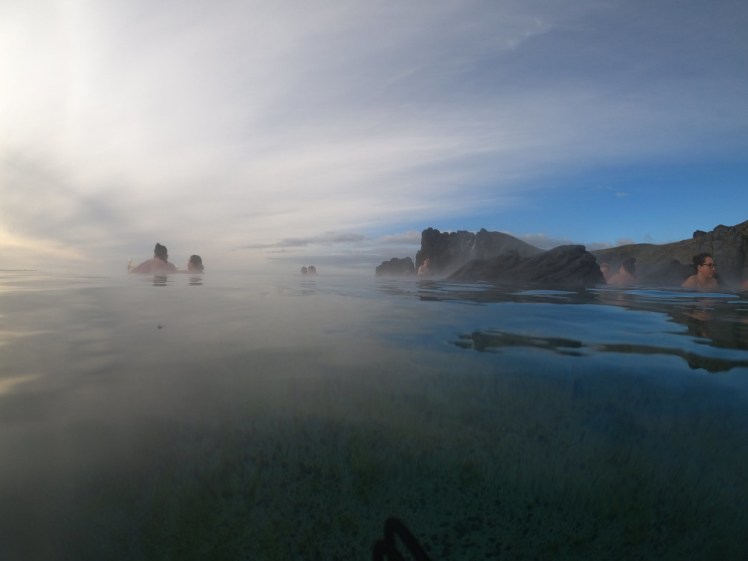
For a more budget-friendly option, go to the public pool at Sundhöllin, behind Hallgrimskirkja. It has indoor and outdoor lane pools, rooftop hot pots, a “garden” with a long hot “trough” and a kids’ pool plus sauna and hot tub. I have spent many a night (and morning) in Reykjavik at Sundhöllin.
Day five – adventure day
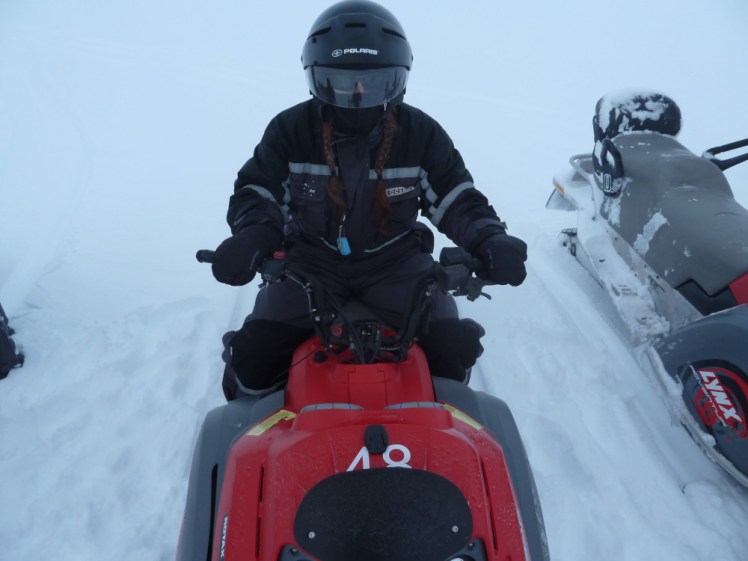
Time for an adventure and all I have to do is recommend one, because this is a job for the pros. You can go on tour companies’ websites and find one that appeals but if you’re like the people on that Facebook group, utterly unable to do a second of your own research, I’m going to suggest snowmobiling. I did it on Solheimajökull, on the south coast but if you go up to Langjökull, in the west, you’ll probably get a tour of Hraunfossar, Barnafoss and Deildartunguhver thrown in, plus a drive on a massive converted missile carrier onto the glacier. I’m not entirely sure how comfortable I am with this level of fossil fuel-burning directly on a glacier but it’s popular with tourists and it’s not as if Iceland doesn’t make up for it by producing more clean renewable electricity than it knows what to do with.
Day six – Snæfellsnes
What’s missing from this bucket list short trip to Iceland? Well, no volcano but there’s nothing we can do about that if one isn’t erupting – and the last seven or eight haven’t been suitable for tourists anyway. A full circuit of the Ring Road, of course. You can do that in six days if you rush but it’s worth taking longer over and using your week or so to just do the south properly.
Well, one thing that a lot of people on the Facebook group really want to do is the Snæfellsnes peninsula so let’s do that on the last day. It’s another long day – I generally do it from/to Borgarnes and/or Akranes and that’s long enough without the extra distance getting to and from Reykjavik. On my first trip to Snæfellsnes, I felt like this was a place that was just nice and low-pressure because there wasn’t a tick list of places to see and do. That was in 2012 and now there are places that are kind of expected to visit. If you’ve got the time and can split Snæfellsnes into two days, there’s so much more to see and do than I’ve listed here.
From Reykjavik, you might find you want to stop off for fuel, snacks or toilets at Borgarnes, since it’s an hour and three quarters to the first stop and then another few hours until the next toilet stop.
- Gerðuberg – this is worth a quick stop but by now, you’ve probably seen enough basalt columns. This is just a little low cliff of them on the edge of a field but worth a look while you stretch your legs.
- Bjarnarfoss – just a waterfall but a nice one
- Rauðfeldsgjá – is this a gorge or is this a cave? It’s somewhere between the two – you enter through the cleft in the cliff and then, depending on whether your shoes are suitable, you can scramble your way upstream a little way. Don’t go too far!
- Arnarstapi – this is one of the must-do stops. It’s a small fishing village with basalt cliffs, views of two pyramidal volcanoes behind the village and an array of amenities, like restaurants and toilets
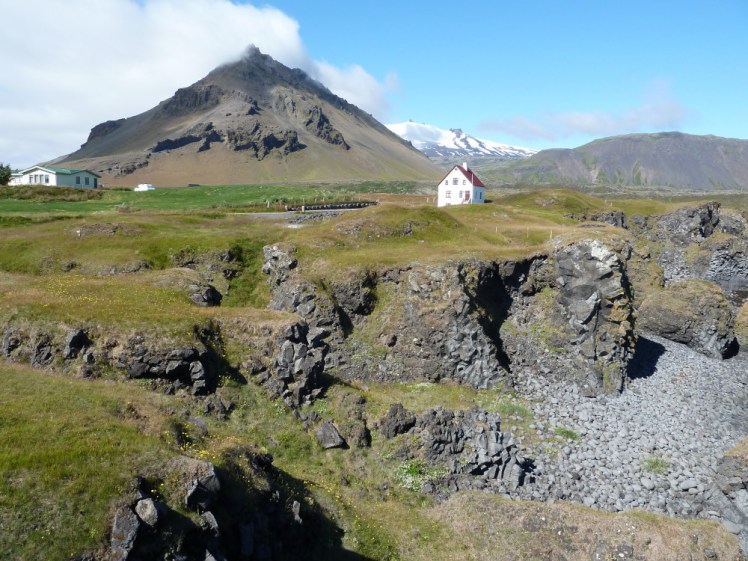
- Hellnar – another spectacular bit of coast but Hellnar also has a tiny but famous seafood restaurant right on the edge of the water
- Djúpalónssandur – this is another must-do. Park at the top and then walk down via the right-hand path instead of the more direct one for a peek at the lagoon and a view through to Snæfellsjökull before going down to the black beach. This is covered in rusty ribbons of metal from a shipwreck in 1948. Don’t take any of the pieces, this entire beach is a memorial to the crew of the fishing trawler Epine but they do make a rather beautiful contrast to the black sand.
- Saxhóll – make a little detour to climb up to the top of this mini volcano for views across the peninsula
- Kirkjufell – there are lots of little villages along Snæfellsnes’s north coast but if you’ve spent as long making your way along the south as I suspect, you’re going to want to power on to the big site, the famous Kirkjufell, which is a big pyramidal mountain rising out of the fjord. It’s very popular, so have fun finding somewhere to park and finding your favourite angle for the photos
- Stykkishólmur – it’s a little bit of a detour to Snæfellsnes’s main town, Stykkishólmur but worth doing. It’s an interesting little town with a great harbour formed partly using the cliffs.
- There are two ways back, both of which cut across the peninsula and back onto route 54 heading south to Reykjavik. Turn right when you leave Stykkishólmur and meet the main road and then turn onto the 56 which comes out partway along the south coast, or turn left and keep going until you meet the 55, which comes out at Gerðuberg. The 56 runs across the Berserkjahraun, a lava field haunted by the Berserkers, a crazy-violent kind of warrior who became mad with bloodlust, giving us our modern English concept of berserk. It’s a little creepy if you think too much about it but ultimately, it’s just a lava field.
- You might want to stop again at Borgarnes because it’s quite a long run straight from Stykkishólmur to Reykjavik.
Day seven
And now I think it’s time to go home. You’ve had six very full, very busy days and seen most of the best of Iceland. If you’ve got maybe ten days, have a go at the full Ring Road but to really do it justice and see everything, I think you want a little longer than that.
 I Am A Polar Bear