I like cathedrals. Sometimes I’ll like an ordinary church too but cathedrals were built to induce wonder and I’ll fall for it every time. So when I was reading about the must-dos in Málaga, the cathedral jumped out at me immediately.
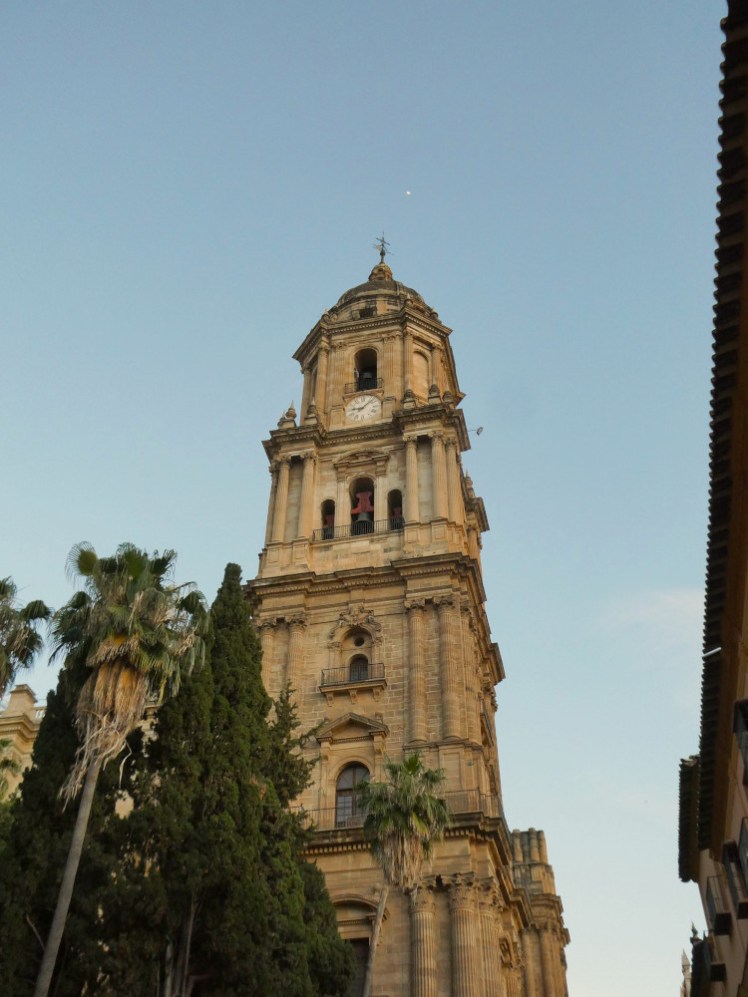
It’s nicknamed La Manquita, the One-Armed Lady, because technically it’s still unfinished. It’s supposed to have two towers but the south one was never completed as towards the end of the 18th century, the budget was diverted to the governor of Louisiana as aid to the American War of Independence against the British. I actually don’t think the cathedral suffers too badly for it; it’s too big and the streets too narrow to be able to really look across and feel that the cathedral looks lopsided.
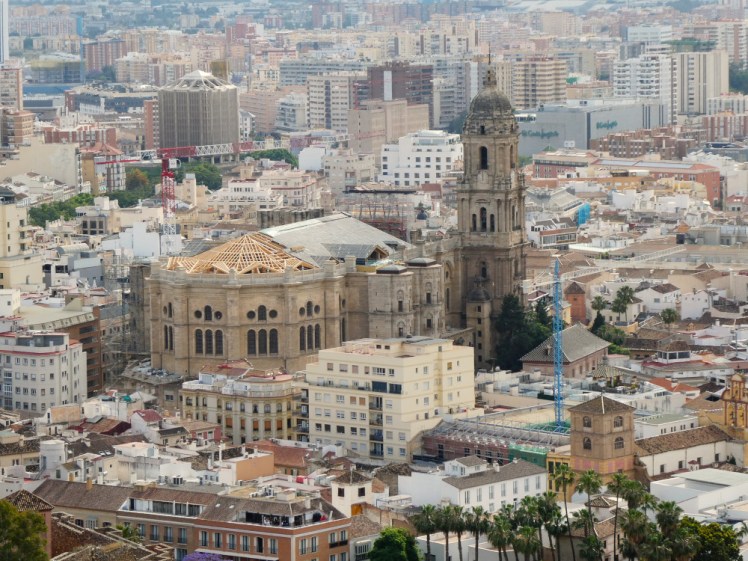
Its full and official name is Santa Iglesia Catedral Basílica de la Encarnación de Málagaand it was begun in 1528. As so often happens with something as huge, ambitious and expensive as a cathedral, it took until 1782 to complete, if you count “not bothering with the second tower” as “complete”. Most of it is in the Renaissance style, although the fascia is Baroque. Renaissance is new to me, I’m much more a fan of Norman, Gothic and those churches that ran out of money halfway through converting from Norman to Gothic.
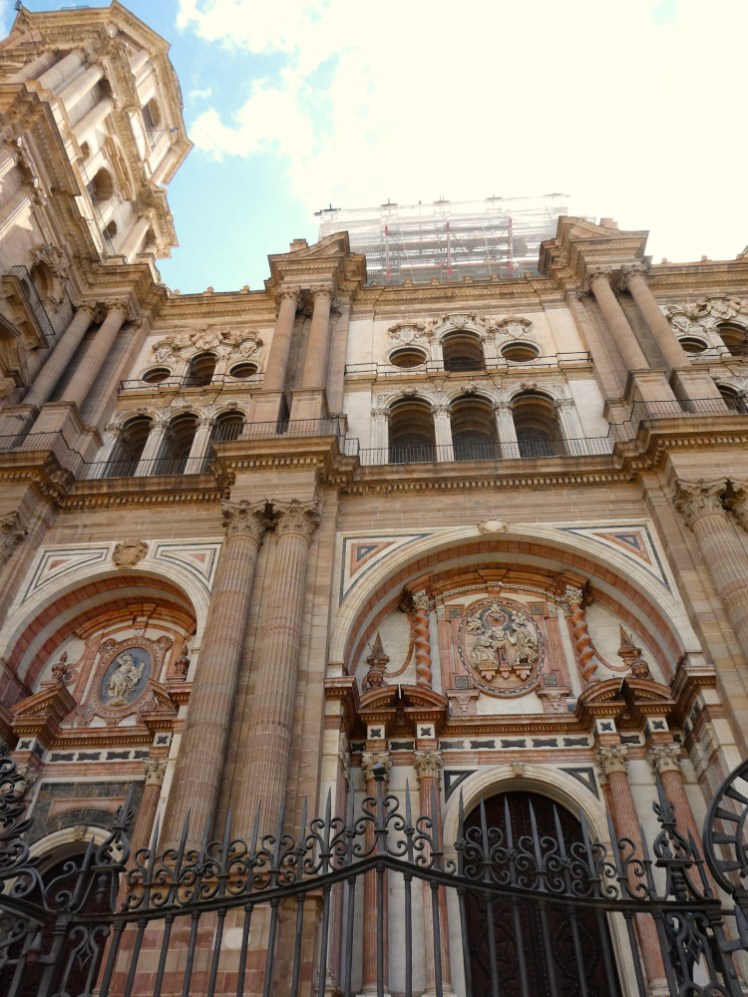
The “rebirth” in question is really of classic Greek and Romam design, heavy on symmetry and the well-ordered arrangement of columns, arches and domes. To be honest, it’s not a style I particularly like nor one I easily recognise. But a cathedrals a cathedral. We paid our €10 entrance fee, Catherine and Esther took an audioguide and I just went in ready for my wide eyes to help propel me around in wonder.
Well, it’s like nothing I’ve ever seen. One of the principles of the Gothic style, which preceded the Renaissance, was that the fabric of the building should look slender and lightweight, which allowed for larger windows to let more light in, or at least to trick you into thinking it’s slender and lightweight. Take the columns supporting the outer walls or the nave: at first glance you think they’re pencil-thin, then you realise there are dozens of them clumped together and then you realise it’s a single column with the girth of the most ancient of oaks carved to look like a bunch of twigs.
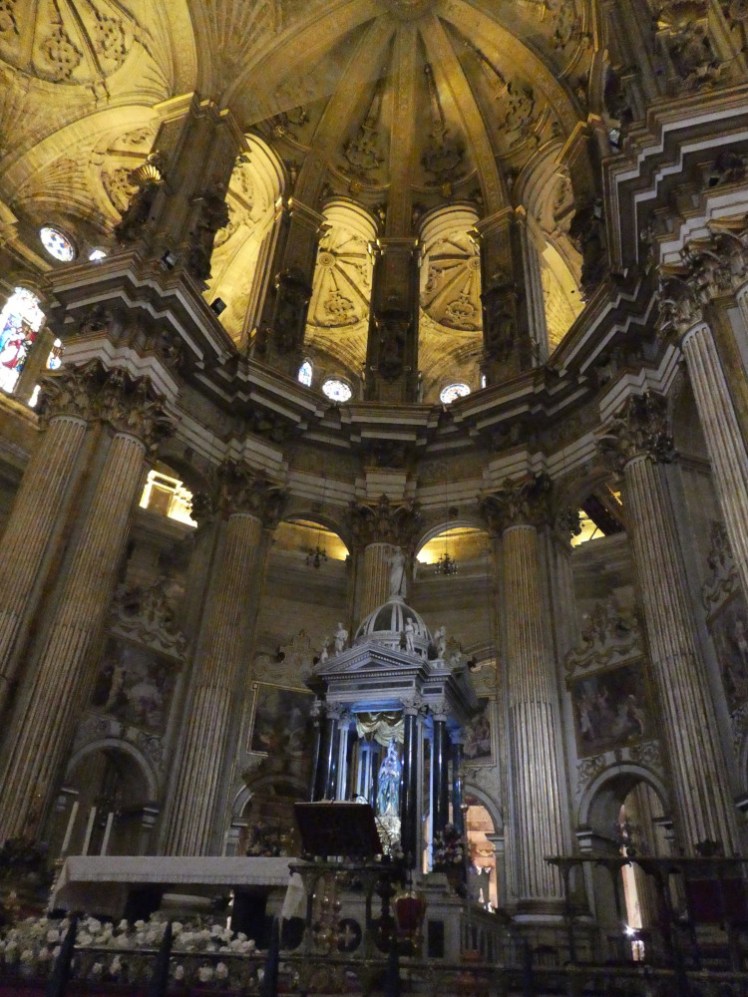
That’s not what this cathedral looks like. I marvelled at how the architectural style seemed to have gone so far backwards since the Gothic phase. Everything looks big and heavy and solid and yet rather than looking a bit… I’m not sure “primitive” is the word I’m aiming for, but rather than looking less sophisticated, like the architectural tricks have been forgotten, instead it looks massive and imposing and magnificent and awesome. I don’t often use the word “awesome”, it doesn’t suit me, but when I do, it’s in a sense closer to its original meaning, more like an overwhelming almost Biblical feeling of awe. This is the sort of cathedral that just makes you say “Wow”.
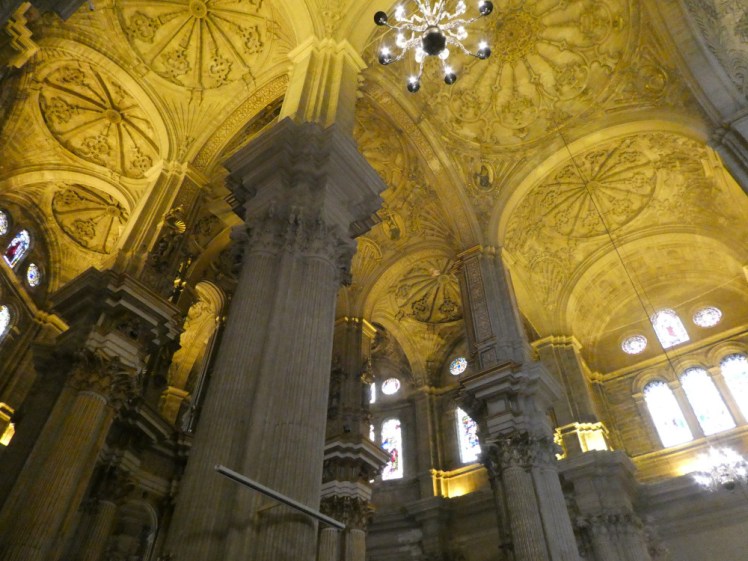
As a fan of Gothic, I don’t entirely understand the layout of Málaga cathedral. The website claims a Latin cross floor plan but also three naves. Are they seeing naves where I’m seeing aisles? There’s a great semi-circular apse, which I’d call “the altar end” with an ambulatory (semi-circular open corridor) running behind it, allowing access to half a dozen chapels.
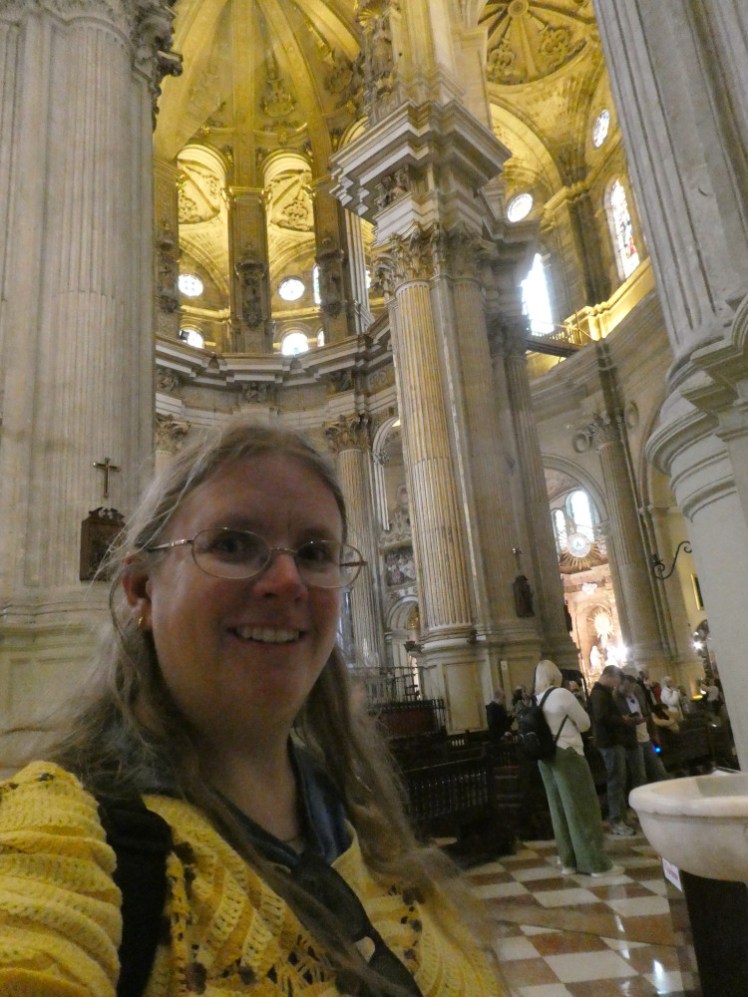
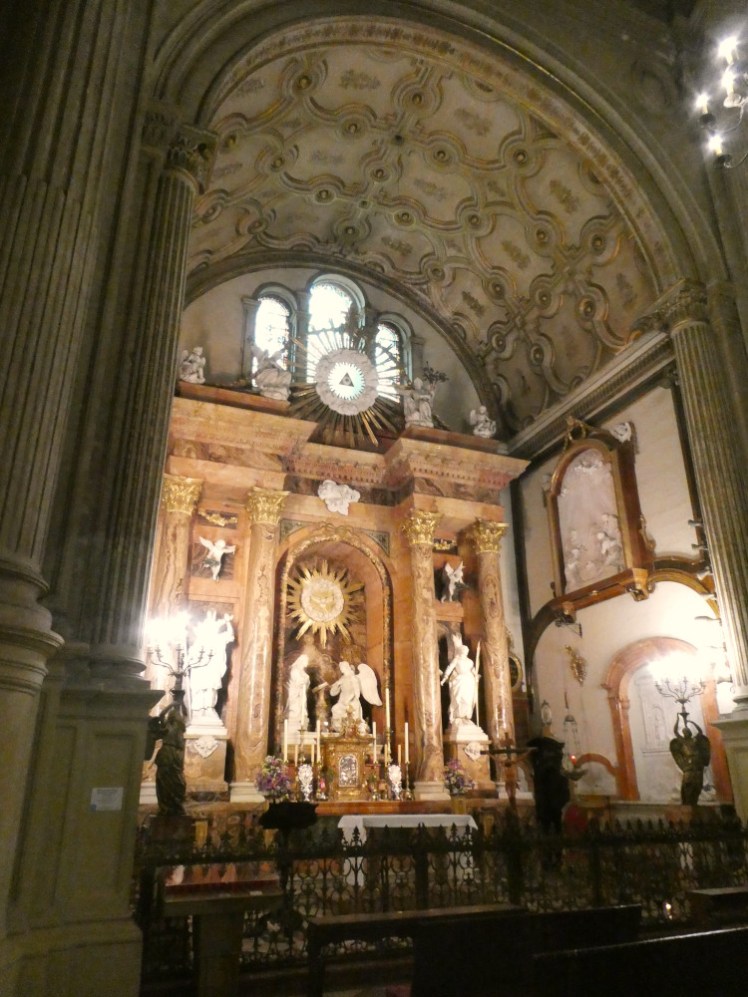
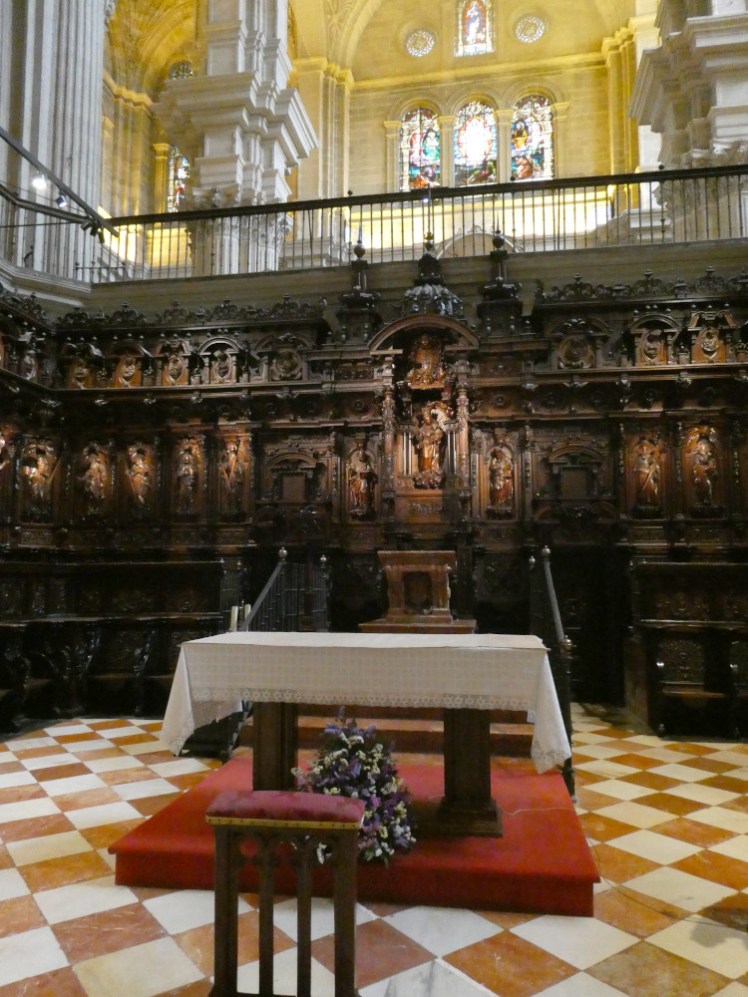
Opposite the apse is the quire, which is effectively a box within a box. This a later addition, more Spanish Baroque than Renaissance and with seven niches on the exterior. That means at the back of the church is a relatively massive area where you can’t see either the altar or the quire. There are more chapels back here but you don’t really need the massive open area.
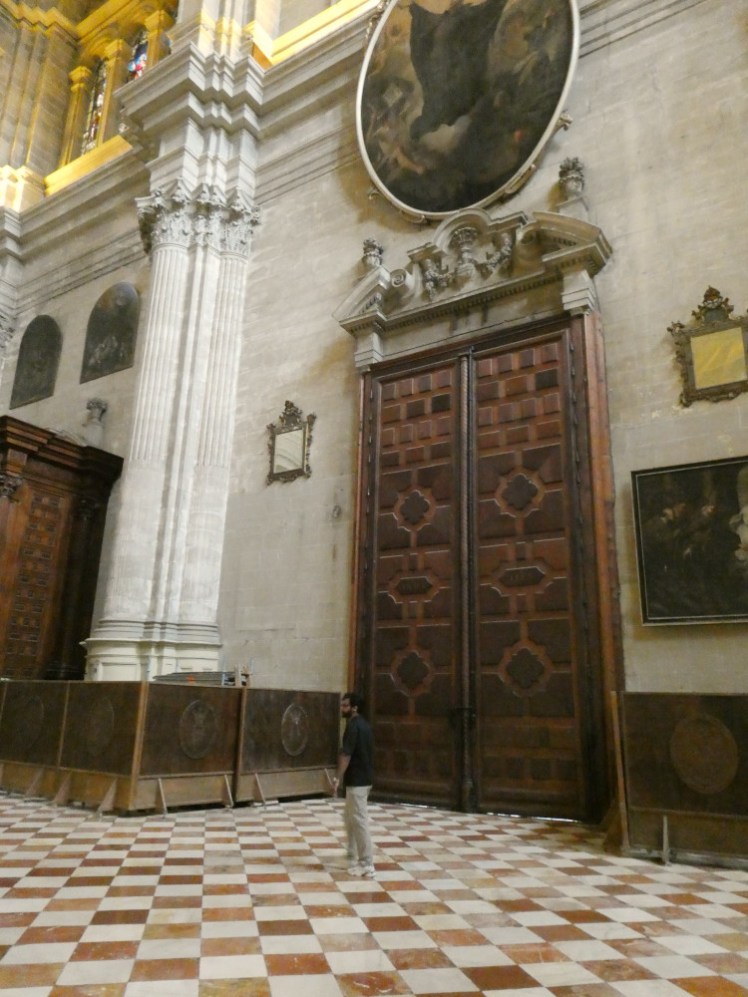
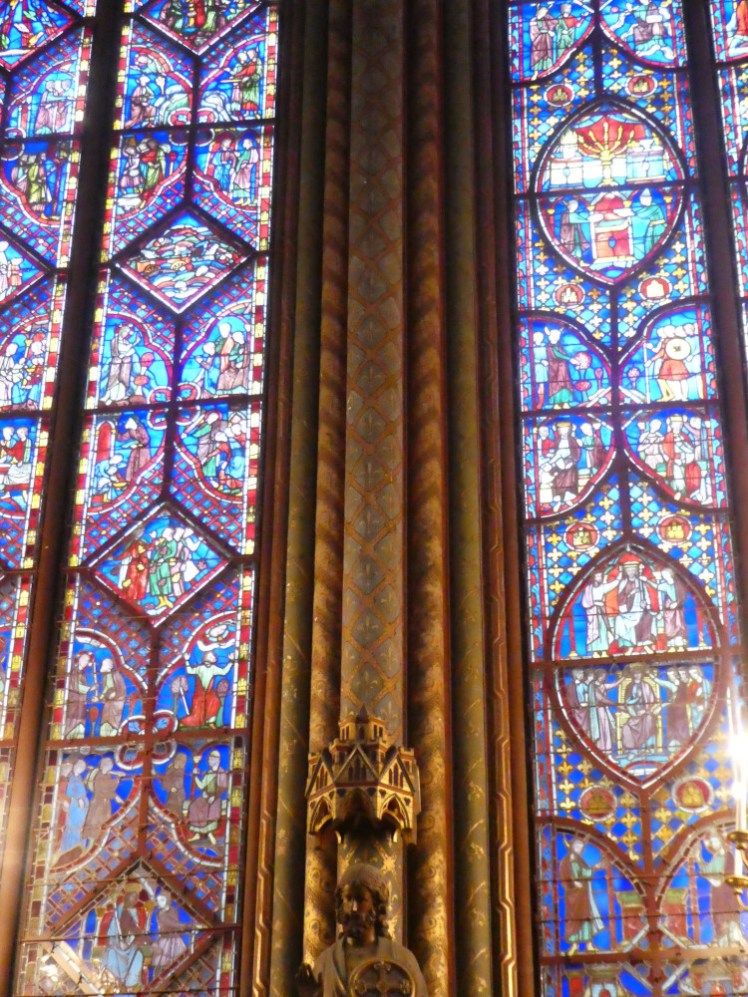
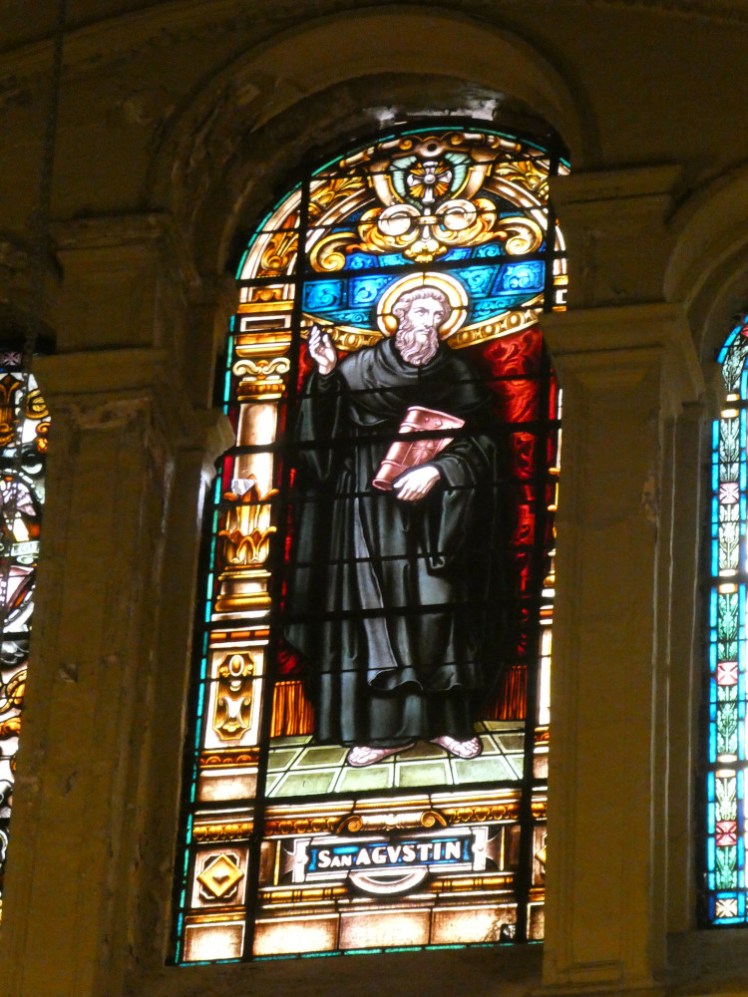
Conventional wisdom is that the most important bit of art in the entire cathedral are the various altarpieces: the Gothic one of the Chapel of Santa Barbara and the neoclassical carved one of the Chapel of the Incarnation, or the 1887 painting of The Beheading of Saint Paul. But I will always look towards the stained glass and the window particularly that stood out to me was St Augustin in billowing black robes. Black is a hard colour to do in large areas in glass; if it’s actually black, it tends to be a bit opaque and a bit of a monolith but if you do it in grey, it’s very easy for it to no longer look black. By and large, the windows are fairly modern, many of them made from 1925 onwards, following a competition to win the contract for the remaining windows, which was won by the Mauméjean Society, a French dynasty of master glassmakers particularly active in Spain between about the mid-nineteenth and mid-twentieth centuries. Whether they did this particular series of windows or not, I don’t know. There are certainly windows around the cathedral that look more “modern” to my uneducated eye.
Now, the one thing that soured the whole experience is that long before we’d finished exploring, there was an announcement. The cathedral was closing, please leave by the nearest exit, repeated in at least three languages until we’d all gone. As far as we could tell, there was a wedding, or at least some kind of private event. No, this isn’t a way to get us all to evacuate without telling us there was a fire or a ceiling falling down and inciting panic. A wedding. And we might not have objected if a) they’d put a sign up at the entrance so we could decide to do the cathedral quickly or come back later or b) if they’d given us at least a 10-minute warning before throwing us out. It was the complete and utter out-of-nowhere “get out now!” that rubbed everyone up the wrong way, especially after we’d paid for entry.
So it all came to an abrupt end. There were parts of the cathedral I never saw, like the Gothic chapter house – although, to be fair, a lot of what I missed I would only have found by already knowing to look for it, which I didn’t. Ten years ago I might have liked to climb the tower but I probably wouldn’t today. And there were gardens I’m pretty sure I missed too. But I guess I at least got a reasonably good look inside before it suddenly closed.
 I Am A Polar Bear