The third of Málaga’s ancient treasures is the Gibralfaro castle, a series of fortifications on the hill of the same name which cuts the city in two and offers 360° views of city, Mediterranean and mountains alike.
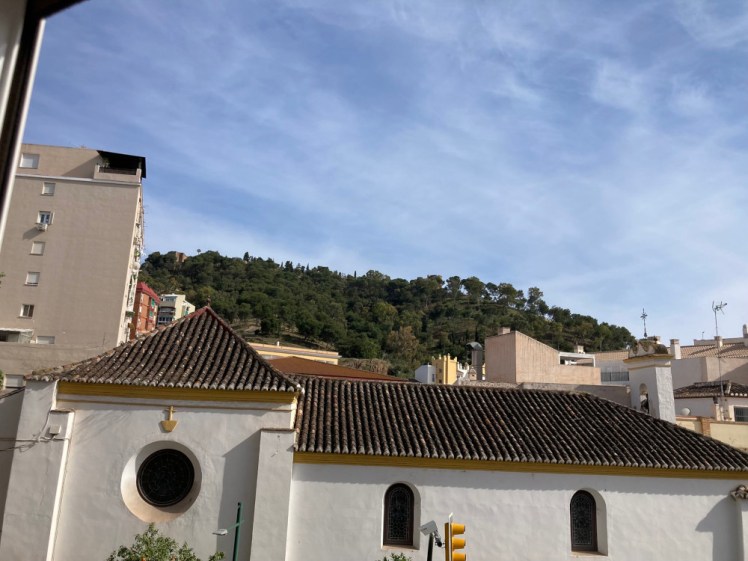
The Gibralfaro started life somewhere around 700BC as Phoenician fortifications but what you see today was really started in the 10th century and expanded in the early 14th century. Its name is a corruption of the Arabic Jebel al Faro, which means Lighthouse Hill, and it was indeed once a lighthouse although Málaga’s current lighthouse, which was constructed in the 19th century, is an icon of the city and far enough within the harbour to make me assume the harbour has been expanded since then. I’m interested to note that the modern Spanish word for a lighthouse is el faro – my Spanish isn’t good enough to know that off the top of my head but I did know that in French it’s le phare and it’s always fun to see two different Latin-derived languages sharing a word of non-Latin origin.
There are multiple walking paths up to the Gibralfaro, including one straight up from the Alcazaba, or you can drive although the car park isn’t anywhere near big enough for the volume of visitors. If you don’t want to walk and you don’t have a car, you can take my route, which is bus 37 from Paseo del Parque, the park that runs parallel to the harbour, just opposite the Town Hall. It doesn’t run as often as I’d expect, given that the Gibralfaro is one of Málaga’s biggest attractions and the bus that eventually turned up was far too small for the job. Maybe it was best suited to the hairpin roads up to the top of the citadel but the service definitely needs to be vastly expanded.
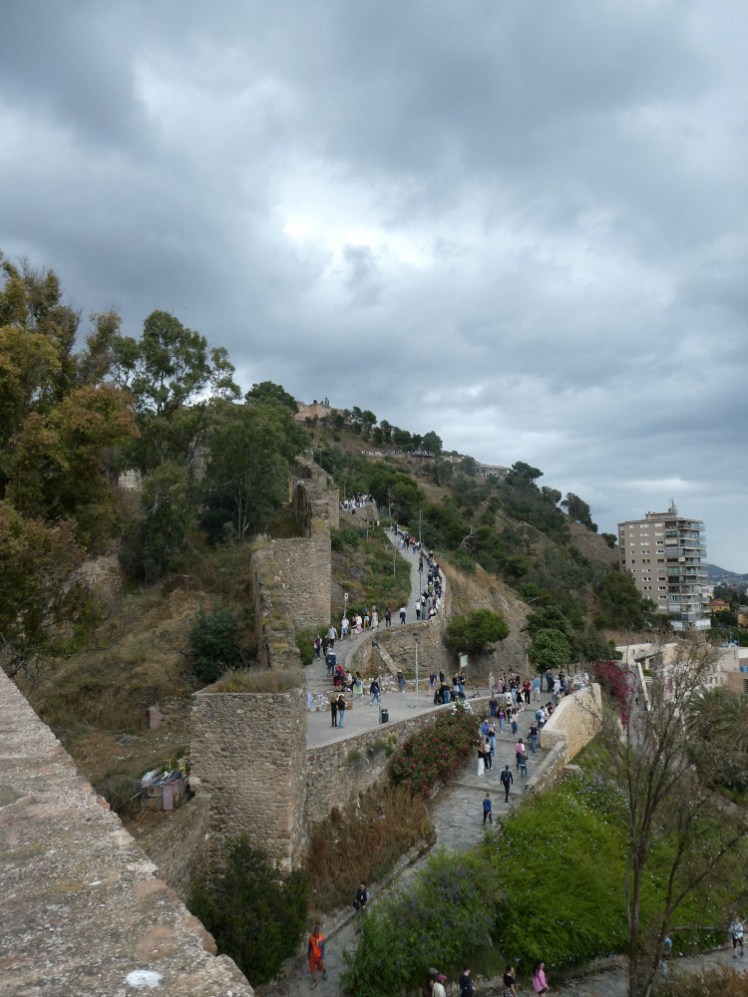
It takes ten or fifteen minutes to wind its way from the park to the Gibralfaro and it was far too packed for me to be able to enjoy what must have been some spectacular views. The Gibralfaro sits 130m above the city, which is a punishing hike in the heat of summer but reasonably tolerable in spring and a popular viewpoint for sunsets. There are definitely good viewpoints on most of the walks up and you actually have the opportunity to enjoy them.
If you’re interested in the Gibralfaro’s long history, its role in the Siege of Málaga during the Reconquest or Málaga generally, there’s a good little museum inside. The Reconquest, the Reconquista, took place over more than 700 years, starting with the Battle of Covadonga on Spain’s north coast in 722 and finishing with the capture of Granada in 1492 with Christian forces taking back the Iberian peninsula after nearly 700 years of Islamic rule – yes, the Reconquest started only a decade or so after the Muslim conquest.
The Siege of Málaga in 1487 happened pretty late in the Reconquest, being part of Granada at the time. It was the second biggest city in the Emirate and one of the most import ports. The Islamic population, led by Hamet el Zegrí, retreated to the Gibralfaro and held out against the Christian forces of King Ferdinand and Queen Isabella of Castile for four months until Hamet el Zegrí capitulated under the twin pressures of citywide starvation and Castile taking an important tower which would have given them a direct way into the besieged city.
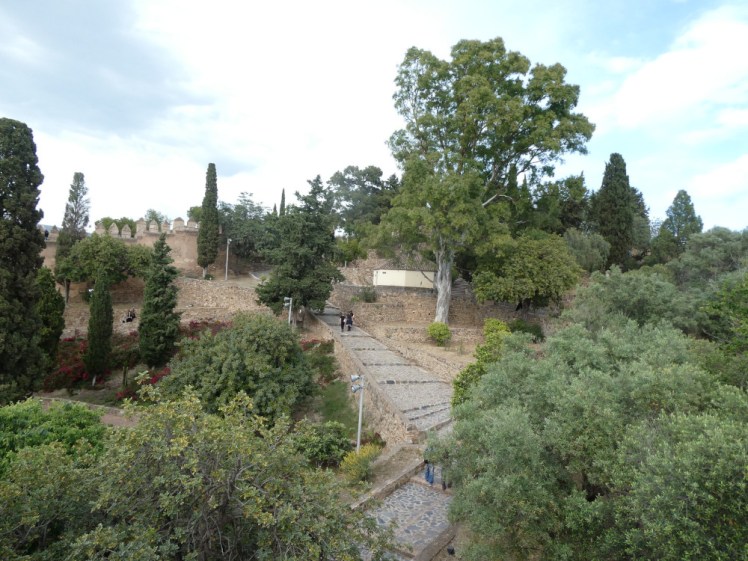
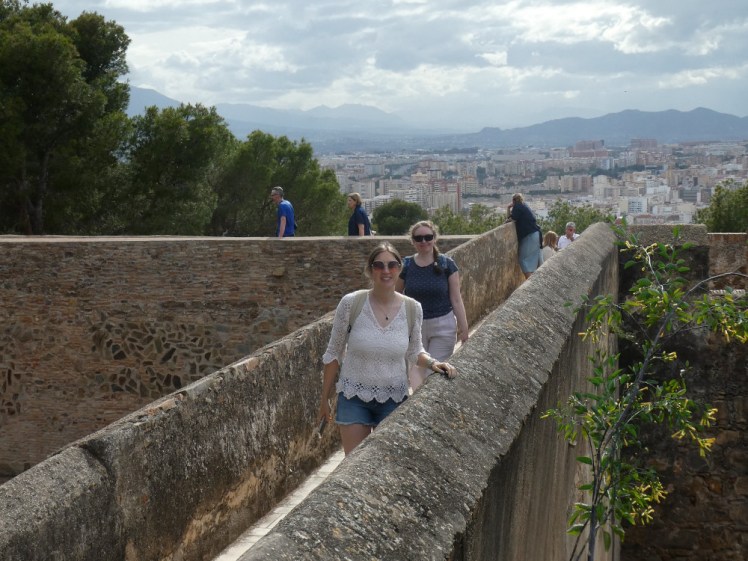
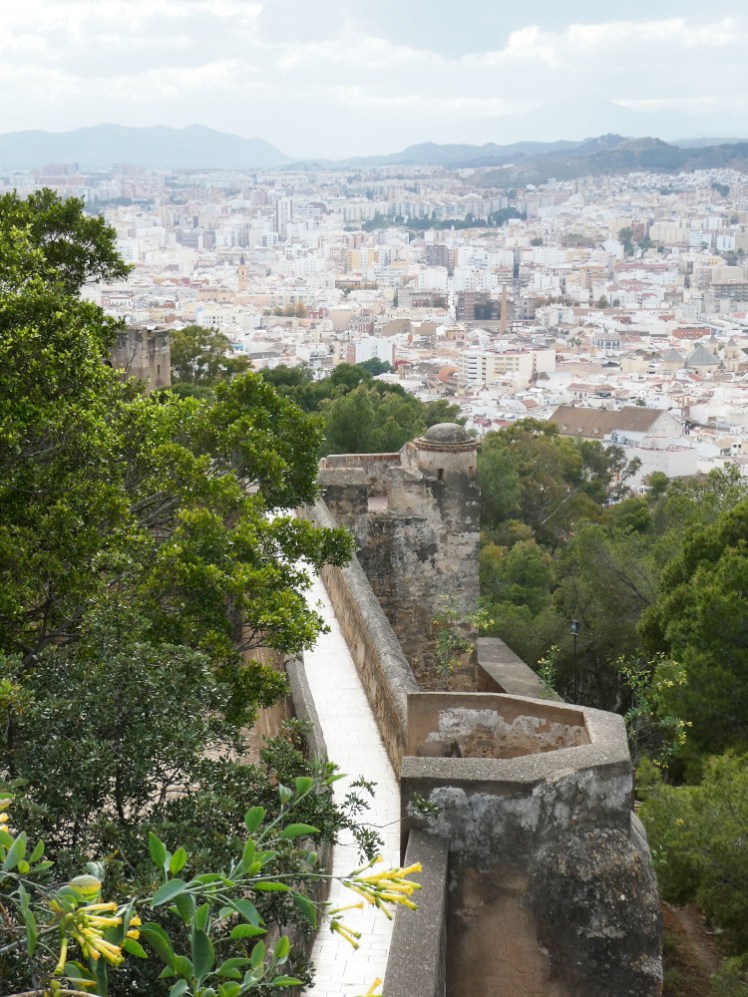
But most visitors are there to take in the views from the ramparts rather than learn about the history. There are steps up to them all over the place and no bad viewpoint around the entire perimeter. The only thing I’d say is that the walkways are quite narrow and it might not be a bad idea to pop up some arrows to turn it into a one-way system. There just isn’t room for entire tour groups to squeeze past each other on some of the ramparts.
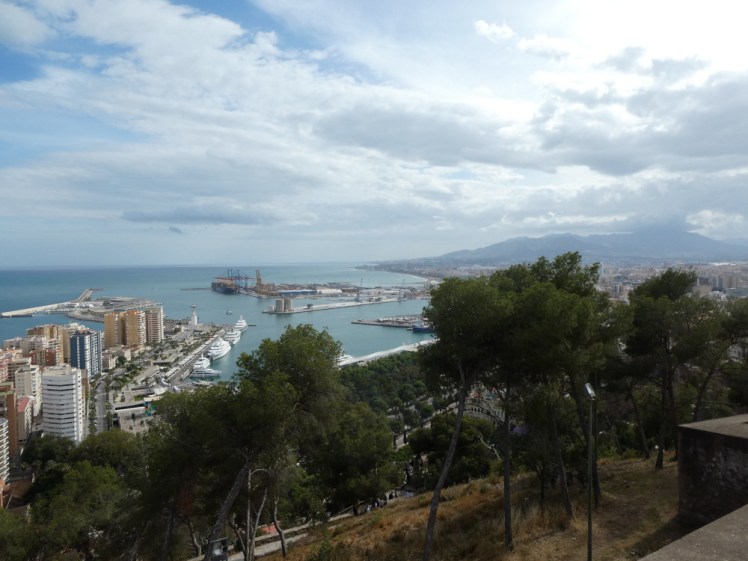
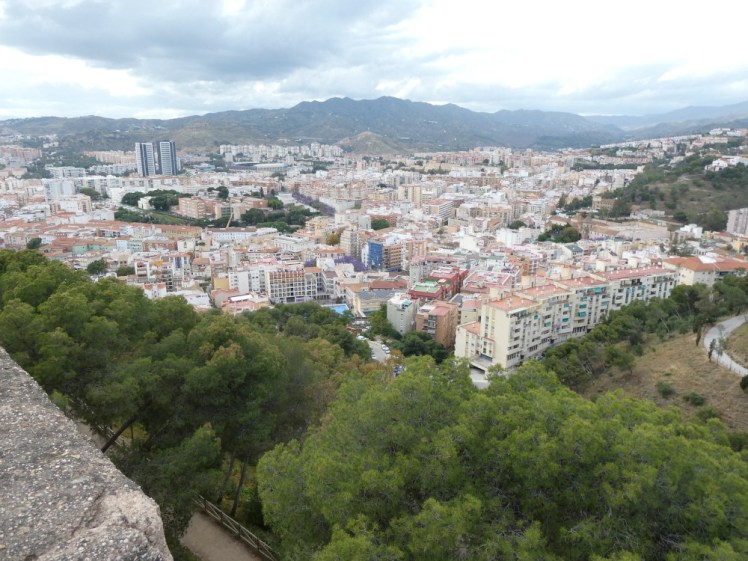
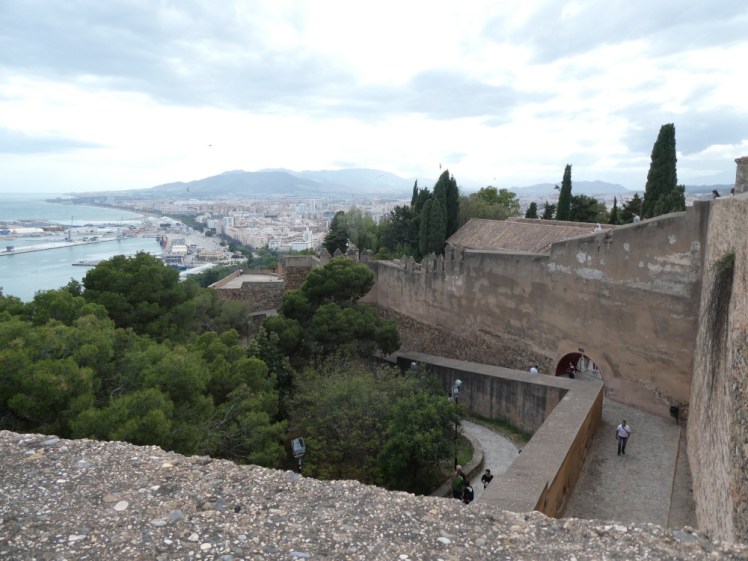
From the south side, you’ve got the views over the harbour and the blue, blue Mediterranean. Take a look down at the modern-day lighthouse and imagine the Phoenician ships being kept off the rocks by a light all the way up here. From the west, you’ll look over the city centre; the shopping streets and the cathedral and get a very different perspective of Málaga. I felt it was a pretty compact walkable city but I only experienced the tourist centre. The actual city sprawls out a lot further. From the north side you can see even more of this never-ending city (and our apartment!) and you can also see the mountains that start to rise up immediately behind Málaga. If I had a bit longer, and a car, and the courage to drive LHD in a big city, I’d head up into the hills. You really do have it all in Málaga: the beach, the city and the mountains. Finally, come round to the east and you can see up the coast towards more mountains.
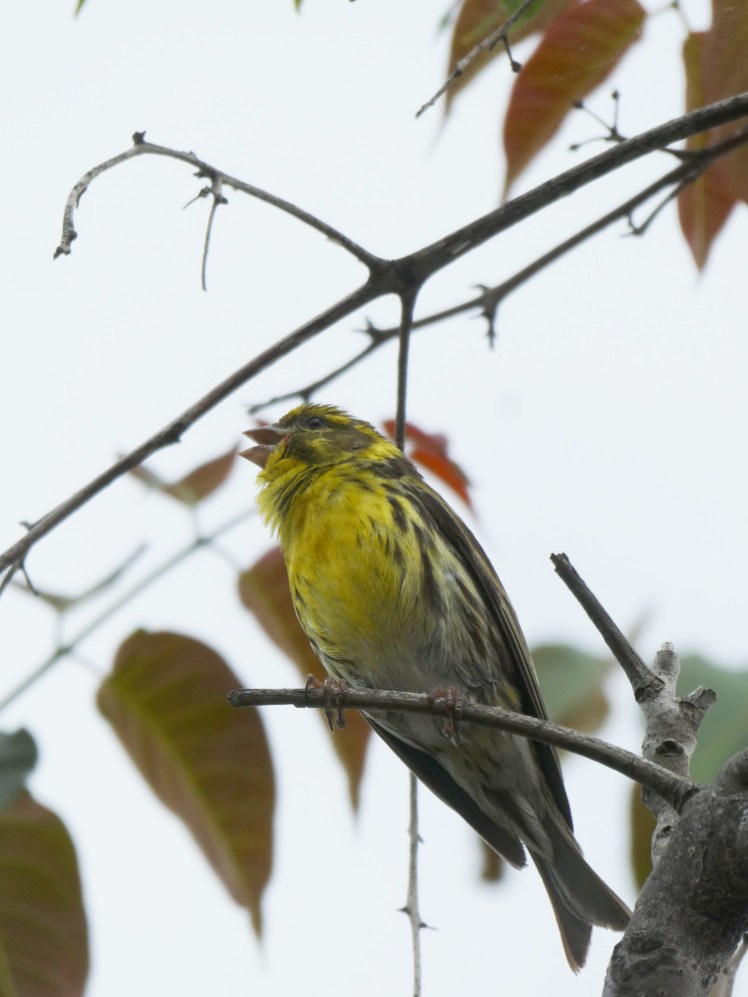
Besides the views, the Gibralfaro offers something you might not immediately notice – the peace and quiet of being out of the city centre. We’d already spent our time in Málaga exclaiming over swifts, parakeets and… umm… pigeons but up here you could hear their calls properly, see the green backs of swooping parakeets from above and round wood pigeons joined the flocks of lean feral city pigeons. There was even a bright yellow European serin singing above our heads.
On the subject of the queues, they let in a whole bunch of people at once and then close the queue for anywhere between twenty minutes and three-quarters of an hour. It’s immensely frustrating when your friends are inside because they walked up amd you’re stuck outside because you took the bus up to the Gibralfaro and it doesn’t run as often as it really should, to be three feet from the entrance and watching fifty to a hundred people walk out and still be told “No, you can’t go in, it’s full”. I’d absolutely be operating one-out one-in. And that was in early May! Imagine what the queues must be like by July or August.
I don’t know that you can get into the fortress itself after hours but I hear that the Gibralfaro is a spectacular and popular viewpoint for sunsets, which must happen more or less straight over the Mediterranean. We didn’t climb up ourselves but we tried to get into an overcrowded and over-noisy rooftop bar down in town which gave us a glimpse of a coloured sky over the hill before we retreated to a bar down on the harbour front.
Like the Alcazaba, the Gibralfaro is free after 2pm on Sundays, which no doubt contributed to the queue that made me so furious. It’s nice that everyone should be given free access to the city’s history but on the other hand, it means everyone goes! For all that, even when passing groups on the narrow ramparts, it never felt over-busy inside but… the queue…
The Málaga blogs are taking a break on Monday. I have something very non-Spanish to tell you all about but I’ve still got the modern city and the cathedral to come, so Málaga will be back! And please be here on Monday for my announcement!
 I Am A Polar Bear