As I’ve said a couple of times, I haven’t entirely fallen for Prague but there are things you can love anywhere and for me, that something was St Vitus Cathedral. I spotted it not long ago when my parents were there and I was trying to make sense of the photos and messages I was getting. My mum sent a picture, which I analysed as following: “That seems to be a reasonably elderly Gothic church with something modern wedged into the corner”, identified it, looked at the pictures on Google Maps and followed up with “If that’s St Vitus Cathedral, it’s got some very colourful stained glass”. And then I pushed it to the back of my mind. Prague was an afterthought on my train adventure round the West Bohemian Spa Triangle and I only really got as far as plotting Mission:Impossible locations on a map and vaguely remembering being interested in the big church.
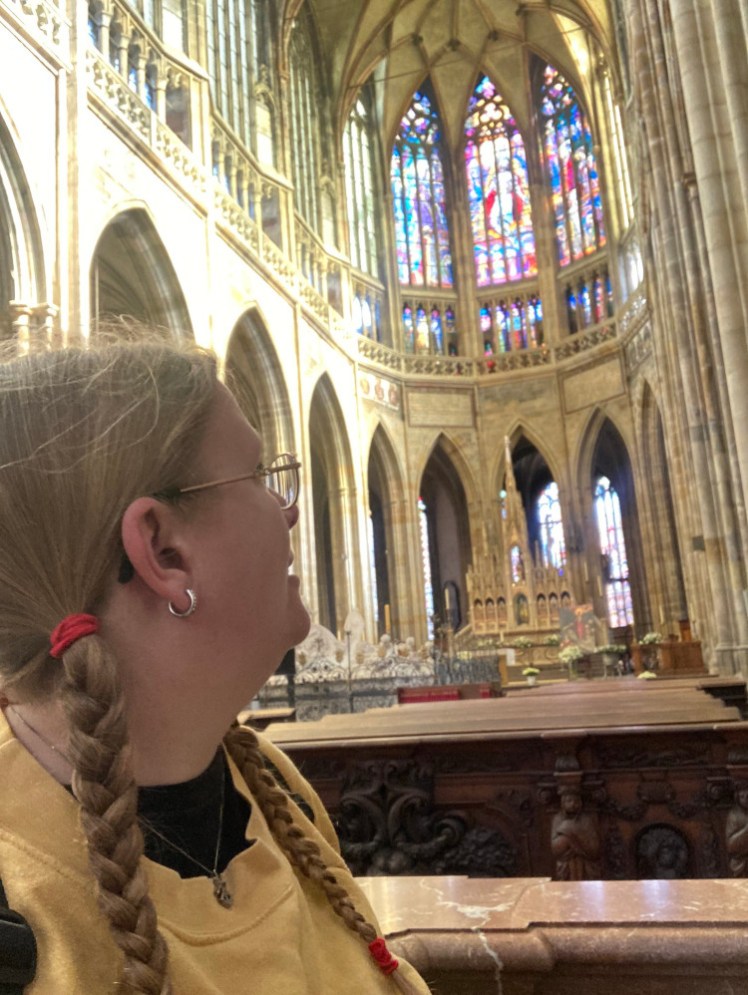
Well, as soon as I walked in, I involuntarily said “Wow!!” out loud.
St Vitus Cathedral is the centrepiece of the Prague Castle complex. The castle has been the seat of the Dukes of Bohemia, the occasional Holy Roman Emperor, and more recently, presidents of the Czech Republic and the cathedral has served as the final resting place for many of those inhabitants. It takes its name from St Vitus, obviously, a Roman boy who was martyred around 303AD during the Diocletianic Persecutions, which was when a handful of Roman emperors basically tried to wipe out Christianity. St Vitus lived and died in southern Italy and his connection to Prague is that the bones of one of his hands were given to Wenceslas I, Duke of Bohemia, as a gift. When the new cathedral was built, it was decided that the relic would be kept there and it would take his name. In 1997, the cathedral was rededicated and its new full name is Metropolitan Cathedral of Saints Vitus, Wenceslaus and Adalbert. Wenceslaus is the aforementioned Wenceslas who was assassinated by his younger brother and his allies and yes, he’s the one from the Christmas song. Finally Adalbert was a Bishop of Prague and a missionary martyred in 997 on a mission to convert the Prussians in the Baltics.
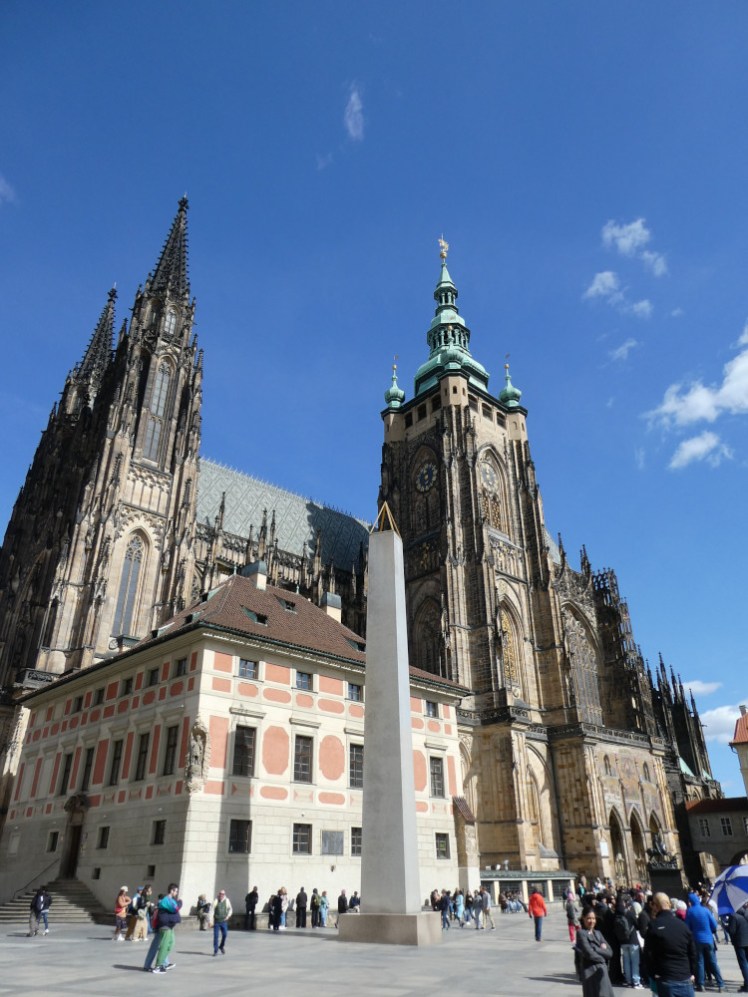
As with many cathedrals, St Vitus was built on the site of two older churches. The first was a Romanesque rotunda founded in 930 by Wenceslas I, the second a bigger version started in 1060 and the current one was begun in 1344. It can easily take a whole century to build a medieval cathedral but St Vitus took nearly six hundred years. That’s partly because of a war in the early 15th century, partly because of a great fire and partly because I guess everyone just ran out of enthusiasm. Baroque and Renaissance bits were added on here and there over the centuries but the project was picked up again in the 19th century and it was all officially finished in 1929, mostly back in Gothic style – well, Neo-Gothic but that really just means Gothic style not done in the medieval era. You can’t really tell what’s modern vs what’s ancient. Neo-Gothic is often Gothic done in brick and that’s very beautiful but here, it’s all in the yellowish stone, made golden by “clear” glass high up actually being yellow if you zoom in and look closely.
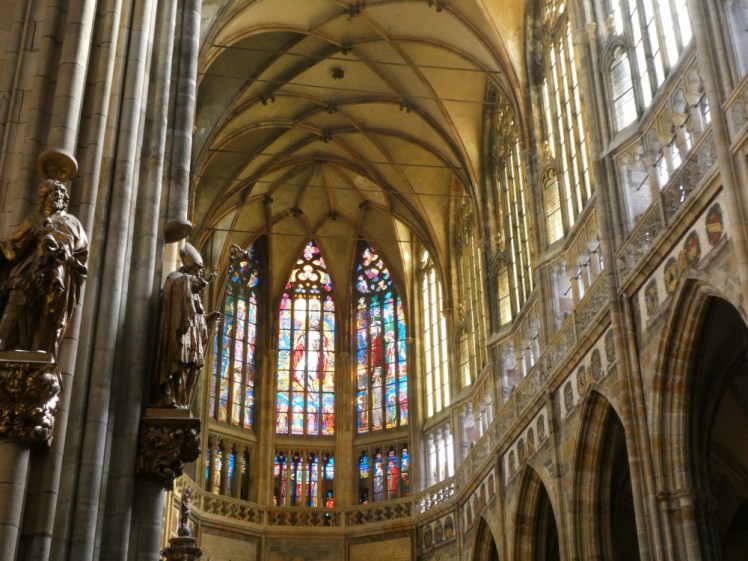
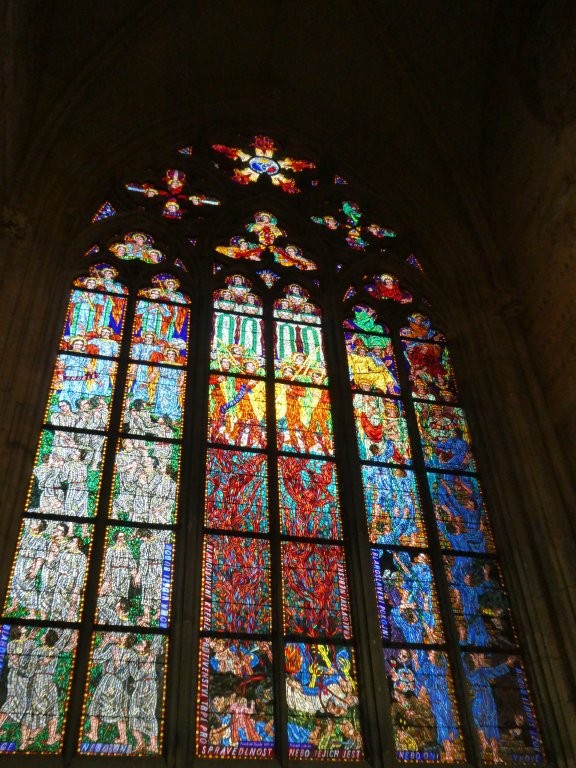
Rumour is that there’s some construction going on in the cathedral at the moment which means there’s currently no access to the areas of the cathedral that have traditionally been free and to get in, you need to have a basic castle ticket, which gives you access to certain major areas which they call the main circuit. The queue for the cathedral looks long but it moves quickly because despite the men in suits standing by the door, they’re not stopping anyone for anything – no ticket checks, no bag checks, just get in, get in. It’s once you’re inside that you’re corralled into the north-west corner where you’re distracted by some stunning, wow-inducing stained glass windows before realising that there are turnstiles and part of the chaos is caused by tourists who can’t figure out how to scan a barcode to get through.
So it’s a lot busier inside than I like but a lot of medieval cathedrals are more tourist attractions than places of worship these days so they’re often busy, especially the ones in busy cities like this. Once you’re in, you’re more or less able to take it at your own pace but there’s definitely a circuit. North aisle, north transept and crossing, east ambulatory and chapels, south transept, south aisle and back out. You can slip through the barriers to get back into the crossing from the south transept but the barriers are laid out so you’re supposed to see it on your way along the north side.
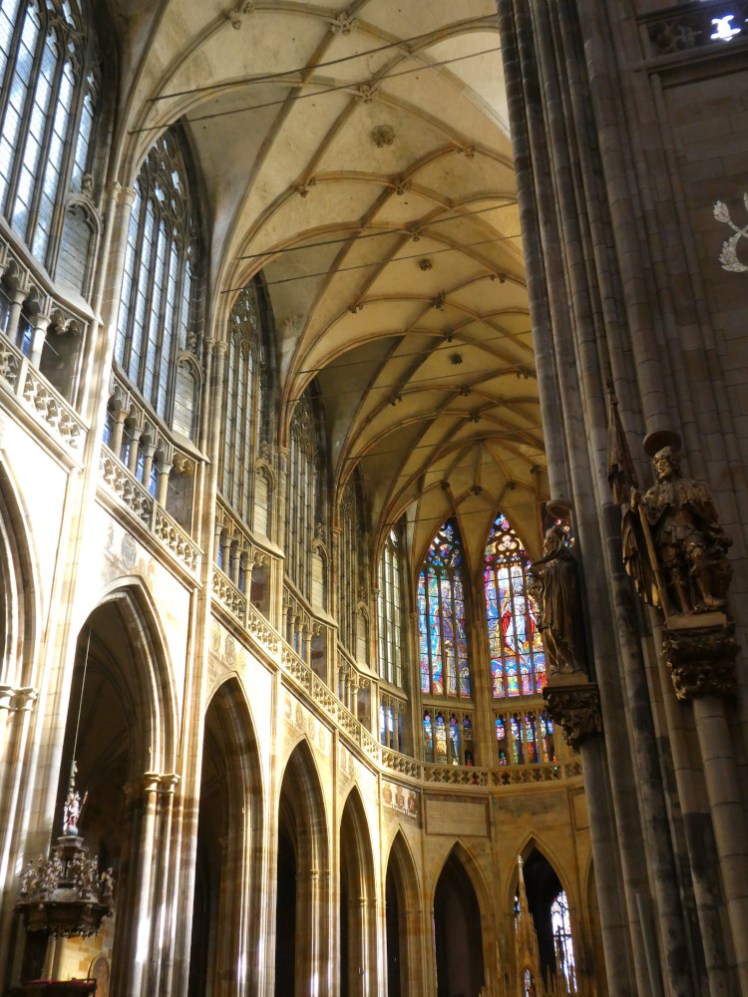
The architecture is pleasing enough – high, fairly sleek Gothic pillars and vaulting, decorative chapels more or less all the way round and their highlight, St Wenceslaus Chapel, which didn’t really register with me as much as the cathedral staff would like it to. It’s a mid-fourteenth century chapel dedicated with thousands of semi-precious stones and I don’t know if it’s a little way off the main circuit or whether I just didn’t appreciate what I was seeing or whether there’s just an overwhelming number of pretty chapels. Or, indeed, whether I was just distracted completely by the stained glass.
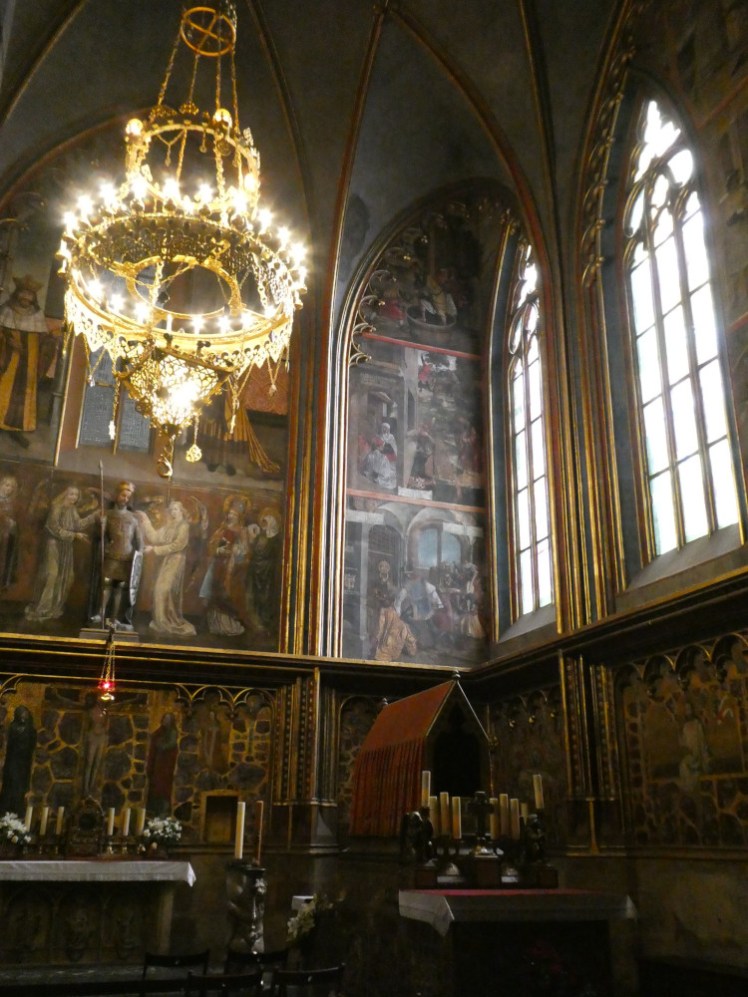
I’m not a religious person. I have no interest in religion; I have no faith. And yet somehow my taste in art has fallen firmly on the ecclesiastical. I love a cathedral, I adore a Gothic cathedral and while I also have zero interest in art galleries, I will stand for hours staring transfixed at stained glass, especially the more modern variety. I have two panels that I made myself in the window in front of me right now and at some point this year, I’ll be adding a third.
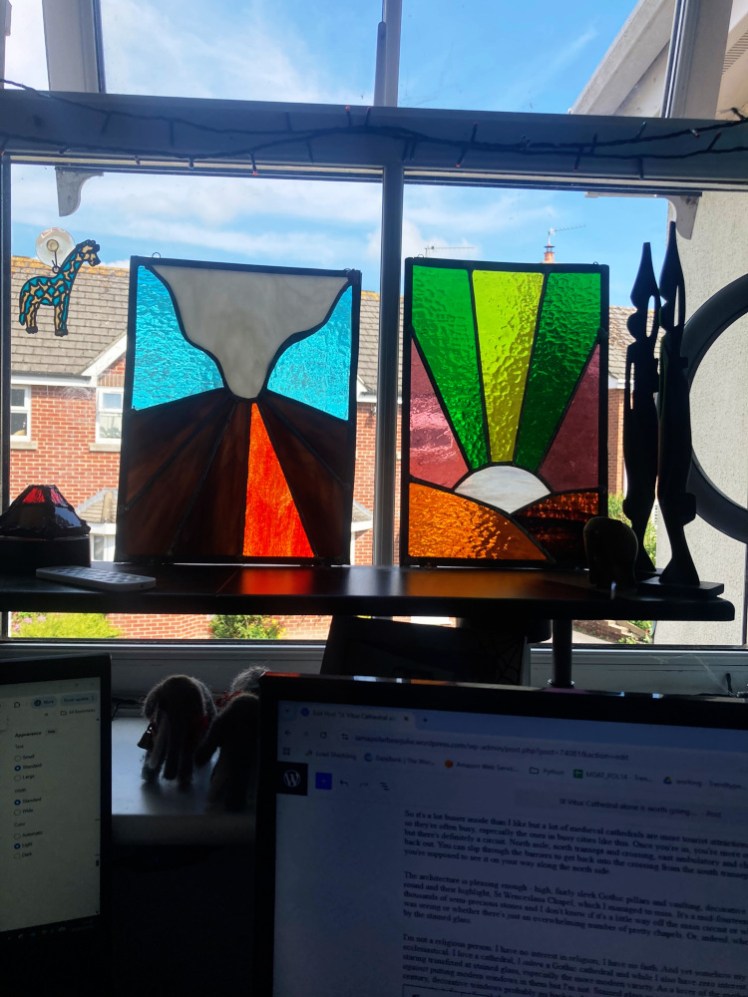
As a lover of medieval Gothic cathedrals, I should be firmly against putting modern windows in them but I’m not. Stained glass as a window art form has been around since around the 7th century, decorative windows probably go back to the 4th century and coloured glass objects have been made since ancient times. I appreciate it if a medieval church has its original glass, slightly yellow and depicting either endless rows of saints or Bible scenes but I prefer something more colourful and more metaphorical and if that makes me a bad lover of the medieval, then so be it.
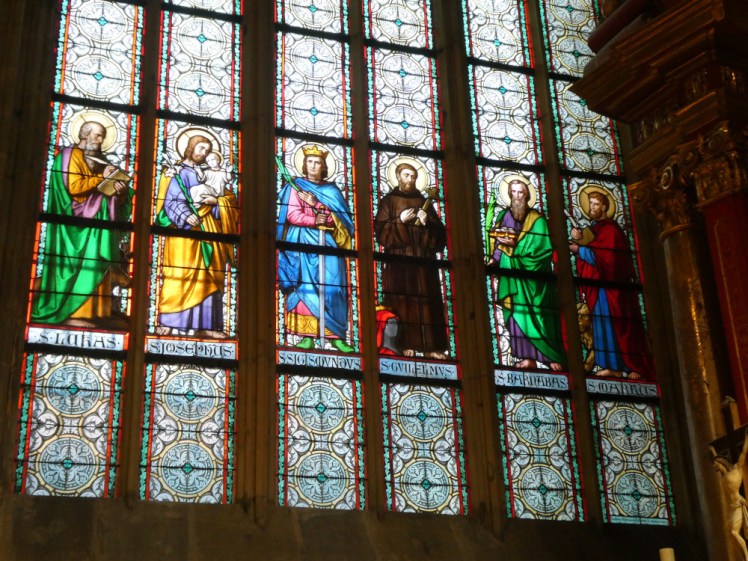
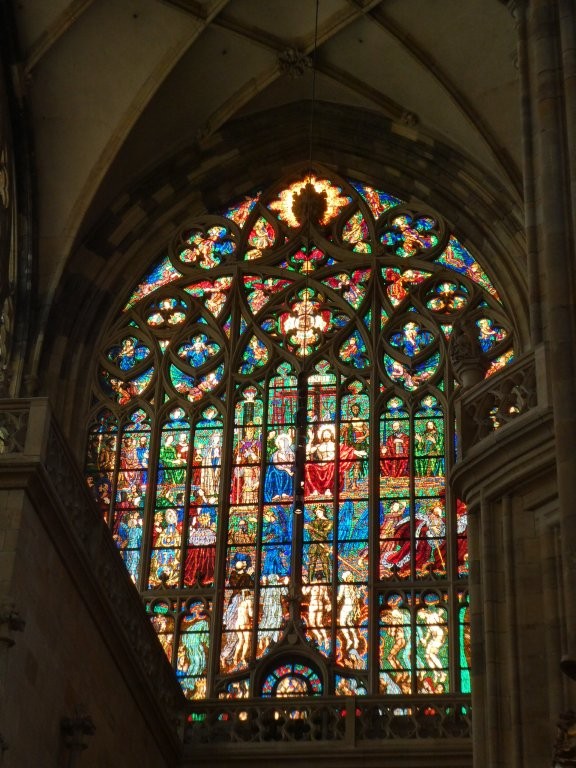
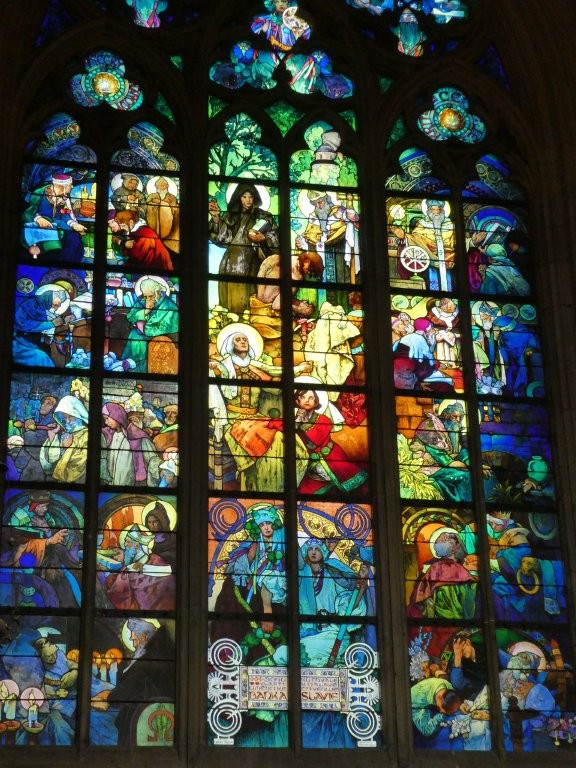
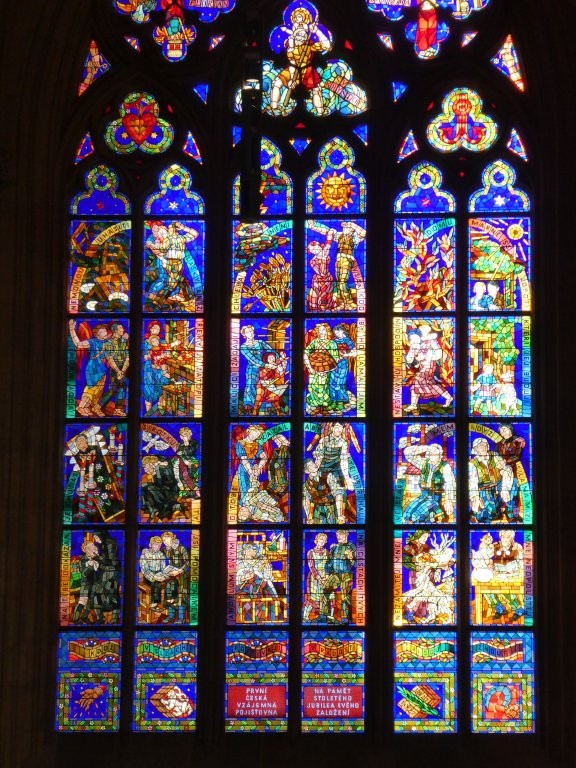
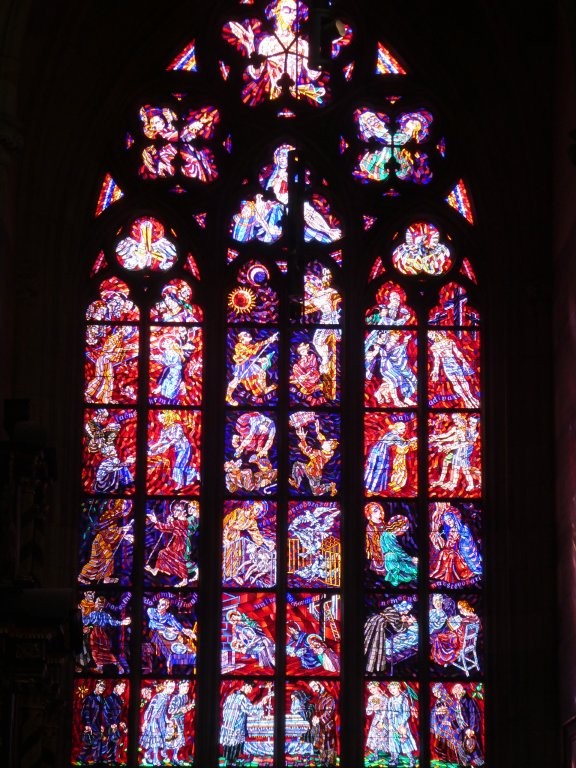
St Vitus Cathedral windows are stunning. They’ve catapulted the cathedral straight into my top ten and if I ever bothered to sit down and write down that list, I’d probably find its in my top five, which is quite a thing considering how far down the list of favourite cities Prague is currently sitting. What I especially loved was that the sun was coming through the southern windows at quite a low angle, illuminating the chapel walls in pastel pinks and purples.
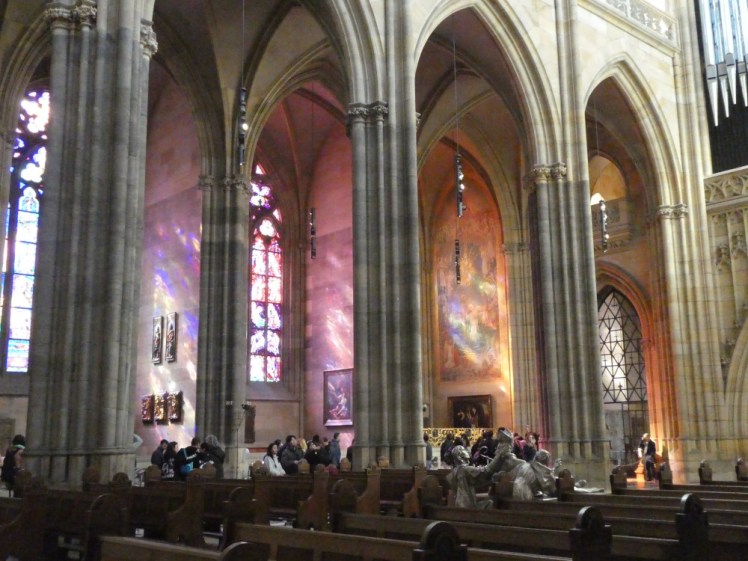
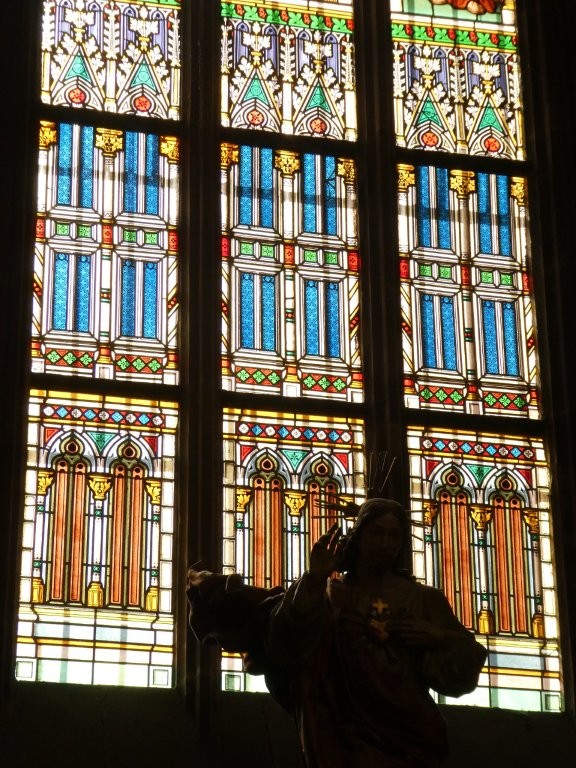
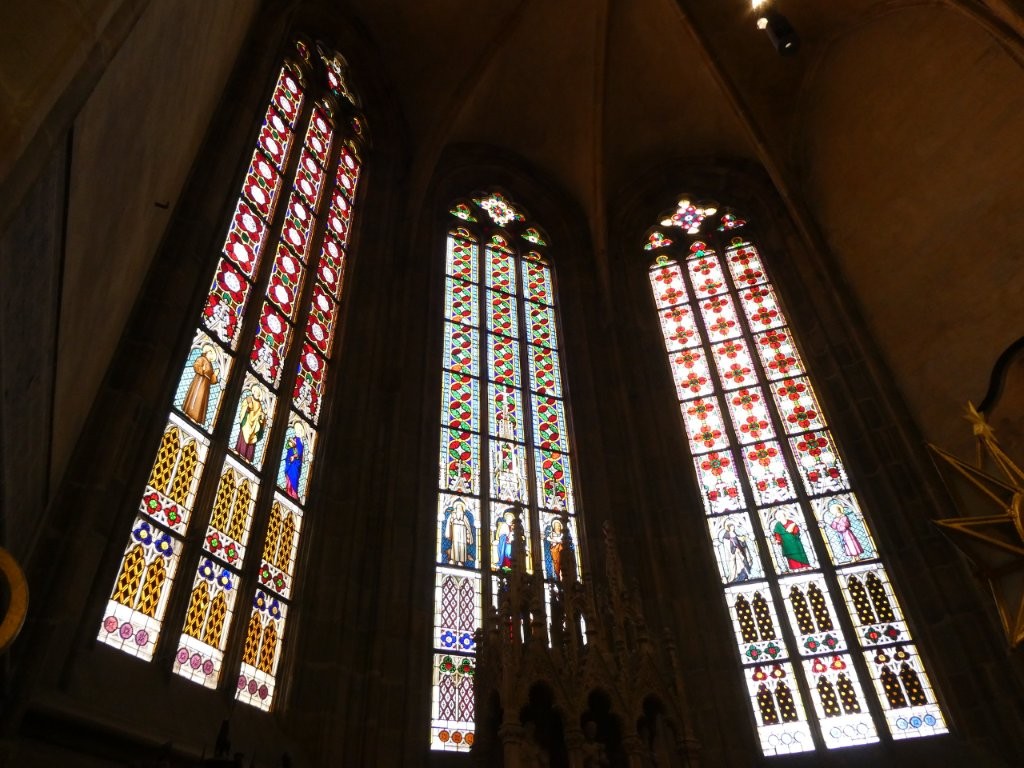
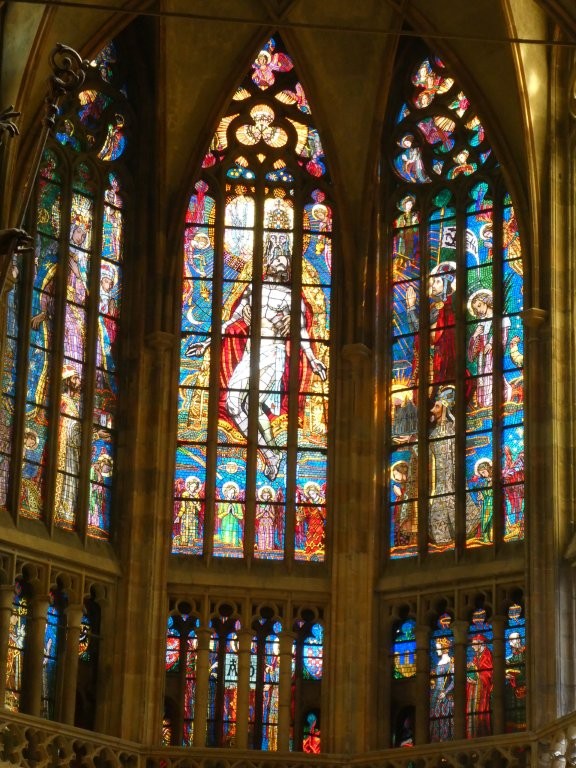
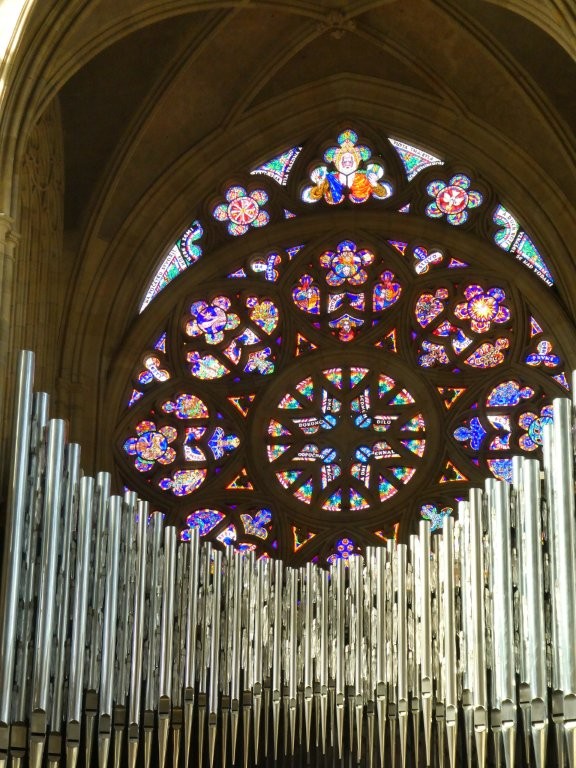
I won’t try to describe the others – instead, I’ll leave you a gallery and the advice that if you ever find yourself in Prague, do Charles Bridge and the astronomical clock and drink cheap Pilsner in the streets and make a nuisance of yourself, whatever, but do allow an hour or two to admire this cathedral because it’s far and away the best thing in the whole city.
 I Am A Polar Bear