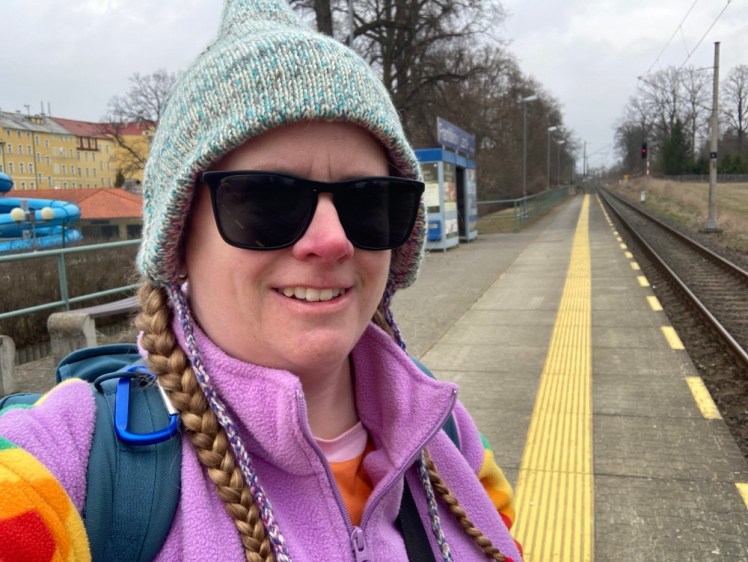
I’m writing this on the platform of the Františkovy Lázně-Aquaforum station, waiting for the tiny shuttle train to take me to neighbouring Cheb, whence I will travel to Karlovy Vary. It’s partly to keep me busy while I wait and partly because I want to get started while it’s fresh in my mind. It looks like this, by the way:
Františkovy Lázně seems to be regarded as the third and last point on the West Bohemian Spa Triangle. From the point of view of a round trip that begins and ends in Prague, it doesn’t make sense to me to put it anywhere but the middle but for all that, it’s the town that gets the least attention and as someone who hasn’t yet made it to Karlovy Vary but has seen vlogs about it, I suspect that might be for good reason.
I haven’t written the Mariánské Lázně blog/s yet so I’m probably covering ground here that I’ve already done: “spa” in Czechia is much more about medical treatments than indulgence. Unlike their German counterparts, Czech spa towns don’t seem to have a large central spa facility/waterpark to enjoy soaking in the water and trying out six different textile-free saunas. Instead, Czech spa towns have a multitude of “spa and medical hotels”, most of which will have a smallish swimming pool for casual guests, but you should think of them more as private hospitals or nursing homes – sanatoria, perhaps. There will always be an assortment of doctors and nurses on site, with at least one medical professional available 24 hours a day. You’ll find physiotherapists and oxygen treatments and things I can’t translate from the signs on the doors between the stairs and the breakfast room. People like me will come for short visits but their main clientele are patients, many of whom stay for up to a month. Hotels will advertise themselves with statements like “full medical exam and tests on arrival”, which is what put me off trying to plan this trip a year ago.
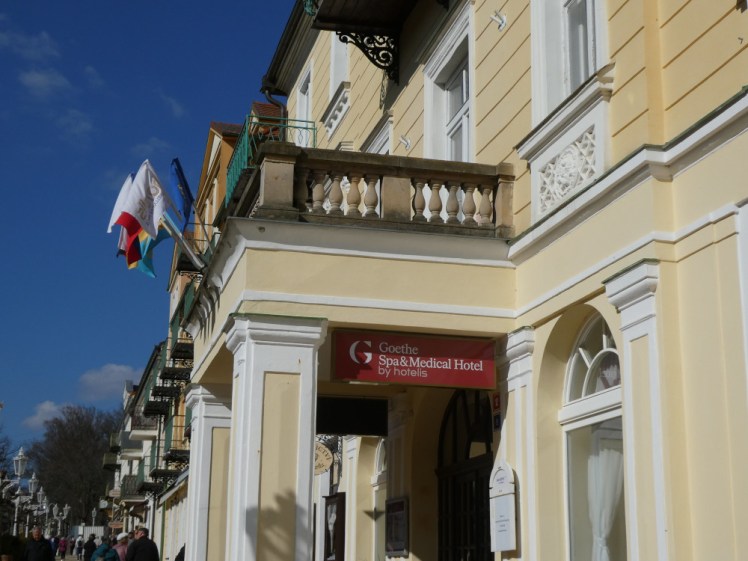
So, while you might have 40 spa hotels in a small place like Františkovy Lázně, the average water-loving tourist here for a spa break can’t actually get at most of them. Even the sauna in your spa hotel might be reserved for medical treatment, or at least subject to an extra fee.
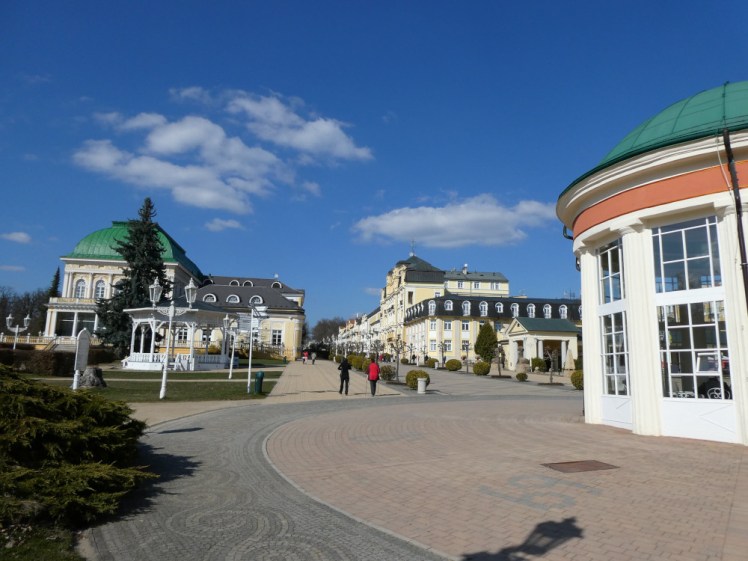
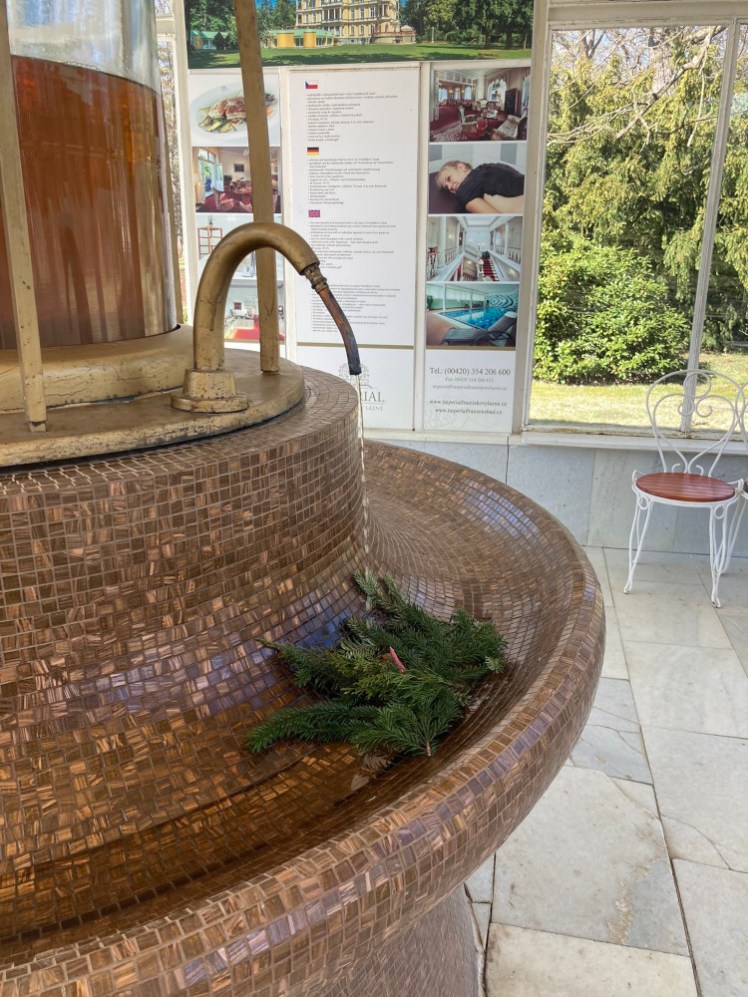
So that leaves the rest of the Czech spa experience: taking the waters. That means drinking. Most of Františkovy Lázně is parkland, dotted with pavilions and sheds and the occasional cafe. You’re supposed to stroll, to enjoy the fresh air, take some gentle exercise – indeed, Nordic walking regularly features in the month-long medical programmes. In most of those pavilions and sheds, you’ll find a spring and probably a dispenser of paper cups. In Mariánské Lázně, there was a kiosk in the main spring pavilion and everyone bought a spa cup there but the only place I’ve spotted them in Františkovy Lázně is in the tourist information. You could spend days finding all the springs within half an hour’s walk of the central pavilion and tasting them. I don’t recommend it. The springs in Mariánské Lázně were instinctively revolting because they’re very heavy on the carbon dioxide and I can’t take fizzy water even long enough to decide whether it’s the fizz I hate or the mineral flavour. But Františkovy Lázně’s water generally doesn’t have so much of the “is it just the fizz?” factor. It’s just icky. Plus you can see it in glass vats. So much easier to taste-test mineral water when it’s coming out of a tap and you haven’t realised that it’s brown until you see someone filling a plastic bottle. You’re not missing that little detail here and I don’t know about you but my instincts scream against drinking brown water, no matter how many doctors or medical programs have declared this a “cure”. Besides, in my own medical experience, nothing is ever called “a cure”, it’s always just “treatment”. In the UK, nothing’s guaranteed to fix you.
I knew the detail that spas tend to try to keep quiet: that the purpose of drinking spa water is to… well, purge, I guess. Ensure that everything you’ve eaten in the last three weeks exits quickly. Of course, “come to Františkovy Lázně, we’ll diarrhoea the heart condition right out of you!” doesn’t sell wellness.
But while drinking the water is part of the Victorian-era “cure”, the other part is leisure. De-stressing spa-style by just strolling in the parks. Go to one of the cafes, get a spa wafer – oh, the spa wafer is every bit as much part of the experience as the water. They’re wafer biscuits about the size of a small dinner plate, paper-thin and come with a variety of fillings. You can also get them plain and straight from the warming plates. I went for a chocolate-filled one and while it’s perfectly edible, it very quickly becomes quite cardboardy. I brought back a box of five of the things but I only ate one while I was in Czechia. I just don’t need a second slice of cardboard. Enjoy the fresh air and the adorable scampering red squirrels and being among trees and flowers.
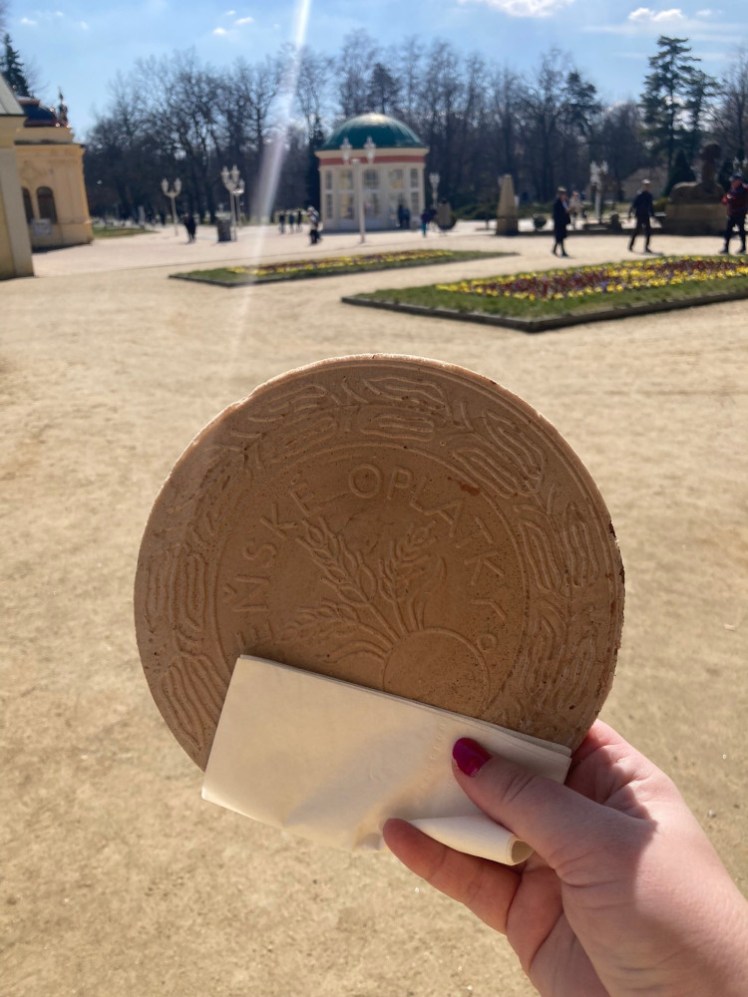
What with all the combined spa-and-medical hotels and the acres of park, you soon start to feel less like you’re in a town designed around wellness and leisure and more like you’re in the gardens of a town-sized hospital. It feels like you should be expected back in shortly for your medicine and your next treatment and while I genuinely do think that’s the case for a lot of visitors, even I started feeling like that, and I was only there one night. You start to expect to see people in hospital gowns and people in scrubs and start to feel faintly surprised to see perfectly ordinary tourists in perfectly ordinary clothes clutching cups as they move from one spring to the next.
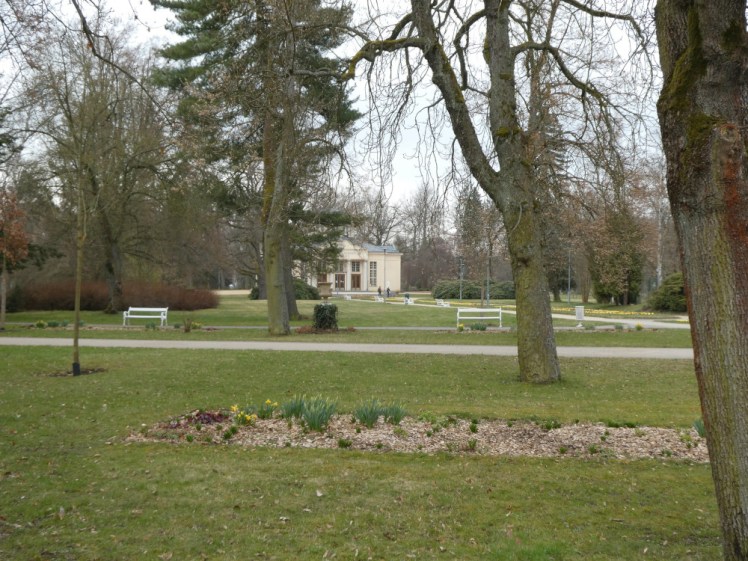
And that’s about it for Františkovy Lázně. You’re going to want good weather because you’re going to spend the majority of your time outside because other than using your hotel’s wellness facilities, the only other indoor entertainment in town is Aquaforum. But that’s a blog for another time…
 I Am A Polar Bear