Iceland Itineraries is a series I did quite a few of a couple of years back but I haven’t for a while. But now I’m a member of a Facebook group for people to ask questions and they’re all the same questions and a huge proportion of them are about what they should do and what they need to see, so I’m going to make your perfect first time in Iceland itinerary to see all the essentials.
Day one
Day one looks like a big and complex day: that’s because I’m dealing with two separate sets of arrivals, all the little details you need to know first thing and a bit of city exploration. It’s nowhere near as intimidating as it seems and the days are going to get simpler!
In the UK, flights tend to arrive in Iceland towards late afternoon and throughout the evening – I regularly get a flight that arrives at 11.30pm. But because the internet is largely American, the majority of people on that group are arriving around 6.30am so that’s where I’m going to start.
Early morning arrivals
If you’ve got an early morning flight, you’ll probably want to allow one to two hours between landing and walking out of the airport. “How long will customs take?” is actually “how long will passport control take?” (customs is the red and green “nothing to declare”/”something to declare” thing you walk under between claiming your baggage and walking out of the exit into the airport and I’ve never seen anyone stop there) and that’s a “how long is a piece of string?” question. It depends whether you’re first or last off your plane, how many other planes come in at around the same time, how many border control staff are working, how many people have more complex visas, whether they’ve started up the EES process, how many EU or Icelandic citizens get to skip the desks by going through the electronic gates and probably half a dozen other factors. You can be through in a minute or two or you can wait for an hour. The Facebook group suggests that the longest queues are in the early morning, when multiple flights from North America are all coming in pretty close together.
You’ve got a couple of options, because your hotel won’t let you check in first thing in the morning. A lot of people go straight to the Blue Lagoon, where there’s luggage storage. It’s a good idea – for one thing, a geothermal pool is a must-do and this is a good opportunity to tick it off your list. It’s an easy 20-minute transfer from the airport and it’s the sort of thing you can still enjoy while jetlagged. If you’re renting a car, go and pick it up. If not, there are a few shuttle buses – Destination Blue Lagoon runs every combination of buses between the Blue Lagoon, the airport and Reykjavik but there are only four buses a day between the airport and the Blue Lagoon. If my flight got in at 6.30am, I wouldn’t be booking the 7.30am transfer – I might well make it comfortably but I equally might not and stressing about that isn’t something I want right at this point. The next bus is at 9.30am, so you could have a leisurely breakfast at the airport and not stress about queues and waiting for baggage and whatnot. Reykjavik Excursions have a 7.30am transfer too and so does Arctic Adventures – I’m beginning to think this is a popular time for it. Otherwise, there’s Hreyfill taxi – Iceland doesn’t have Uber but Hreyfill has an app and it’s what the locals use.
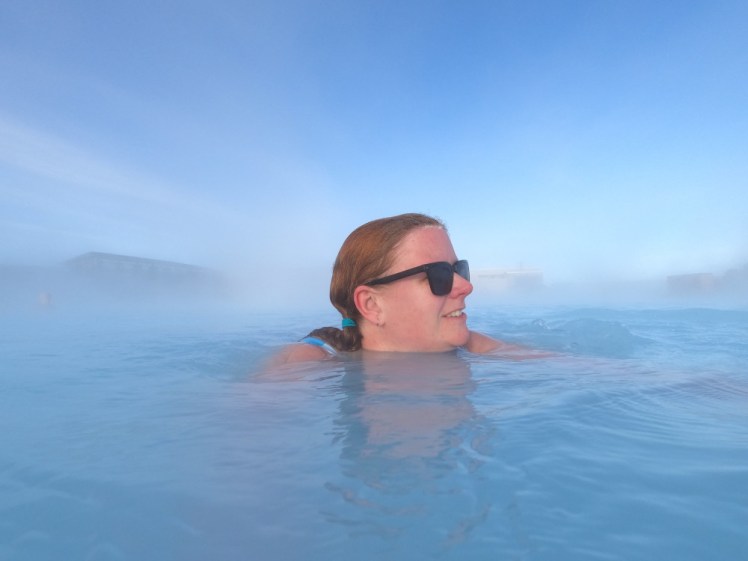
Whatever transfer service you use, check, double check and triple check whether entry to the Blue Lagoon is included! This catches out a surprising number of people. Sometimes it’s a tour, which includes transfer and entry. Sometimes it’s just transfer. Both have their merits. I’d usually say to book direct with the Blue Lagoon but it does sell out, especially in the summer, sometimes days or even weeks in advance. However, a chunk of those tickets go to tour operators, so if you can’t book direct, there will almost certainly be a tour company that you can book through. As with everything in Iceland these days, the further in advance you can book, the better.
If you’re driving, be aware that there’s not a whole lot other than fresh black lava field between the airport and the Blue Lagoon. Popping into Keflavik, the town, is a bit of a detour in completely the wrong direction, although it’s only ten minutes from the airport. If you’re hoping for breakfast or to pick up coffee on the way, I’d personally do it at the airport where you’ll find a mini supermarket and an assortment of cafes around the arrivals area. If you prefer to wait until you get to the Blue Lagoon, there’s a cafe in the lobby, there’s a cafe inside between the showers and the lagoon itself and there’s an in-water bar. You pay in the ordinary way at the dry cafe but at the other two, you use your electronic bracelet as a credit card. There’s also the Lava Restaurant in the same building and I know a lot of people recommend it but that’s probably more a lunch or dinner stop than breakfast/brunch.
If you don’t fancy the Blue Lagoon, take the Flybus into Reykjavik. Your hotel might store your luggage or there are lockers at the BSI, which is the central bus station where you’ll almost certainly be taken, whichever of the half a dozen transfer services you use. Flybus is just the easiest and most ubiquitous – you’ll see people say things like “they meet every flight” but what they actually do is leave a queue of buses outside the airport. As soon as one is full, it departs and the next one moves up to take its place and they run well into the night and start again very early in the morning. On the bright side, minimal waiting time. However, you will be crammed in like sardines, so whatever luggage you can put in the hold, please do. You can buy a Flybus ticket online in advance or at the kiosk in the airport and it’s valid for whatever bus is waiting outside when you get there – no need to worry about times. If you’re coming back, you will need a time for a specific bus because they won’t necessarily pick up from every bus stop and they need to know where you’re going to be and when. It takes about an hour to get to the airport, so I’d book my return bus an absolute minimum of three hours before my flight departs.
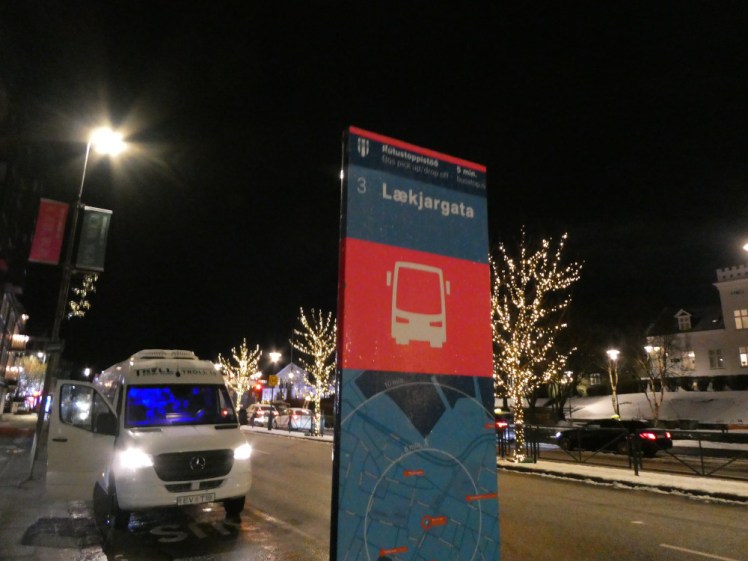
Back to day one, though. Coming from the airport, you have two Flybus options. A plain Flybus ticket will get you delivered to the BSI terminal in downtown Reykjavik, from where you have to figure out the rest yourself. Or you can get a Flybus+ ticket which will also take you to the BSI and then you’ll transfer onto a minibus (they give you a coloured ticket when you board at the airport so you know which matching colour-coded minibus to go to) which will take you either to your hotel or to the tourist bus stop nearest to it. It’s worth figuring out which is your most convenient in advance. When you book, look down the “to” drop-down and find your accommodation. Obviously, it doesn’t cover every single option in the entire city but it’s got the majority of the hotels, hostels and guesthouses and next to them, it’ll say “go to bus stop [x]”. These are identifiable by the bright pink number marker on them and it’s where the Flybus+ will pick you up when it’s time to go home and where you’ll be picked up for any tours you go on. Reykjavik’s streets are too small and tourists are just too numerous to pick up and drop off at every single hotel in the entire city so they have these pick-up points. It’s also worth figuring out which others are within an easy walk of your accommodation. I’ve stayed many times at a terrible guesthouse right on Lækjargata which is a 20-second walk from bus stop #3 but bus stop #2 is just across the road if it turns out your bus is only going down that street in one direction (more common with drop-offs after tours) and it’s a five minute walk from bus stop #1 so I know I can jump off at any of them. If you’ve booked a pick-up, absolutely wait at the one you’ve booked, though – that’s where your tour company is expecting you and they’re not necessarily going to pick up at every single stop. Be where you’ve told them you’ll be.
Once you’ve dealt with your luggage, it’s time to go and start exploring Reykjavik. After an overnight flight, you’ll probably be hungry and the overwhelming favourite for a first-timer in Iceland is Brauð & Co. It’s actually a chain, albeit a small local one. The one everyone raves about is at Frakkastígur 16 but if you’re right in the heart of downtown Reykjavik, the one at Austurstræti 17 is probably more convenient. They apparently do really good cinnamon rolls. I’ve not been there myself. As for coffee, there is a Starbucks in Reykjavik but you should go to local chain Te & Kaffi, which you’ll see all over the place, which has objectively better coffee.
Over the course of this first day, we’re going to take thing gently. If you’ve come straight into Reykjavik, you can start here or if you’ve arrived in Reykjavik after a lovely relaxing few hours at the Blue Lagoon ready to spend a few hours before checking in, you can jump in here too.
Stroll along Laugavegur, the main shopping street. It’s lined with tourist shops, jewellers, outdoor clothes shops, cafes, hotels and even a few of the shops the locals need to go about their daily lives – it’s still sad to realise the ancient hardware store has finally gone. Where do I go now if I suddenly need to buy a mop in Reykjavik?! On your right as you wander up from the city centre you’ll see Skólavörðustígur (sko-la-ver-thu-stee-gurr) which you might know better as “Rainbow Road” or “Rainbow Street” but I assure you the locals don’t call it that and will resent you barging in and renaming their country. You can’t miss it – it’s got a rainbow painted up it and at the top is the great grey basalt Hallgrímskirkja. As a general rule, Hallgrímskirkja is open to the public for free, just try to keep your voice down a bit as you wander around, but it is a working church and because it’s by far the biggest in Reykjavik, it’s the one used for important events. It’s not the cathedral – I’ll show you that later, it’s just an ordinary parish church but it’s big and beautiful and far more practical for anything large-scale. If you want, you can go into the gift shop and buy a ticket to go up the tower. This is via a lift and when you get to the top, you can peer out through the faces of the giant clock or you can go up the stairs to look out through open windows onto 360 views of Reykjavik. A word of warning – even in summer, it can get very windy and cold up here.
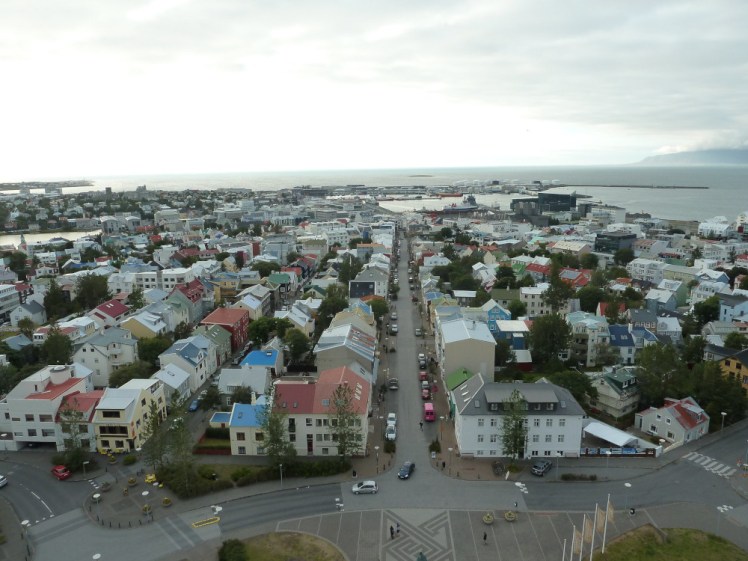
Back down on the ground, there’s a cafe opposite called Cafe Loki and this is a great lunch option. It serves some of the more traditional Icelandic meals – lots of rye bread and fish, lamb, soup and an option to try the fermented shark and Black Death. They also do bagels with less traditionally Icelandic fillings and a unique rye bread ice cream.
Walk back down Laugavegur towards Lækjargata, the street that runs perpendicular to Laugavegur with Harpa, the great glass conference centre and concert hall, on your right and turn left. Down here you’ll find the Tjornin, the City Pond and although it doesn’t appear on most people’s first-time itinerary, I enjoy seeing the waterfowl splashing and honking and squawking down here. The glass building on stilts on the far side of the pond is the City Hall and Tourist Information Centre and if you walk through the buildings, you’ll find the administrative heart of Reykjavik – a grassy square with a statue in the middle of it is Austurvöllur, the two storey black basalt building is the Parliament (yes, if you really want to, it’s possible to go and peer through the windows but it’s not terribly polite, so don’t do it) and the small church next to it, believe it or not, is Iceland’s national cathedral. Now you see why large events are held at Hallgrímskirkja. At the end of the road is the Settlement Exhibition but we’re not going to go there right now.
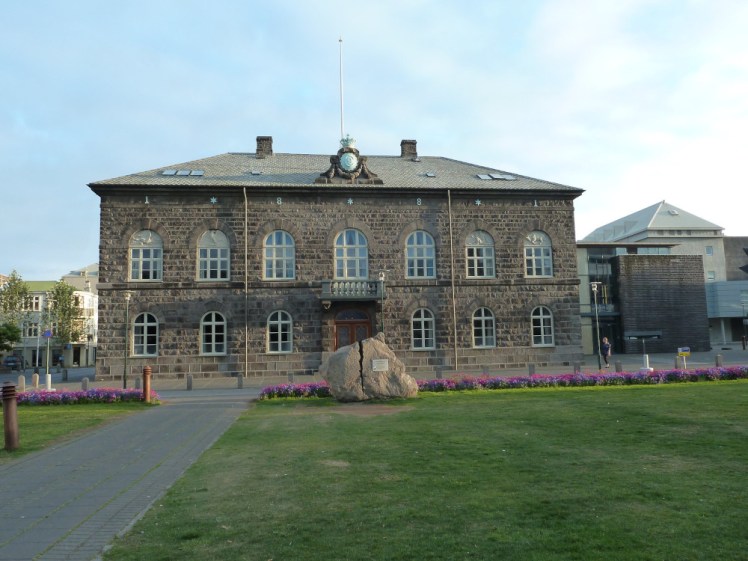
If it’s not time to check in to your hotel yet, I’d wander around this area. There’s a great bookshop/souvenir shop a couple of streets back, there’s an entire shopping district and a museum my mum calls “that certain museum”. Walk up the road to Harpa and enjoy it from both outside and inside.
Check in to your hotel and get comfortable. When you’re ready to emerge for the evening, the glass shopping district contains the Hafnartorg food hall or you can walk along Laugavegur until you reach Hlemmur food hall, or you can walk through the harbour which has an assortment of restaurants and yet another food hall. If you’re after fine dining, Iceland’s flagship (read: incredibly expensive even by Iceland standards) restaurant is Dill, next to the Bonus cheap supermarket on Laugavegur. Or you can go to the cheap supermarket and see what you can assemble in a hotel room. A loaf of bread and some meat or cheese is going to be a really good lunch option anyway, especially if you’re going on a tour over the next few days.
Late afternoon arrivals or the rest of the day for the early birds
If you’re coming from Europe and arriving on a mid-afternoon or early evening flight, this is probably around the time you’re arriving in Iceland. Take the Flybus into Reykjavik, drop off your luggage and find something to eat.
If you’re in Iceland in winter and you’ve arrived early enough in the day, this is probably a good opportunity to go on a Northern Lights trip. If you’ve got your own car, have a look at a Northern Lights app to see where the best place is to go, otherwise find one of the hundreds of tours. The guides are experienced at driving in Icelandic winter conditions and they know where’s the best place for the best opportunity to see the Northern Lights. A word of warning that I don’t think people give enough: they’re extremely skittish beasties. You need the sky to be clear and preferably for it to be cold and crisp weather and you need to be away from light pollution, although I hear tell of a lot of people who’ve just walked down to the edge of the harbour in downtown Reykjavik and seen them. But the Northern Lights only come out if they feel like it, no matter what the conditions are like. At one point, I was on a 20% hit rate. Most tour companies in Iceland will give you a voucher to try again the next night if you don’t see anything, which is why I recommend doing it as early as possible. If you leave it until your last night, you’re not going to get to try again. The big companies will let you come back within two or three years but not everyone’s going to be able to do that.
For your evening entertainment if you’re not aurora hunting, a really popular option is the bookshop Hús máls og menningar which has live music in the evenings. To be honest, I remember it when it was more or less a full time bookshop, whereas it’s more of a bookshop-themed live music venue and coffee shop these days. There are an abundance of bars in downtown Reykjavik – the Lebowski Bar is popular with tourists, although not so much with the locals, Magic Ice is an art gallery and ice bar and if you want something a bit more old-fashioned, Kaldi is proper pub-esque with its own micro-brewery. I, personally, would spend my evening at Sundhöllin, the public pool between Hallgrímskirkja and Snorrabraut – geothermal bathing on a budget, with outdoor and indoor geothermal heated lane pools, rooftop hot pots, sauna, steam room, children’s pool etc.
Day two
Now, I’m calling this day two but there’s no reason whatsoever why you have to do any of this in the order I’m setting out here. Come to that, there’s no reason whatsoever why you have to follow my itinerary at all.
On one of your days, which for the sake of the blog I’m calling day two, get out of Reykjavik and see the Golden Circle. It’s touristy but it’s for a reason. There are hundreds of companies running Golden Circle tours. Google it. There’s no point in me giving you direct links when there are so many options depending on what you’re after. The cheapest options are the large coach tours but there are smaller minibus tours and you can book a private tour. They can last the whole day, eight or ten hours, or you can squeeze it into an afternoon or even an evening. There’s plain Golden Circle tours or there’s every add-on you can imagine. Golden Circle & Blue Lagoon. Golden Circle & Friðheimar tomato farm restaurant. Golden Circle & Northern Lights. Golden Circle & Glacier Snowmobiling. Golden Circle & Lava Tunnel, Golden Circle & Sky Lagoon, & ATV, & Horse Riding, & Buggy Adventure, & Snorkelling, and and and. That’s just from looking down Reykjavik Excursions’s Golden Circle page.
There are three major stops on the Golden Circle which your tour will definitely cover, although not necessarily in the same order. If you’re driving, anyone who says “most people do it in this direction, so you should do it in the opposite direction for minimal crowds”… well, that’s not something I’ve experienced. People are absolutely started to crowd around Geysir by 7.30am and they’ve still there are 9.30pm and I’ve never noticed anyone doing it in a particular order so treat that as a contemptible myth.
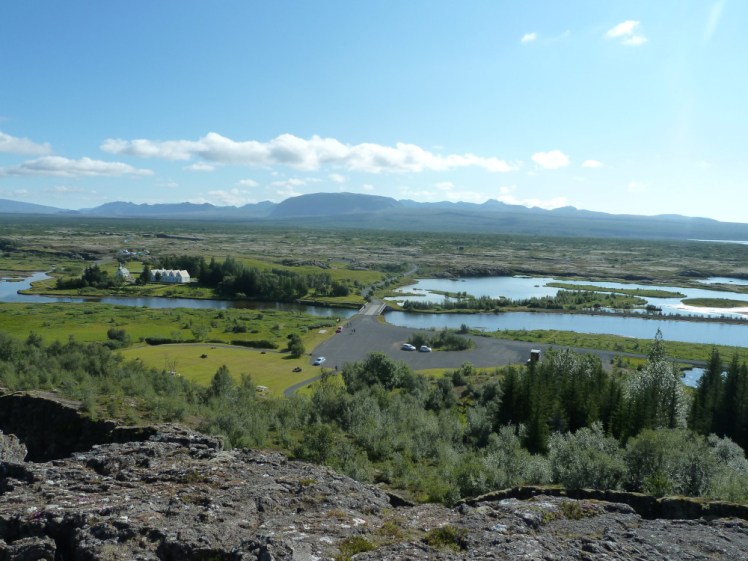
The three stops are Geysir, where pools of water boil and bubble and Strokkur erupts a column of boiling water every ten to ten minutes; Gullfoss which is a massive waterfall; and Þingvellir, a National Park, rift valley and home to Iceland’s ancient Parliament – the name means The Parliament Fields. Gullfoss and Geysir both have large restaurants and souvenir shops, Þingvellir’s visitor centre and cafe is small and it’s less obviously exciting than the exploding water and the big waterfall so a lot of tourists regard it as little more than a toilet stop and photo op before getting back on the bus, which is a shame because it’s far and away my favourite stop. If you want to scuba dive in Silfra, it’s right here in the park. You’ll need to do it with a tour – no matter how good and experienced a diver you are, you can’t just turn up with your own kit and jump in. If you’re the least bit claustrophobic, Silfra itself is actually a reasonably wide and pretty deep pool full of absolutely clear water but the drysuits you’re required to wear are sometimes a bit much for people. I absolutely couldn’t wear something that tight around my neck. I’d spend the entire trip pulling at it, it would fill up with water and I would sink to the bottom. It’s also not as literally “between two continental plates” as they sell it as. The walls of the rift are not the plates. If you’re at the viewpoint by the visitor centre, that’s the edge of the North American tectonic plate and some three kilometres away, on the other side of the lake, is the Eurasian plate. The whole park is a geological no-mans-land. If you’re walking around in it, you’re already walking between two continental plates.
If you’re driving yourself, there are plenty of other places to stop. If you’re on a tour, every tour guide seems to have their own additional places to show off. Instead of yet another wall of text, I’ll list some of them.
- Friðheimar, tomato farm and restaurant in a greenhouse. Book well in advance
- Efstidalur II, cattle farm with restaurant overlooking the stables and ice creamery
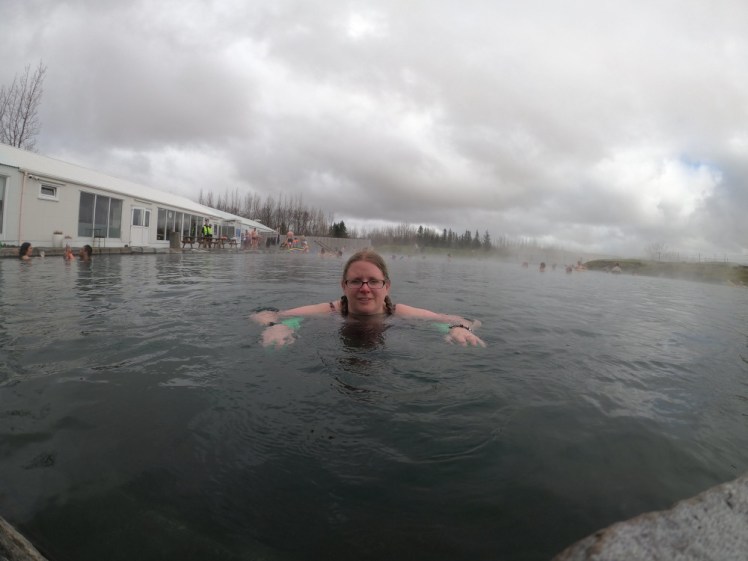
- Secret Lagoon, no frills geothermal pool fed by a small geysir
- Laugarás Lagoon, Iceland’s newest luxury lagoon
- Laugarvatn Fontana, another geothermal lagoon, closed for complete rebuilding from the ground up between autumn 2025 and spring 2026
- Geothermal bakery, at Laugarvatn Fontana and open throughout, where you can dig up a loaf of rye bread cooked in the natural hot sands of the lake shore and eat it with butter and salmon
- Kerið, a flooded volcano crater that you can walk around
- Brúarfoss, a bright blue waterfall within the flow of the river itself
- Faxafoss, a waterfall with a “salmon ladder” to help the salmon pass the waterfall to get upstream to breed
- Skálholt, cultural and religious centre, home to the relics of Þorlákur Þórhallsson, the patron saint of Iceland and site of the execution of the last Catholic bishop of Iceland
If you get back in time and it’s winter and you didn’t do the Northern Lights last night, now’s the time. Otherwise, I’d either use the evening to go to Sundhöllin or to the Sky Lagoon, which is a short transfer or taxi (or even a public bus ride) from downtown Reykjavik. Tourists on the Facebook group these days argue over whether the Blue Lagoon or the Sky Lagoon is better and most of them agree that they prefer the Sky Lagoon (I utterly disagree; I think it’s far too small for the number of tourists who flock there and I hate that they sell “you can only go in the sauna and steam room once” as an exclusive Seven Step Ritual when even the tiniest village pool will let you go back and forth to the sauna and/or steam room as many times as you want. Another downside: the Sky Lagoon’s cheapest most basic entry package is more expensive than the Blue Lagoon’s cheapest most basic entry package, and finally, it’s the only lagoon in Iceland that isn’t owned by an Icelandic company or family. It’s owned by Colorado-based Pursuit Attractions) or go and enjoy Reykjavik’s bars.
Day three
The next thing that all tourists want to see is the South Coast. Again, there are tours galore, from the straightforward sightseeing along the coast and back to the ones that include adventures. You can hike, climb or snowmobile on a glacier, there’s a massive zipline somewhere in the vicinity of Vik, there are ice cave tours, you can go horse riding, there’s the LAVA Centre at Hvolsvöllur, the Lava Show at Vik, a detour to Seljavallalaug, Iceland’s oldest swimming pool, but for the purposes of this post, I’m just going to do the basics.
Whether you’re self-driving or going on a tour, the main spots to see on the South Coast are:
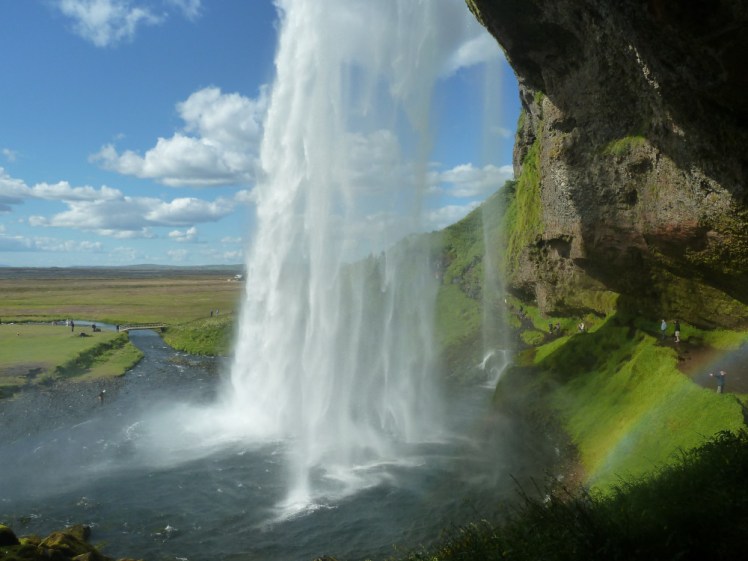
Seljalandsfoss, a tallish thin waterfall that’s carved out a cave into the cliff behind it. You can walk behind this for a unique perspective on the waterfall but be prepared to get very wet. The ground is muddy, slippery and uneven and there are metal mesh steps at each end, so maybe something to avoid if you have any mobility issues. Gljúfrabúi, a waterfall in a canyon a five or ten minute walk along the path, is often called a secret but I promise you, it’s the worst kept secret ever. You will get pretty wet going into its cave and if you’re with a tour, especially a large one on a full-size coach, you may not have time to visit Gljúfrabúi.
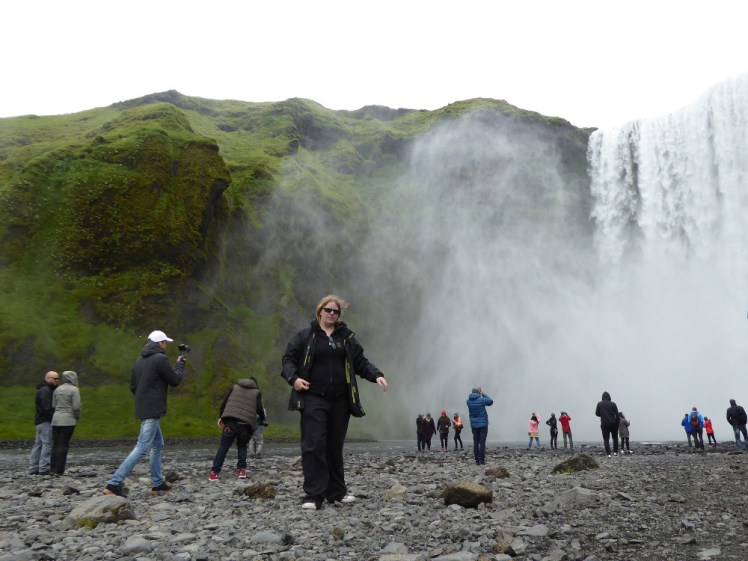
Skógafoss, a massive square powerful waterfall. There’s supposed to be a treasure chest under the fall but it’s just too powerful to get close enough to find out. You can get close enough to this one to get drenched too if you want to but you can’t walk behind it.
Reynisfjara, aka “The Black Sand Beach”, as if 99.9% of beaches in Iceland aren’t black sand. This was always a popular spot because of its big basalt cliff and cave but the waves are extraordinarily dangerous here and this winter, a lot of the beach has been washed away, leaving the cliff inaccessible because it’s now well out into the sea. I’d stop here just to see what it’s like these days but if you’re expecting the beach you’ve been seeing in pictures for years, you’re going to be disappointed.
Vík, a small town popular with tourists for being the only major settlement within a couple of hours. This is where you’ll want to make a toilet stop and maybe get some fuel. It’s also home to a massive souvenir shopping centre.
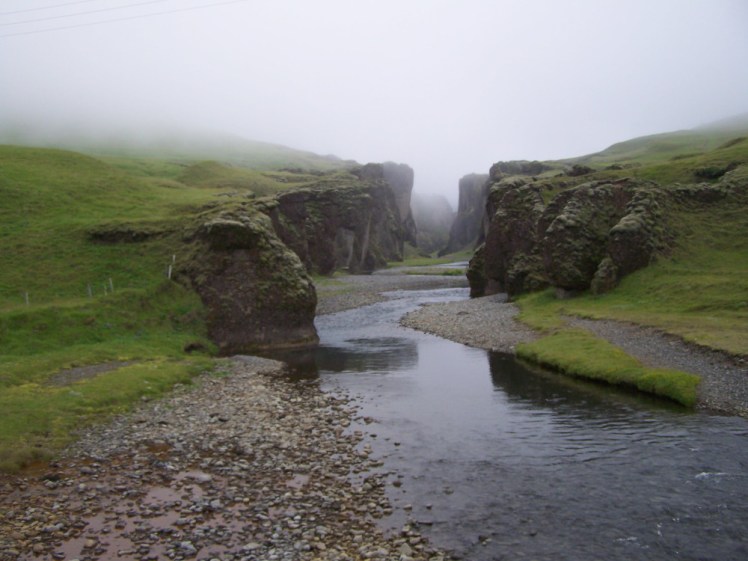
Fjaðrárgljúfur, aka “the Justin Bieber canyon”. Your South Coast tour probably won’t stop here but if you’re driving, you can detour here. It seems to have dropped a little in popularity since Instagram discovered Stuðlagil, which is right up in the east and far too far for your short first trip to Iceland but it’s still pretty.
Skaftafell, a national park hemmed in by three glaciers, home to Iceland’s largest campsite and a good base for exploring the Vatnajökull area. Your tour may drop you off here to go and have adventures with the experts – you can do a glacier hiking adventure from here or a trip to Jökulsárlón, or your tour might continue or you might drive yourself. If you’ve got the time – and it’s already a long day, so you probably haven’t – it’s about an hour and a half round trip to hike up to Svartifoss from Skaftafell.
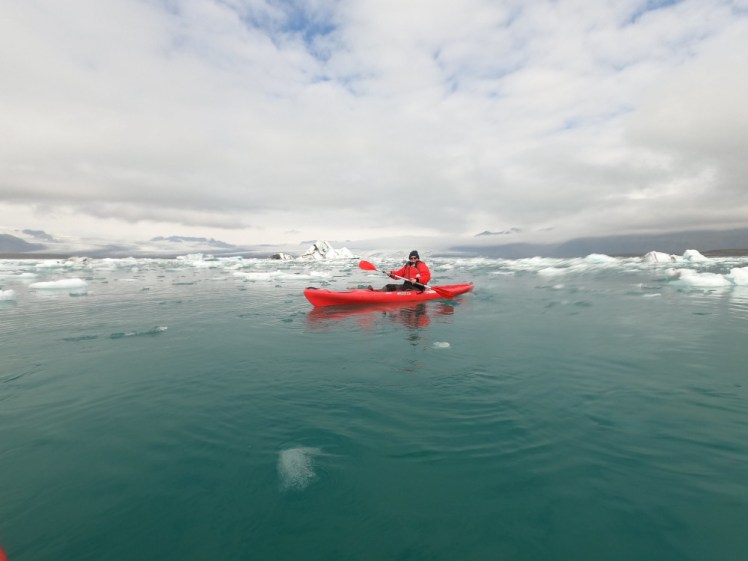
Jökulsárlón, the glacier lagoon and Breiðamerkursandur, aka Diamond Beach but I repeat what I said about barging into someone else’s country and renaming everything. Jökulsárlón is a spectacular place to just walk around and look at – it’s a glacier lagoon and proto-fjord, where the glacier (and that’s every inch of five miles away, believe it or not) has carved out a deep pool into which it regularly drops chunks of ice. They’re stripy because they’ve got layers of volcanic ash in them, as well as layers of summer (white) and winter (so clear they look blue) ice. They bob around the lagoon until they melt enough that they can escape out to see, where they break up and wash up on the beach. If you have the chance, and you’ve preferably booked in advance, you can take three different boat trips around Jökulsárlón – the most popular and least expensive is the amphibian boats, which pick you up from a jetty on solid land before driving into the water. The Zodiac tours are high speed rigid inflatable boats which can cover larger areas and get closer to the ice. I personally enjoyed the kayak tour but that’s inherently more effort than sitting on a boat that someone else is driving.
On a day trip, this is more than enough – even the bare minimum, pausing to take a photo and immediately moving on, is probably ten to twelve hours returning to Reykjavik at the end so if you really want to dive into the South Coast and do everything, you’ll want to find somewhere to stay overnight and make at least two days of it.
Day four
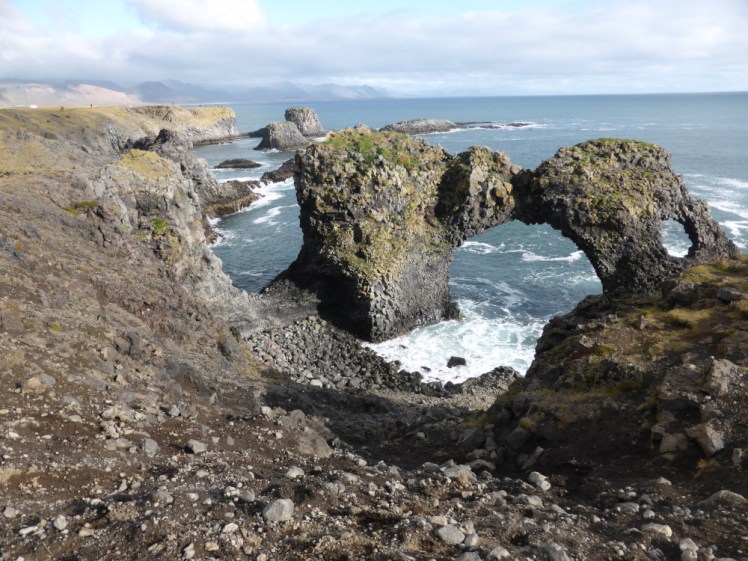
The Snæfellsnes peninsula has become surprisingly popular in recent years, with almost everyone recommending it in the Facebook group when you ask “What do I need to do?”. I liked it back in 2012 because it was unknown, which for me meant that there was no pressure, there was no “you have to tick off this, this and this”. Some call it Iceland in miniature but it’s not really. It’s pleasant and pretty and wild and there’s very little in the way of towns and souvenir shops and other trappings of tourism and commerce.
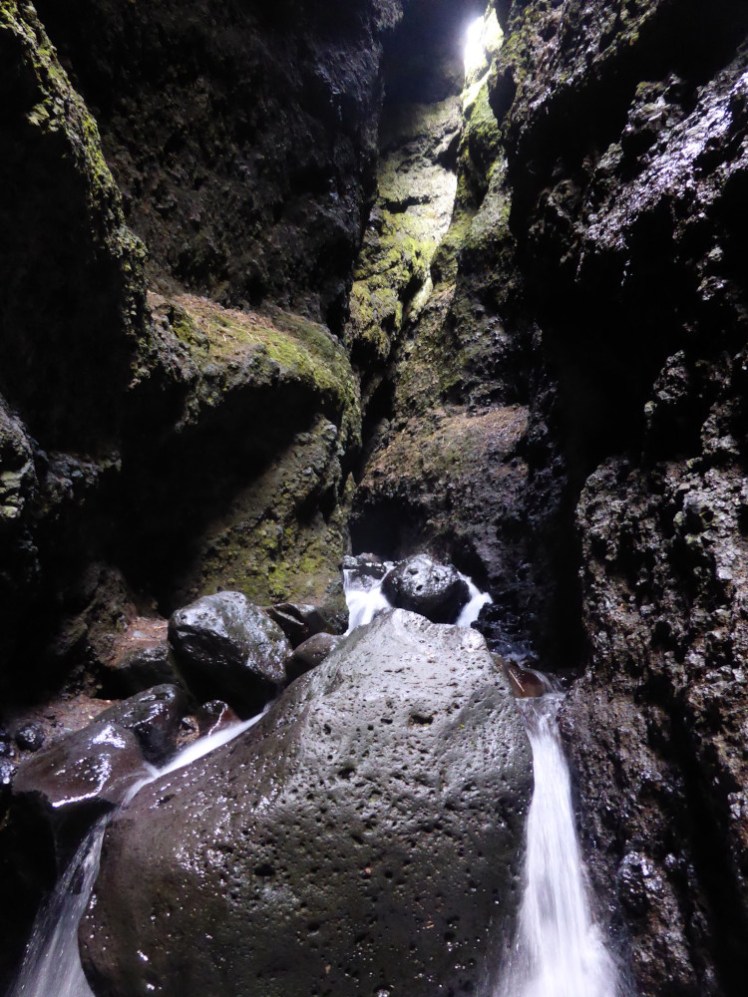
If you’re on a tour, it will drive you up the west coast, probably along the south coast of Snæfellsnes, stopping at Arnarstapi, Djúpalónssandur, Ólafsvík and a photo stop near Kirkjufell. If you’re doing it yourself, I’d stop at Gerðuberg, an inland cliff of basalt columns, Bjarnafoss, Rauðfeldsgjá, Hellnar, Saxhóll, Stykkishólmur and get back to Reykjavik absolutely exhausted. Again, this is something that is probably best stretched over two days if you want more than the most superficial look at the obvious attractions.
Day five
Now we’re going to spend a day in Reykjavik. Anything leftover from day one which you haven’t done, including your souvenir shopping or the Blue Lagoon, do it today. There are literally thousands of souvenir shops in the downtown area and rather than make a list in advance of what you “should” buy as a souvenir, think now about what reminds you of what you’ve seen and done and what you want as a souvenir. If you really want a traditional Icelandic wool ring-necked jumper, most of the ones you’ll find in souvenir shops aren’t genuinely Icelandic – for the real thing (at the real price – expect to pay $300-500) head to the Handknitting Association on Skólavörðustígur. Walk along the seafront to Sólfar, the Sun Voyager in English, the gleaming steal sculpture of the skeleton of a Viking longship, taking in the views across the bay as you do.
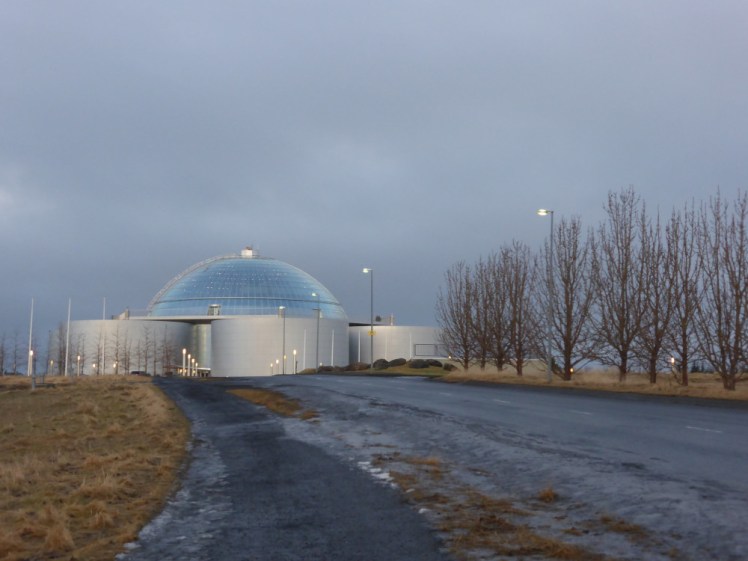
The Facebook group overwhelmingly recommends Perlan, which is an exhibition centre based in that weird building on the hill, the one that looks like six water storage tanks topped by a glass dome, because that’s exactly what it is, or was. I don’t know if any of them still contain so much as a drop of hot water. It’ll give you a good taste of Iceland’s nature, from its Northern Lights 360 theatre, to its actual ice cave to its immersive volcano show, but it’s also got exhibitions on volcanoes, birds, marine life, water, glaciers and you can go out on to the roof for views across Reykjavik. You’ll want a good couple of hours for this.
If you go out to Grandi – I’d walk but the bus is a good option – there are an assortment of large exhibitions (aka good places to escape terrible weather!). FlyOver Iceland (owned by Pursuit, who own the Sky Lagoon) is a 3D helicopter “ride” over the sights of Iceland – it’s pretty short but it’s spectacular. I love the Lava Show, where they pour actual lava down a steel slide into a theatre. Whales of Iceland, where large models of marine life hang from the ceiling of a vast blue-lit warehouse so you feel like you’re walking among whales and dolphins, is a great way to make sure you see them even when they’re not showing up for real whale watching tours. The Saga Museum will walk you through the history of the Settlement and some of the major sagas and you can dress up in costumes at the end. And Aurora Reykjavik will teach you everything you ever wanted to know about the Northern Lights.
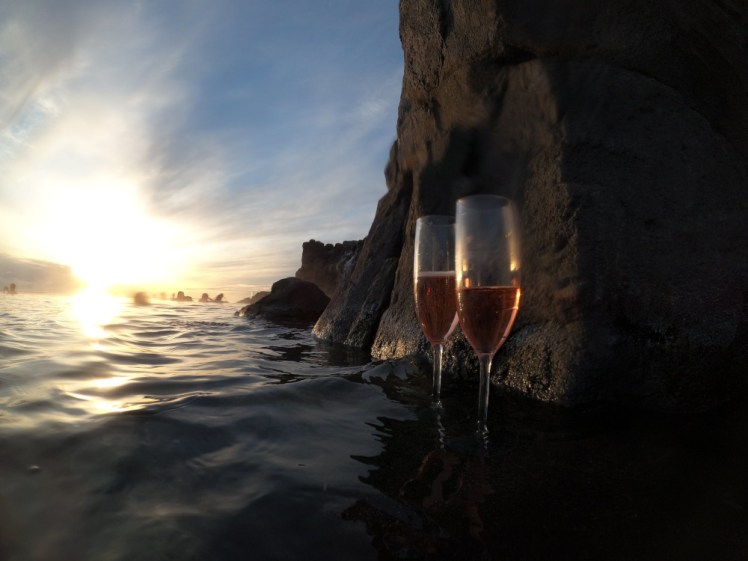
If you haven’t done the Sky Lagoon yet and you want to, maybe go and do that but I’d take the number 14 bus to Laugardalslaug, the big pool complex where you can swim in a warm geothermal 50m lane pool or try out four different temperature hot pots or the saltwater spa or just enjoy the social pool. This is another thing that’s good to do in bad weather – having swum here in a blizzard so thick I couldn’t see the other end of the pool, you’re warm and wet and you can just laugh up at the bad weather.
Go home
And that’s it for your must-dos in Iceland for your first trip. You can come back dozens or hundreds of times and not run out of things to do but if you’re looking to tick off the best or most popular things, this itinerary covers them. Remember, you’ll need a prebooked Flybus ticket to get back to the airport, you’ll need to be waiting at the bus stop you’ve told the company you’ll be at, half an hour before the bus is due to depart (it needs that half hour to do the pickups around town) and plan so that you’ll arrive at the airport at least two hours before departure. Security isn’t that much slower than anywhere else but non-Schengen flights to North America and the UK need to go through passport control at D Gates – don’t wait until your gate is announced, it will absolutely be at one those (check the departure boards for other flights to your country to be sure it’s D and not C but I’m 99% sure it’s D) but if you don’t end up in the queue with everyone getting on a non-Schengen flight in the next hour, that will make your airport experience smoother. But bear in mind there’s very little seating at D Gates, although there are shops and cafes and toilets, so you don’t want to get there too early. It’s a balancing act.
 I Am A Polar Bear