Last night I had my ninth out of ten lessons in the Norwegian for beginners: module one class. I knew that I wanted to write this before it even started and I’ve written pages and pages about it and deleted it. So now, with the end in sight, I’m starting over.
I’m not actually a beginner in Norwegian. I’ve been learning it on and off – a lot more off than on – for nearly ten years with Duolingo, Mondly, Drops, a virtual course with Future Learn, the Teach Yourself books and a few phrases learned straight from the phrasebook. I’m not fluent, not by a long way but I’m reasonably comfortable with the peculiarities of a lot of the pronunciations, I’m comfortable speaking it and there was very little new to learn during the first few weeks. But I know that Duolingo and a couple of evenings on Teach Yourself do not an advanced speaker make and I finally decided that I was going to do actual lessons with an actual human teacher and that despite my previous experience, although I’m better than “person who has never learned a word of Norwegian in their life”, I’m probably not good enough for beginners module two – although I questioned that a lot in the first few weeks!
I learned with City Lit, an adult education centre in London that does a lot of online courses. I did my Russian course with them in 2022, the one where we all turned into Basil Fawlty on week 6, the day that Putin invaded Ukraine and we spent the rest of the course saying to ourselves “Do not mention the war!”. Had it not been for that, I might have continued the Russian, which I find a very interesting language and one that doesn’t particularly lend itself to learning independently, but it didn’t feel in good taste back then. So, four years later the language bugs bites again and I decided it was time to actually learn some Norwegian.
We started as a class of nine and then two people never came back the second week. Did they discover this was the wrong level for them? Did they decide a £50 textbook that the teacher didn’t even want to use on top of the price of the course was just too much? Was there something physically stopping them ever coming back? Of the remaining seven, most of the others had some practical reason to learn Norwegian, such as a partner or family. Me, I just fancied it because it seemed fun. Actually, that’s not true. It’s been so long that I’d almost forgotten why I started in the first place. In 2016, I had some idea of moving to Tromsø for three or six months and realised it would be a lot easier to do if I could speak some Norwegian. I’ve long abandoned that idea but I still enjoy the Norwegian. It’s a language that feels good in my mouth, if you see what I mean.
Classes generally took three parts. Part one was going over the homework. It’s been four years since I’ve had homework and fifteen before that. For the Russian course, you had to email the homework to the teacher who would correct and comment on it but now, the teachers aren’t supposed to have direct contact with the students, although some of them struggled to get into Google Classroom the first couple of weeks and had to request the homework to be sent to them. You have to set up a City Lit Google Microsoft account and then refresh your password and then turn it into a Google account and long story short, that wasn’t as easy as it should have been. But once everyone was in, teacher Eva would put a document into Classroom on Thursday or Friday, containing the work we’d done the previous Wednesday, any vocab or points that she’d written down in it during the lesson and the homework. Then the next week we’d go over the homework together.
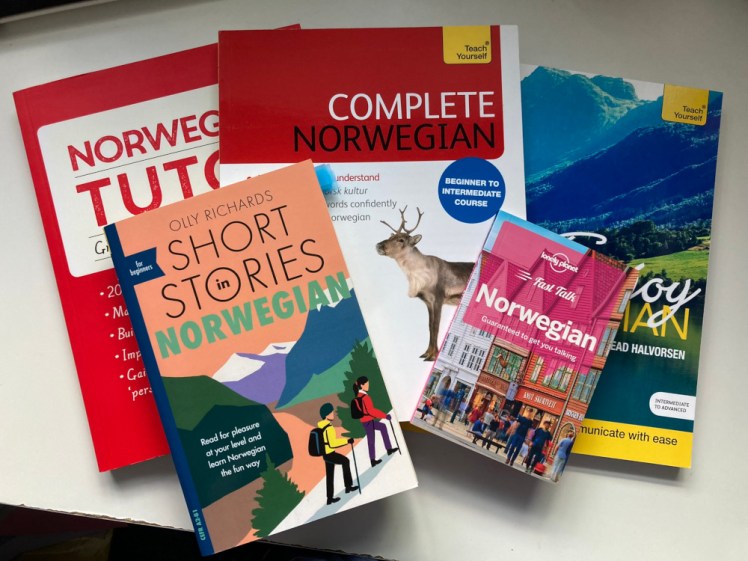
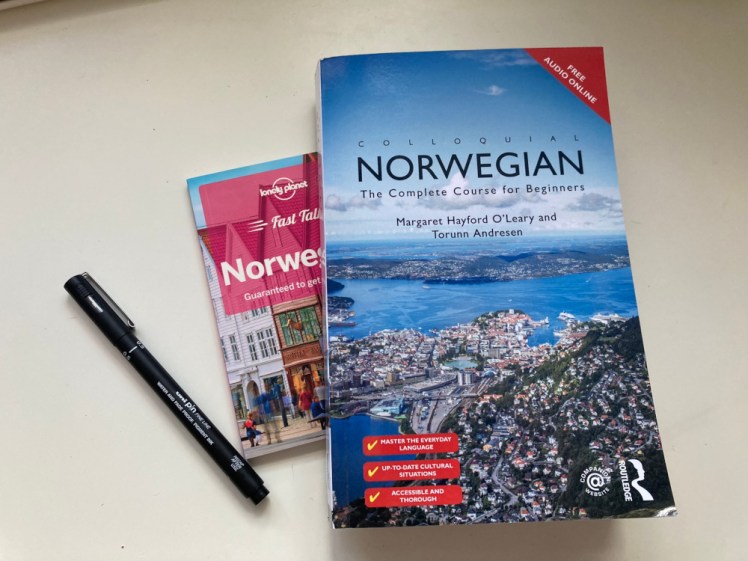
Part two was usually reading a new text and finding new vocab and grammar. This course, unless week ten takes a sharp turn, has focused mostly on vocab. Verbs especially, and in the present tense. I’m familiar with articles and plurals and how those mash together but we’ve not touched them, except when Eva happened to mention that et nouns with one syllable don’t acquire the -er suffix when they become plural, but none of us are supposed to know that happens, so it shouldn’t have meant anything to us. I mentioned the book: City Lit decided that we’d use a certain textbook and the teacher disagreed. Because we’d all been required to buy it, she’s put some exercises in it for homework (twice, maybe three times) but she prefers to work from an obscure out-of-print book that we can’t buy, so she puts scans of various pages in our documents. That’s where all our class work comes from and the vast majority of our homework.
Part three was usually something else, something more grammatical. For three weeks we learned numbers (1-10 first, 11-20 and then 21-a billion), we did subject pronouns early on (I, you, he, she etc) and then Eva threw most of us by introducing object pronouns (me, you, him, her etc) and we’ve touched a little on word order (the verb always comes second otherwise “it gets angry”). This week, week 9, we did telling the time. Norwegian deals with half hours the same way that most Northern European languages do, ie it’s half to the next hour, rather than half past the previous one, 3.30 is half-four. One of the students speaks Afrikaans and the Norwegian way made far more sense to him than the English way ever has but it definitely bewildered a few people. And then the 20s and 25s are five or ten to or past half the next hour. So 3.20 is ten to half four and 3.35 is five past half four. I must have come across this before and I’m very capable of accepting “Oh, this is just the weird way this language does this and I would never have guessed it if left to my own devices but I’ve been told and I just have to remember it” but the group chat was flooded with “this is really hard!”.
That’s been another interesting thing, the rest of the group. As a person with a double language degree, who’s done a couple of courses in other languages and self-studied more like a magpie with a very short attention span, I don’t necessarily approach the lessons in the same way as people who haven’t done that. A panicked reply to the homework of “Oh, were we supposed to write it in Norwegian? I’ve written it in English” will sit forever somewhere in my brain. Some of them are very openly uncomfortable speaking a new language in front of other people; one of them just hasn’t picked up the pronunciation of certain words we’ve been using since week 1 and one of them has a habit of asking what a new word means five minutes after we spent a full five minutes as a group discussing and debating its meaning. Honestly, with the rate the vocab can come through, it can be very difficult to catch all of it but it’s always the words we discussed and never random words Eva flung at us at lightning speed and then moved on from.
For the first few weeks, the first four or five or maybe even six, I seriously wondered if I was wasting my money here. We introduced ourselves again and again – our names, where we’re from, what languages we speak and I already knew all this. Ok, it was a bit of a refresher after taking a long break from Norwegian but it felt like a lot of money to not really actually learn anything. Then we started talking about what we do, both work and hobbies, which is something you’re likely to actually use and also something that’s generally too specialised to turn up in most textbooks or phrasebooks. We have a secondary school science teacher, a graphic designer, a fine art insurer, a diabetic podiatrist, a screenwriter/script supervisor, a dentist and me, a researcher in a field that invariably gets a “…what?” when I say exactly what I do. So now I can cheerfully tell you that I pull teeth and that it takes a long time to write a manuscript and that I train with my girlfriend.
Other than that, the nature of having lessons with an actual human teacher (it’s online; I was about to say “in-person” but it’s not) is that she drops in random vocabulary. Quite apart from us all acquiring an excellent repertoire of “Perfect! Very good! Fantastic!” and so on, which is the response to us getting anything right, we at least recognise things like “it’s your turn now” and “try this” and then we get stuff like “utepils”, which is the beer that Norwegians drink outside when it’s sunny, a rude phrase made innocent by swapping one of the words for the name of the skier who cheated on his girlfriend which is one letter different from the rude word in the manner of the early 2000s brand FCUK, the word “flood” which is what prevented the expensive textbook from getting to me in time for the second lesson and the fact that you call an animal, even a pet “det” or “den” rather than “han” or “hun” (it rather than he/she).
So, as of week 9, was it worth it? Yes, we’ve definitely picked up some new stuff in the last few weeks and I’ve enjoyed the random words and phrases and the glimpses of insight into the Norwegian psyche. I think the rest of the class have enjoyed it too – there were lots of comments on increased confidence when we talked about it last thing at the last lesson but I think there’s one person who’s kind of finding it frustrating because it’s focused on the basics, like being able to talk to people when you go to Norway, rather than on the finer points of grammar or any tenses other than the present. But it’s ten weeks – how much French did I learn during my first term at secondary school? Mr Warbis being excellent aside, probably not much more than “je m’appelle” and “ça va” and “bof”. A class of seven adults who’ve paid to be there is very different from a class of up to 30 eleven-year-olds who don’t particularly want to be there, of course but you can’t expect to know everything about a brand-new language in fifteen hours.
What I think I’ve mostly got out of it myself, is being required to stop everything and sit down for an hour and a half on a Wednesday evening to learn Norwegian. I won’t be doing module 2, which is partly because I do think it moves a little slowly for me but it’s partly because there will be at least three Wednesdays I can’t make, and that’s a lot to miss out of a ten week course. Keeping ten Wednesdays free in a row is tricky enough but doing it in the summer and then potentially doing it again in September – one, it’s too much of an intrusion in my life to consistently keep a single evening free for basically the whole year and two, I’m already at Brownies and Rangers two nights a week and losing a third night out of every week is just too tiring.
What I’m considering is looking at what the second module will cover and asking those of the group who are doing it to just let me know what they cover each week so I can keep it up myself – not “will you send me the documents that you’ve paid for and I haven’t” but “this week we did telling the time, nouns you find in a hotel reception and verbs you might find in and around a cafe” and then I might jump back in for the third module in September. I’d like to keep up the habit of sitting down for an hour and a half a week and studying – preferably on Wednesdays but I’m able to be flexible if I’m doing it myself. Study what the class tells me they did but also just work through my Teach Yourself book. I’m reasonably bright and reasonably accustomed to learning languages: what I really need is the habit.
Massive plot twist in the last lesson: as far as the teacher is concerned, next term’s is the same class, so she won’t be changing the code on Google Classroom, which means anyone in beginners 1 will have access to all the material in beginners 2. Technically, we’ll have access to the lessons themselves too – the joining link is posted in there weekly so the only thing stopping me joining a course I haven’t paid for is me. Three weeks of dithering over whether I feel ok looking through the material and doing it myself – which the teacher has explicitly said is ok – or whether I just ask “what topics did you cover tonight, guys?”.
So that’s my Norwegian course: what I really got out of it is a long way from what I expected and I’m debating returning.
 I Am A Polar Bear