First thing, straight up – in case you thought I got all dressed up in a harness and tied myself to a couple of hundred metres of dynamic rope, I climbed Tower Bridge from the inside, not the outside, using a ticket I bought online last week, just like every tourist who’s ever visited it. In my 20s, I might have fancied some of the climbing experiences a Blue Peter presenter gets to do but as a grown-up, I’ll happily take the conventional route up.
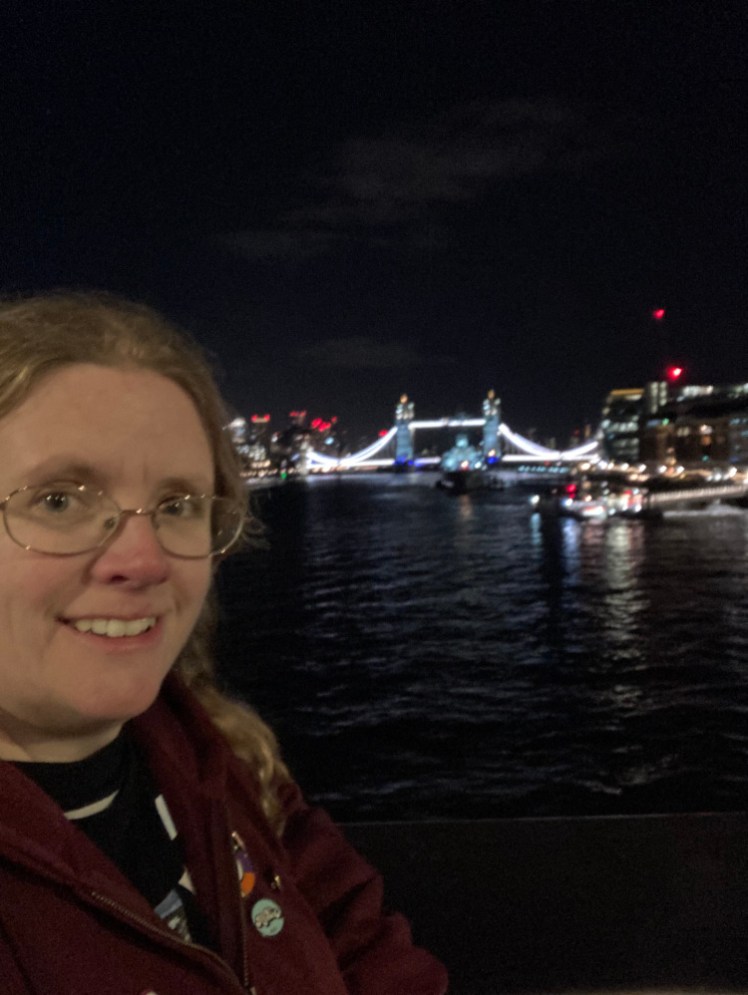
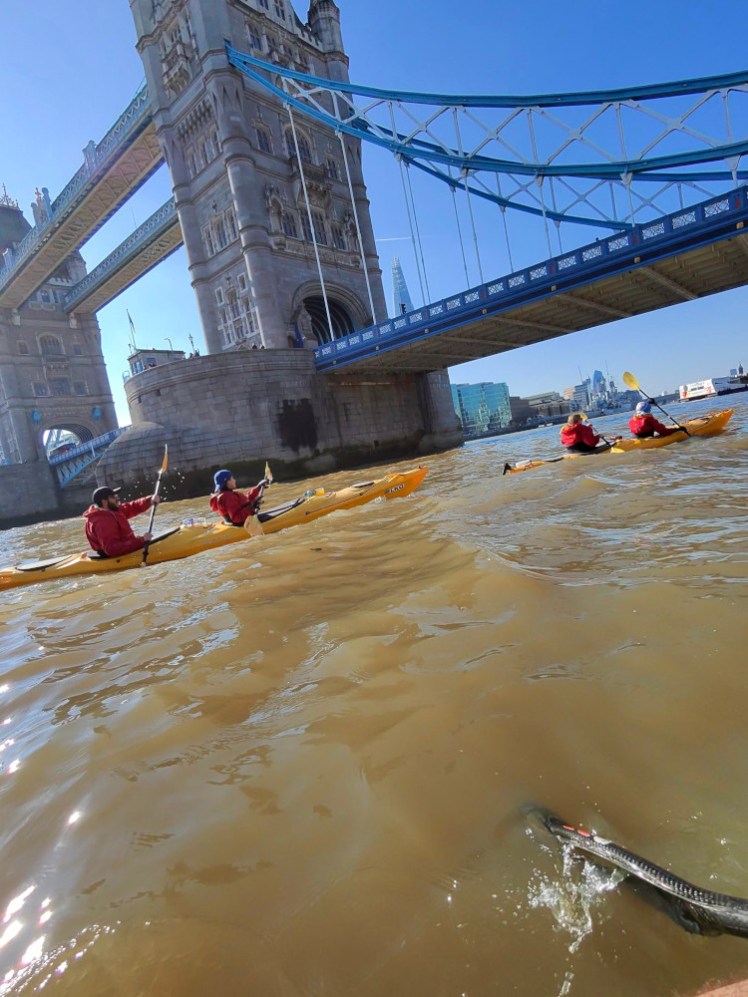
It was, as so many things in my life are, for a badge. “Climb a tower (or a climbing wall)” and I decided it was time to do this thing I’ve just never got round to doing. I’m pretty sure someone at work did it not long ago and recommended it and that was the first time I realised there could be more to visiting Tower Bridge than either crossing it by foot or bus or sailing underneath it in a Clipper or a kayak. A visit involves going up the North Tower (the one next to the Tower of London), crossing the high level walkways to the South Tower and then going to the engine rooms to see the Victorian hydraulic engines that used to lift the bascules, the central lifting part of the bridge. You can just turn up and buy a ticket (and that seemed to be working just fine for most people) but you can also buy a timed ticket online.
When you arrive, there’s an absolute mishmash of ropes marking out holding areas for groups, buying tickets, prebooked tickets for the current timeslot and prebooked tickets for the next timeslot. Everyone seemed to be in the wrong place and everyone, whether they had a ticket or not, seemed to be getting directed straight in via the buying tickets line. Once you get inside, there’s the most indifferent bag search I’ve ever experienced – you open the bag and someone glances in that direction and says it’s fine, so as long as you don’t put your bomb or your knife or your whatever right on top, you can take it whatever you like! Likewise, because it’s a relatively restricted space, there’s a limit on bag sizes which isn’t enforced either. My bad is easyJet personal item size, which is pretty much exactly the same as Tower Bridge maximum size but whereas easyJet would probably be checking it wasn’t a single millimeter over in any direction, Tower Bridge doesn’t even blink. Makes life easier for me but I’d just spent two days just wondering if it was going to be a problem.
Once you’re past bag search, show or buy your ticket and then you can take either the stairs or the lift to the top of the North Tower. There’s free wifi and a QR code to listen to an audioguide but as I’m one of those rare people who doesn’t routinely carry headphones, I couldn’t do that. I would have liked to take the lift – straight up to 33.5m with no effort! – but the badge clause said climb, so to the stairs!
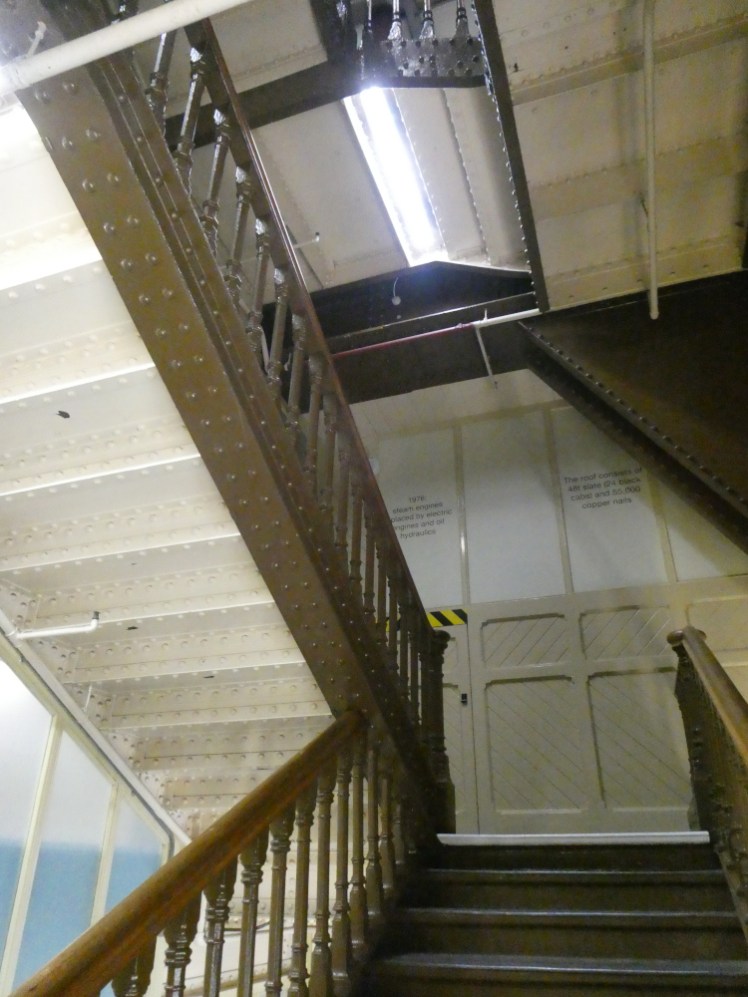
There are 206 steps up the North Tower. The first part is the worst; spiral stairs with no proper stopping places but then you reach a landing just under halfway up with some information about sinking the cages that form the foundations and that makes a welcome break. The cages, called caissons, were sunk into the riverbed by divers in old-fashioned metal Victorian diving suits. Under their own weight, they sank down to just 8m into the mud and clay, which doesn’t feel enough to support something this size, then divers dug out around the sides of them and eventually the water was pumped out ready to start building the piers.
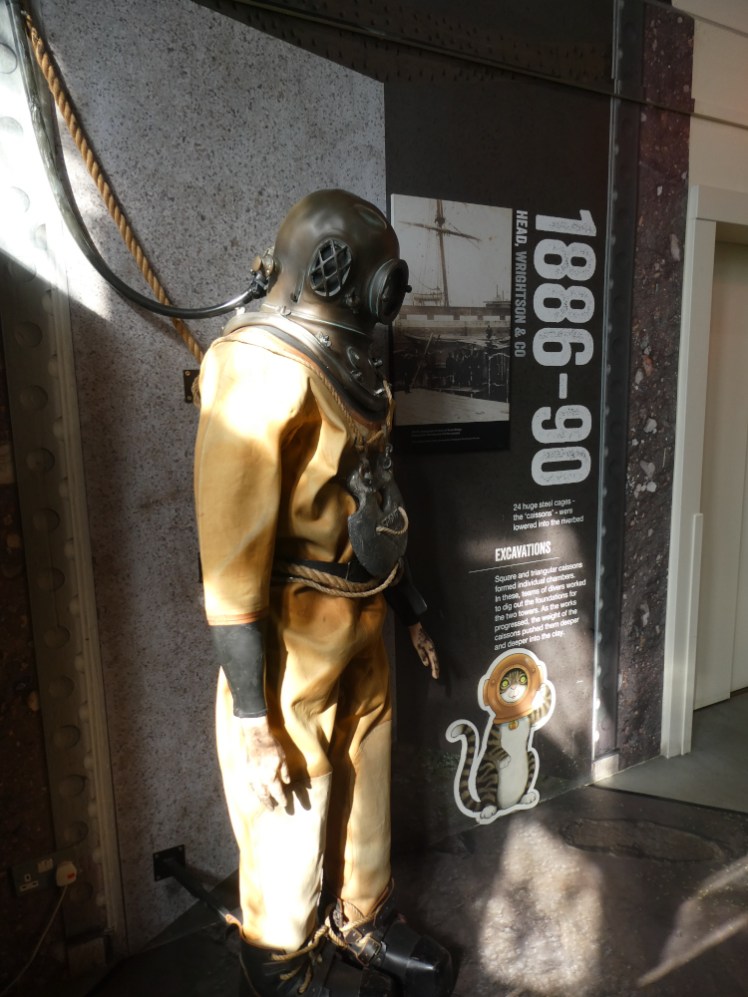
Something they don’t make a lot of noise about, and which I only discovered lurking in the corners of the website when I went to find the word “caissons” was that the Assistant Engineer on the Tower Bridge project was Henry Marc Brunel, son of Britain’s most famous civil engineer ever, Isambard Kingdom Brunel. Given that IKB came second in the list of Greatest Britons in history and designed Bristol’s iconic Clifton Suspension Bridge, you might think he would be more prominent than “I never once even saw his name when I was there”. Maybe I just wasn’t paying attention. As for the rest of the big names, the Chief Engineer, Sir John Wolfe Barry, was the youngest son of the architect who designed the Houses of Parliament, and the designer and original lead was Sir Horace Jones, not the son of a famous architect or engineer but an architect who designed Smithfield, Billingsgate and Leadenhall Markets, He died a year into the building of Tower Bridge and it was finished under the supervision of Sir John.
After that, there are two parallel staircases up to the walkways, proper full-width staircases with a bench at most landings. I found these a bit easier – partly because they’re so much more open and light and partly because you don’t feel the same level of “there’s someone behind me, I can’t stop!”. At the top there’s a mini exhibition but it’s mostly just things you’ve already seen on the way up, like how many London cabs’ worth of concrete is involved and where all the material came from. It’s just to give you something to look at while you get your breath back before you go off to the main event, which is the East Walkway.
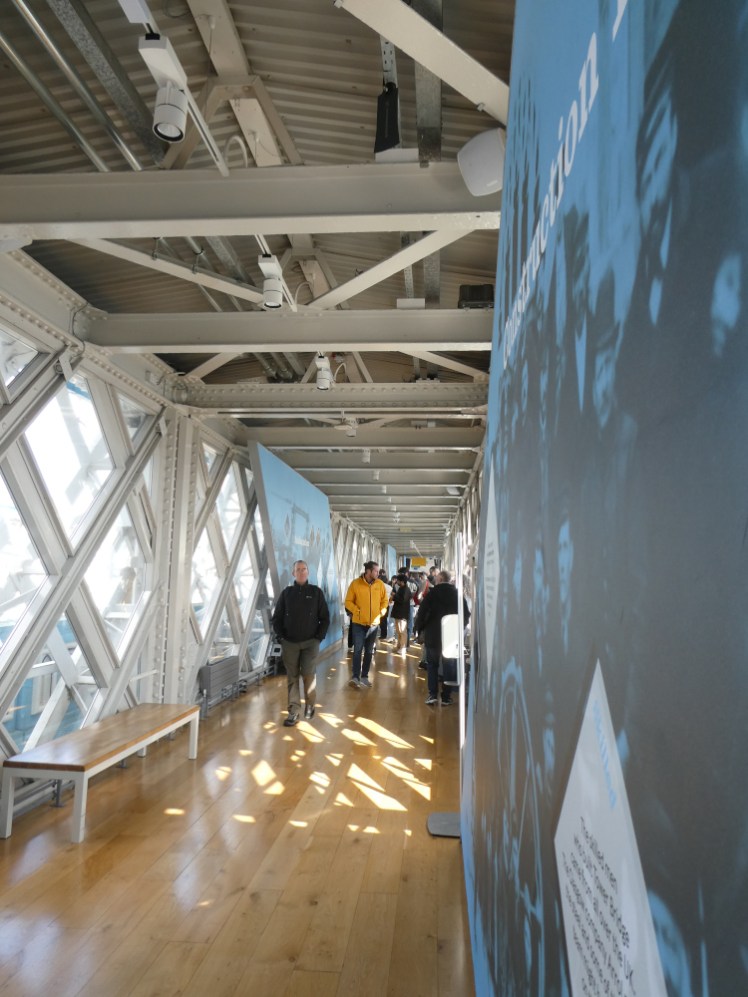
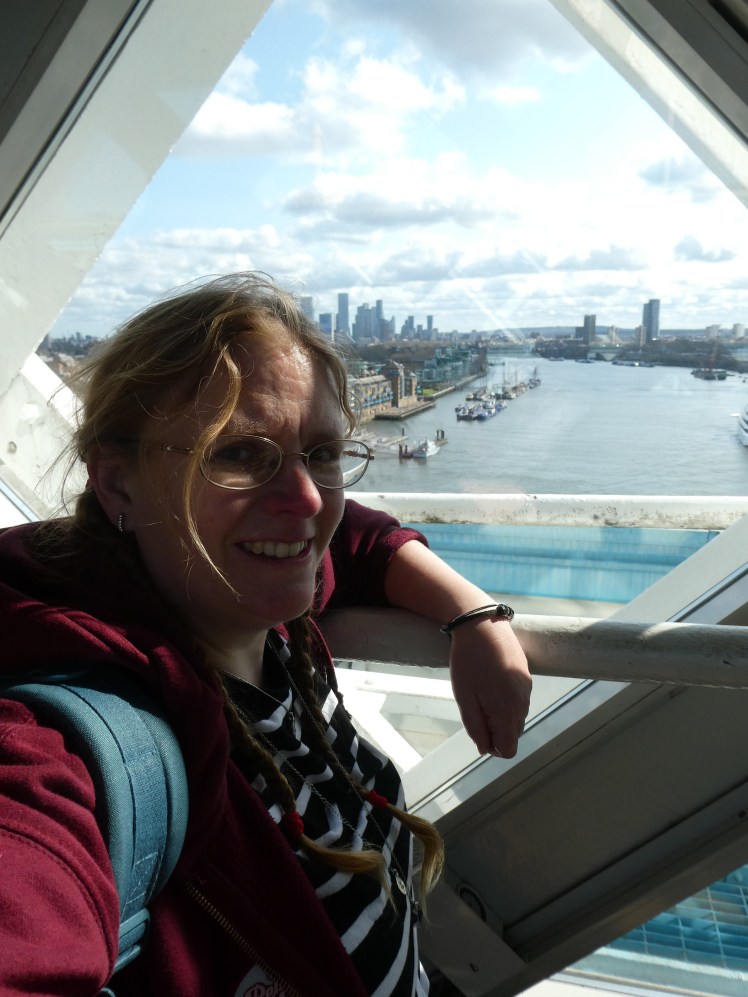
Here you’re 35.5m above the road and 43.5m above the Thames at high tide. That’s actually no great height, despite what it might feel like after climbing 206 stairs but it’s high enough to give you great views east up the river. Look carefully because there are small sliding photo windows for pictures without reflections. From street level, it’s very easy to see the towers and the blue links and the cantilever crossings and not realise that as well as housing the suspension cable that holds the bridge up, they’re walkways. They were built to allow pedestrians to keep crossing even when the bascules were open, which was 20-30 times a day when it was first built, and now they’re a tourist attraction. These days, the bridge apparently only opens 20-30 times a week but that sounds a lot when the website right now lists the next opening as three days away, on Wednesday, although four lifts are planned that day. Once upon a time you could pretty much just turn up with your large boat and ask by semaphore flags for the bridge to be opened. Now there’s admin and staff to be brought in and it has to be requested by email at least 24 hours in advance. Mind you, it now takes 12-18 people (depending on which information board you read) and a joystick to open, whereas it used to take more than 80.
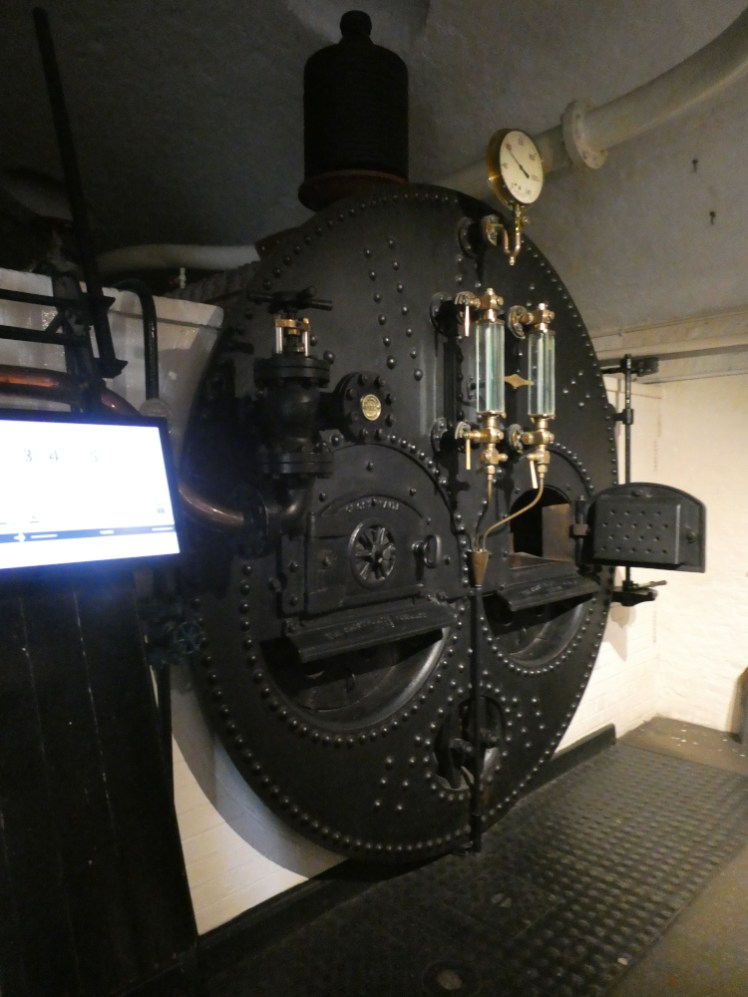
That’s because the original engines were steam-powered. With three large boilers which needed to have coal shovelled into them 24/7, that alone required non-stop shifts of stokers. The steam powered the pumping engines which ultimately turn the eight giant cogs that move the bascules. The engines need constant maintenance, the traffic on the bridge needs to be controlled and this massive operating was happening more than once an hour all day every day. The system was converted to electricity in the 1970s. By then, central London was no longer the major port it had been and keeping the steam up and a crew that size on standby for less frequent lifts just wasn’t worth the money.
But I’m getting ahead of myself. I’m still on the East Walkway. It was quite busy, what with views and selfies, information panels, displays and people frozen listening to the audioguide. I hesitated in front of a penny press machine (that no longer requires you to put a penny in, in these increasingly cashless times) before realising I have no conceivable use for such a thing and continuing on my little adventure.
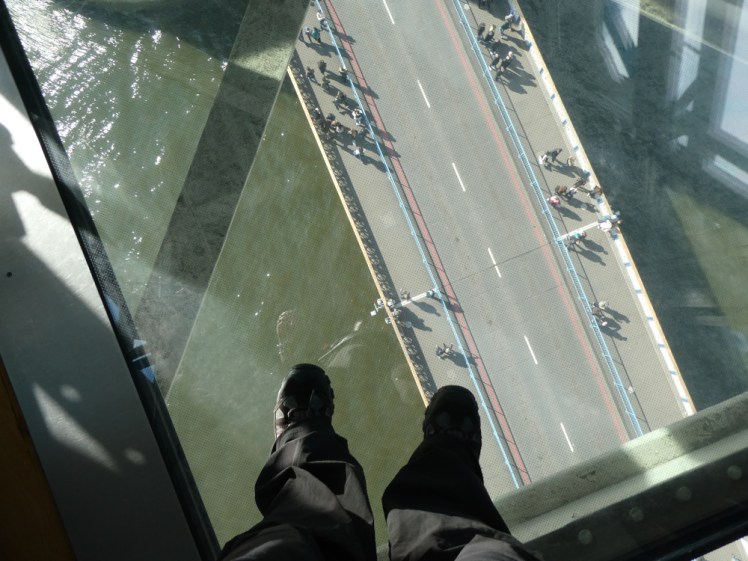
Then you reach the glass floor. Now, we all know these things are almost bombproof. They were installed in 2014, they’re 7cm thick and made up of 5 layers of glass, they weigh 530kg and they can take the weight of two London Black Cabs, which Google tells me each weigh between 1180kg and 2230kg depending on whether that’s referring to the old diesel ones or the modern electric ones. It very clearly implies that they can take the weight of a mere human but human nature being what it is, you still feel something wobbly in your legs or stomach or both when you step on it and look down. You can tell that by looking at how people move when they’re on it compared to when they’re back on “solid” ground, no matter how they’re acting. Everyone is nervous about that glass panel. If you really can’t do it, there’s just about room on each side to pass by but it’s narrow enough that you can probably expect at least half a foot to end up on the glass at some point.
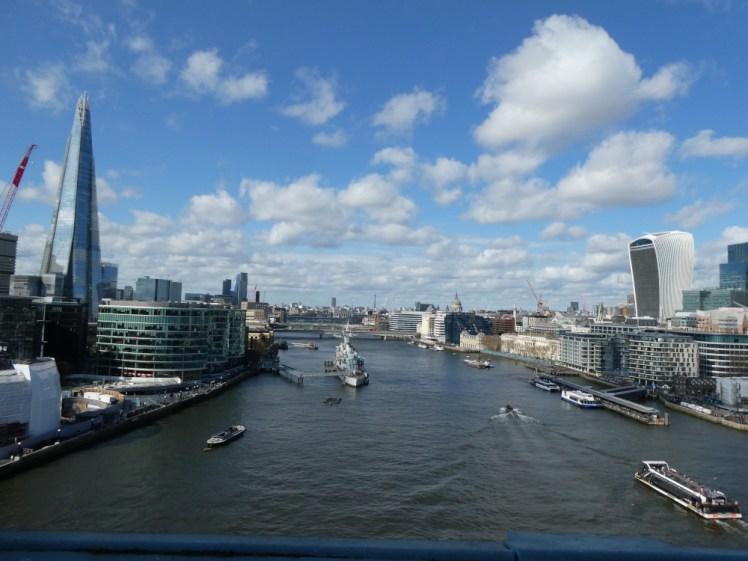
At the far end, you can cross through the South Tower to the West Walkway, which is a bit quieter. If you want a picture of the walkways without hundreds of people front and centre in your picture, this is the place to do it. There’s also a big mirror on the ceiling above the glass walkway here so you can take your pictures from a very different angle. Obviously, there are vastly different views here – from the East Walkway you can mostly see Docklands in the distance but from here you can see the Shard and the interesting skyscrapers of central London and the Tower of London. Parliament is a bit far away and a bit around the bend in the river to get even a glimpse of but other than that, you get much more “classic” London views from this side.
Now you can either take the stairs or the lift back down. I don’t think there are any exhibitions on the stairs this time but I thought my mission probably required me to climb back down the tower as well so I took the stairs rather than make it easy on myself. At the bottom, there’s a blue line painted on the ground and you follow it to the end of the tour – the gift shop and the engine room. I got my required souvenir, a badge for my blanket, and then went into the engine room. I’ve already covered most of that but it’s perhaps worth saying that this almost feels more like a cave than a factory. Well, I guess if you’ve got to dig a hole in central Victorian London, you want to keep it as small as practically possible. There was a young man attempting to narrate the machinery, oblivious to the fact that just three metres away is an engine that’s actually running – or at least, the flywheel is turning and the pistons are pumping. It’s clearly not actually connected to anything but you can see roughly how it used to work without having to supply the movement with your own imagination. It’s all very beautiful – it’s all painted green and the brass gleams and everything is kept absolutely pristine. Whether it was actually kept like this while it was working, I don’t know. It does say that the boiler rooms stank of coal and fire and filth whereas the machinery mostly just smelled of “sweet oil”. Well-oiled machinery works well; unoiled machinery breaks down but whether the effort was taken to keep everything shiny, I have no idea.
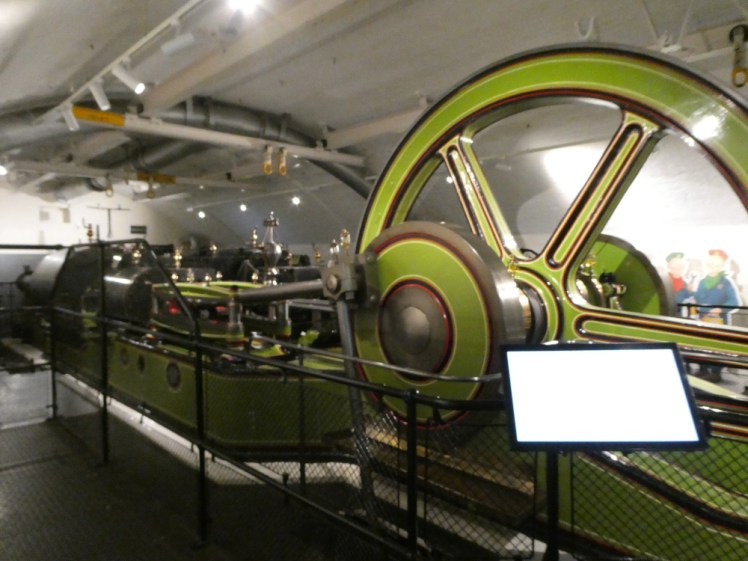
Naturally, the door that takes you out of the engine rooms drops you straight into the back of the gift shop. After exploring this massive piece of infrastructure and realising how much more complex it is than you’ve ever imagined, it almost feels like leaving with a bad taste in your mouth. At least when I went to Battersea Power Station last year, the gift shop was wide and open enough that you didn’t feel like you were actively being pushed into spending, and this is from someone who went in with a plan to buy something.
Would I recommend visiting Tower Bridge? Absolutely! I’m amazed I haven’t done it before. The walkways are the star of the show but the mechanics behind the whole thing is so much more complicated and interesting than I’d ever imagined, and five years ago I watched a video by Tom Scott on the subject. If you’re a tourist in London with an hour or two free, do it. If you’re a regular in London and you think you’re not a tourist and you’ve never been up Tower Bridge, do it. And then get the Clipper eastbound from Tower Pier and go underneath it because it’s worth seeing from multiple angles.
 I Am A Polar Bear