Reynisfjara is known better to tourists as “the black sand beach”, although almost all beaches in Iceland have black sand. It’s therefore confusing, potentially misleading and it’s just plain rude. You wouldn’t come to England and talk about going to “the big yellow clock tower” or go to the US and talk about your visit to “the big skyscraper city”. But that’s by the by, as Reynisfjara was washed away in a storm last week.
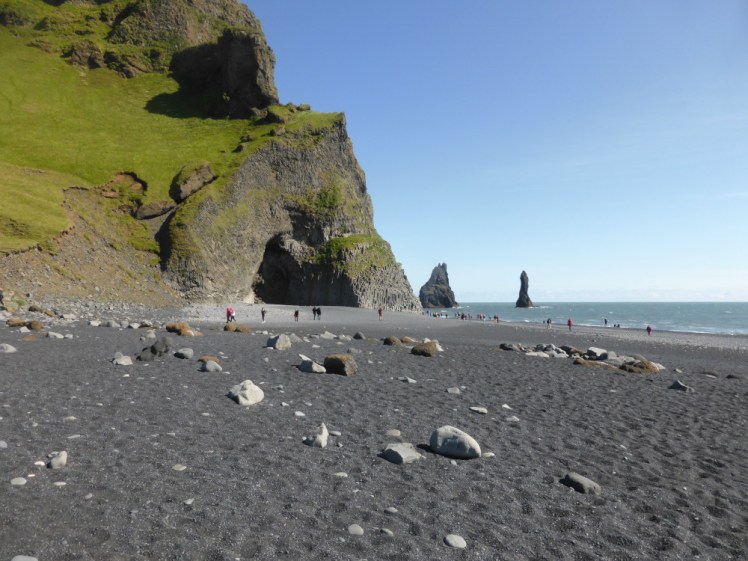
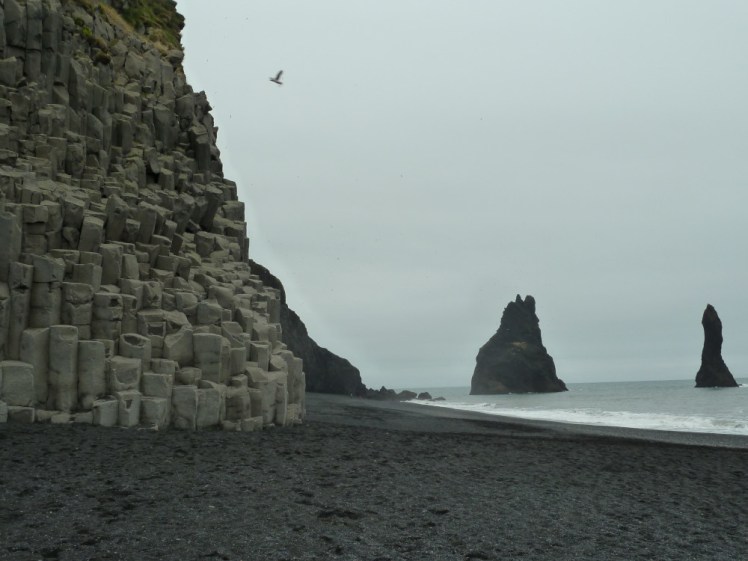
Reynisfjara is a very popular tourist attraction on the south coast, just west of Vik, which is hidden away behind the headland. It’s very pretty, what with that black sand, the cliff made out of basalt columns, the enormous cave, the pinnacles (said to be the masts of a troll ship caught out after sunrise) and not a tourist heads out along the south coast without planning to stop here. The waterfalls, here, “the glacier lagoon” (again with the “I can’t be bothered to find out the so-difficult foreign name: Jökulsárlón please) and Diamond Beach (ditto ditto ditto; Breiðamerkursandur is really the correct name but the signs use Fellsfjara for this very specific part of the beach) are the established spots. Tick them off your list, take your photos, go home satisfied.

The thing is, Reynisfjara is actually an incredibly dangerous place. On Iceland’s southern coast, there’s very little to break up the power of incoming waves all the way from South America and right here, that black sand beach slopes away very steeply underwater. The result is that waves are a lot bigger than they look, they “sneak up” on the beach, crash on it unexpectedly and will pull you straight off the beach into open water in the blink of an eye. You’d think people would know this by now. It’s talked about endlessly; discussion groups on Facebook talk about it endlessly, it has signs – well, a few years ago, the path from the car park to the beach was literally a wall of signs but somehow people still missed them and the signs were taken down. Last summer there were just two signs – one explaining that there was a system of coloured lights to warn of danger and one explaining what the lights actually meant, which had been blown away in a storm a couple of weeks before I went there, leaving just one very missable sign which caused more confusion than anything else.
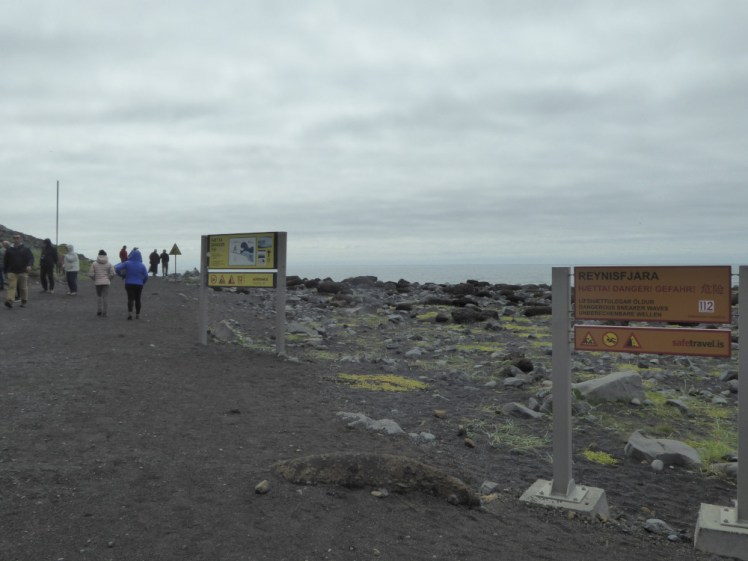
It didn’t seem to matter how many signs there were or how much discussion there was: tourists, even in tour groups with tour guides who would have explained this, persist in not understanding that this is the single most dangerous place in the entire country. Week after week, tourists had close calls, either by getting too close to the water, deliberately paddling in what looked like the shallows or turning their back on it to take pretty pictures. There was a fatality there last summer, which exposed the fact that no one apparently knew whose responsibility it was to actually turn on those warning lights or what conditions had to be in place to do it. Eventually, a gate was installed, to be locked in red conditions, which tourists promptly climbed over because tourists are idiots.
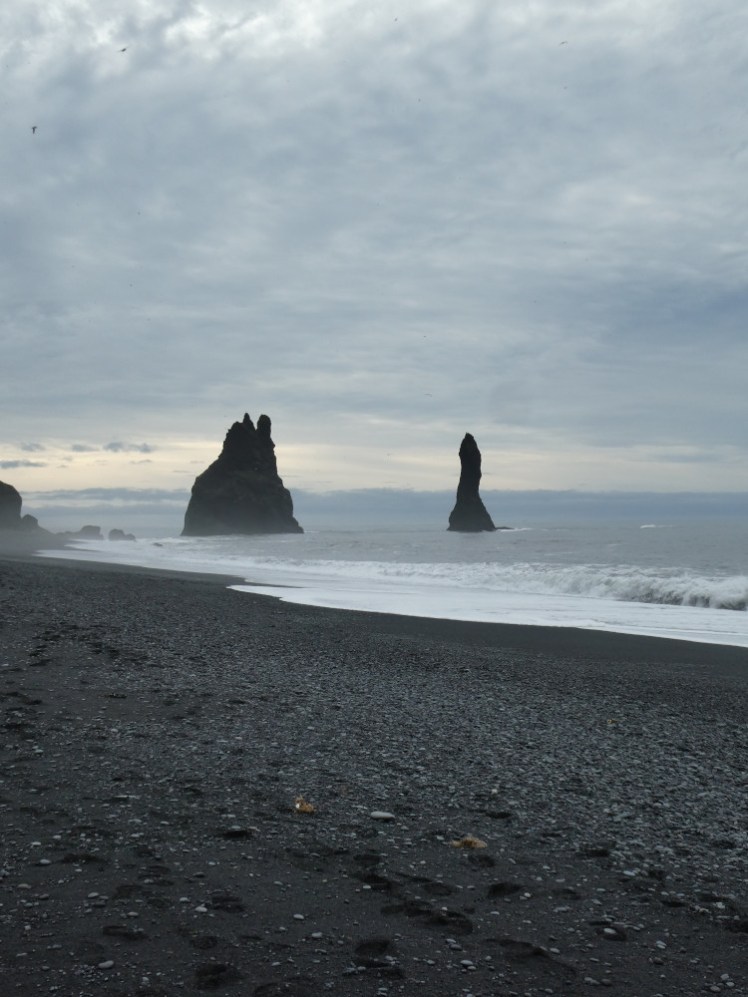
However. Last week there was a big storm and some particularly big waves washed the beach away. If you look at the pictures in RUV or MBL, Iceland’s English-language newspapers, you’ll see what it looks like now. In short, it looks like someone with a really big digger took it down to the beach and just scraped the entire beach away. What was once the top of the beach, next to the fence and gate, is now all that’s left of the beach. At high tide, this is the new water level and the cliff is now a proper headland. Good news in a way. There’s not a tourist alive who’s going to jump into the water to go down to the cliffs. On the other hand, it just means it’s moved the sneaker wave zone up a bit. I haven’t been there and seen it for myself but I would guess that sneaker waves haven’t stopped just because it’s a few more feet to solid land. Maybe the submerged remains of the beach mean they can’t drag you beyond the sudden shelf quite so quickly but I don’t know a lot about waves and I personally would still want to be tanding a good distance away from the new shoreline, especially in rough weather.
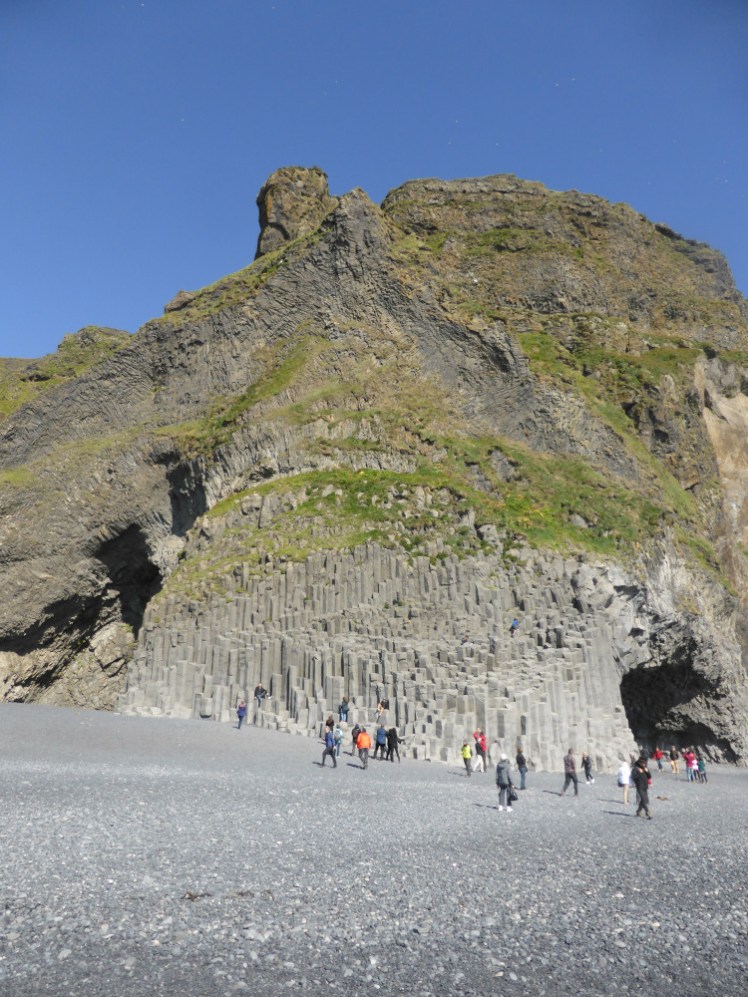
But when the tide recedes, it looks like a kind of pit is left, with a cliff edge five or ten feet high just beyond the path and pretty easy to climb down for your photos. And tourists will climb down it. The thing is, wave of some kind can and will still happen and if you were lucky, a lot of people could run back up the beach while the sea dragged at their ankles. Now you’re going to have to climb and scramble and that means more people are not going to be lucky. You put yourself in a dangerous position like that and you’re going to need all the luck you can get.
So are things better at Reynisfjara or worse? It’s hard to say without going there myself and without really seeing what it’s like. It’s also hard to say even if you do go there because levels of tourism in winter are not the same as levels of tourism in summer – you know, if it’s only one tourist in a thousand who’s really stupid, it might take a few days to find that one tourist in February compared to two or three of them in a day in July.
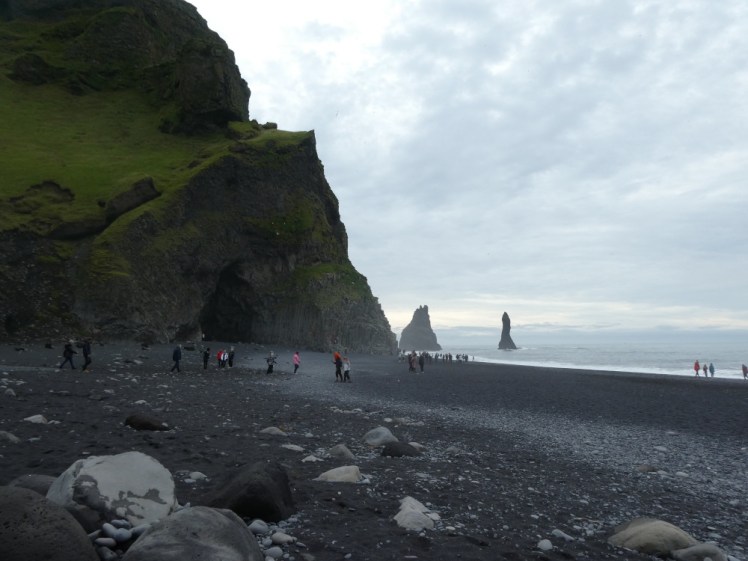
Plus, there’s a chance this is only temporary. We’re all sad over the loss of this beautiful beach but a) coastal erosion is an active ongoing thing and absolutely nothing by the sea is guaranteed to last b) because it’s ongoing, the landowner says it would only take the right kind of wind to blow the sand back into the hole again. Whether that could happen, like this did, pretty much overnight in one storm or whether it would take years, I have no idea. Not my speciality. But I live close enough to the sea that I’m very used to news of landslides, cliff collapses and beaches occasionally getting blown or swept away. Arches collapse. Caves form. Nature doesn’t care how many tourists visit a place. This sort of thing just happens and if there’s a chance that tourists aren’t going to be able to put themselves in mortal danger for a few photos, that sort of feels like getting a positive out of it.
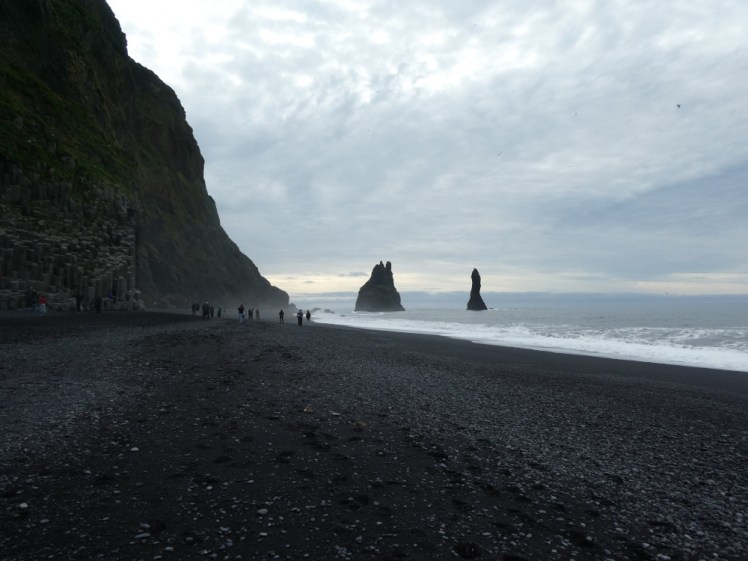
Besides, even if it’s a bit wet, there will still be some angles, in some light, that makes that great basalt cliff look beautiful even without the beach underneath it. Just might need to build a new road and a new car park a mile further west.
 I Am A Polar Bear
One thought on “Reynisfjara has been washed away. Now what?”