Ever since about mid-2019, I’ve had a series on this blog called Before It Burns Down, dedicated to cathedrals, and especially the massive, magnificent, medieval Gothic and Norman varieties, because it turns out that just because they’re looking towards their thousandth birthdays doesn’t necessarily mean they’ll still be there waiting for me to get round to them. Even ancient stone can burn (or collapse; there are a few that are only still standing because, cartoon-style, they haven’t looked down and noticed that they’ve got swamps where the foundations should be). And today it’s the turn of Lausanne Cathedral.
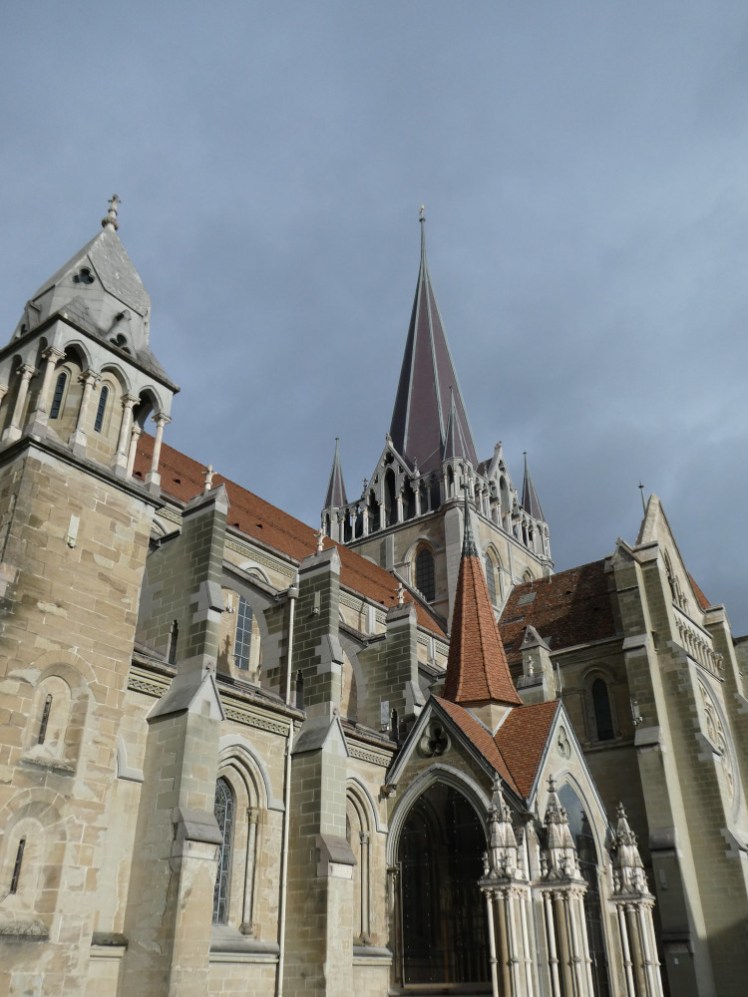
I’d never really considered that Switzerland might have Gothic cathedrals despite having lived there. France has them, of course. Before we imported the word Gothic into the English language, they were referred to as “French style”. Germany has them. I’ve climbed the dizzying tower of Cologne Cathedral. I’m not sure whether Italy has the Gothic variety but it certainly has some of the most famous and spectacular cathedrals in Europe. But Switzerland? That doesn’t feel like the sort of country to have Gothic behemoths. The land of Calvin, clocks and a very reliable rail network, to have something as flamboyant and gaudy as fan vaulting, flying buttresses and flèche spires just feels unnatural. But there I was, standing outside Lausanne Cathedral and it’s undoubtedly Gothic.
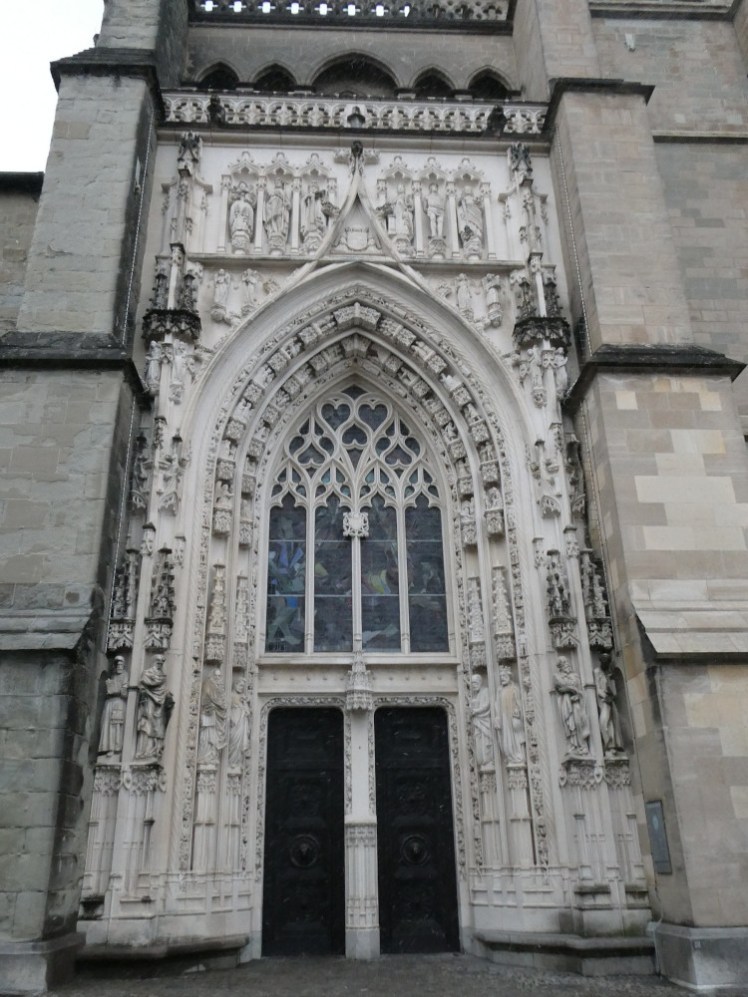
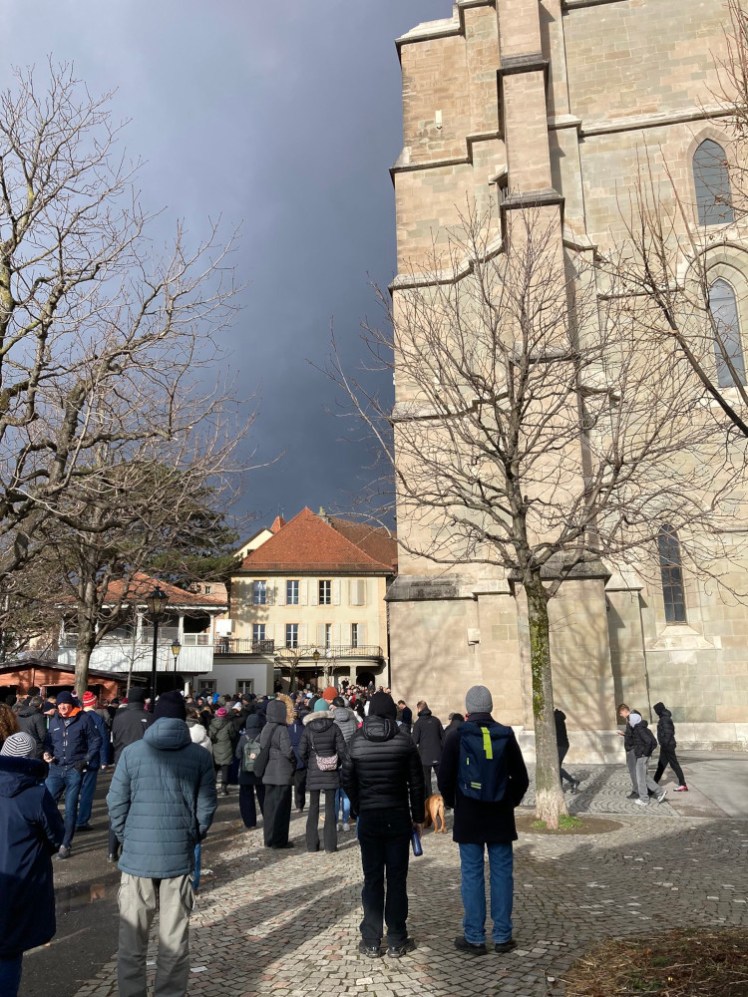
Some say it’s the finest work of Gothic architecture in the country, so well done me for picking Lausanne as my destination almost at random and picking a hotel that turned out to be about three streets away – I even had a view of its towers from my window. It was the first place I headed when I arrived in the city on Friday (don’t do what I did and climb nearly-vertical Lausanne; take the M2 metro from the station to Bessières!) but Switzerland had declared the day a national day of mourning for the victims of the New Year’s Eve Crans-Montana fire and was holding a minute’s silence at 2pm. That was fine, I didn’t know it was happening but I can go with that. What I’d never imagined was how many people chose to observe that minute’s silence outside the cathedral. It was a nice experience, to be part of that – the fifteen minutes leading up to it was equally silent, the Swiss apparently not feeling the need to be loud or rowdy just because there was quite a crowd. I don’t think there was any service inside the cathedral but it didn’t really feel like the time or place to indulge in being a tourist, the moment the crowd starter to dissipate.
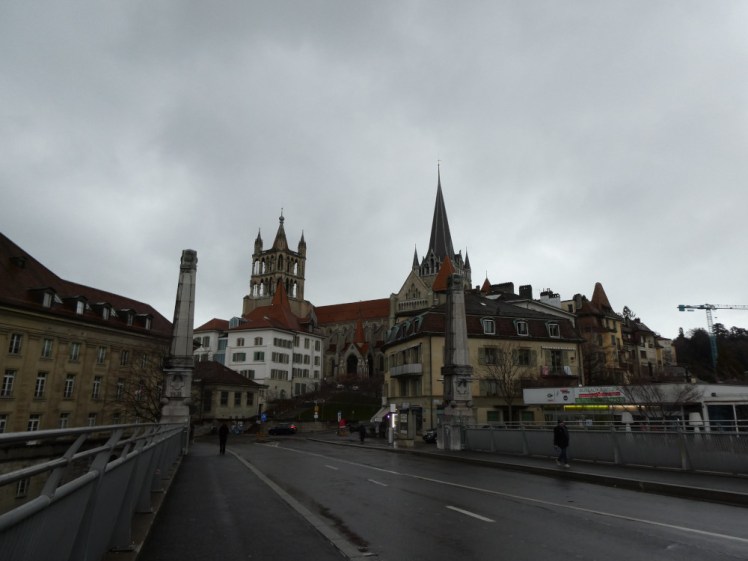
So I came back on Saturday morning, managing to accidentally squeeze in my visit before the massive state funeral of a prominent politician, which must have happened on Saturday afternoon. Well done me for getting into that cathedral during the only gap in the entire weekend when it was possible!
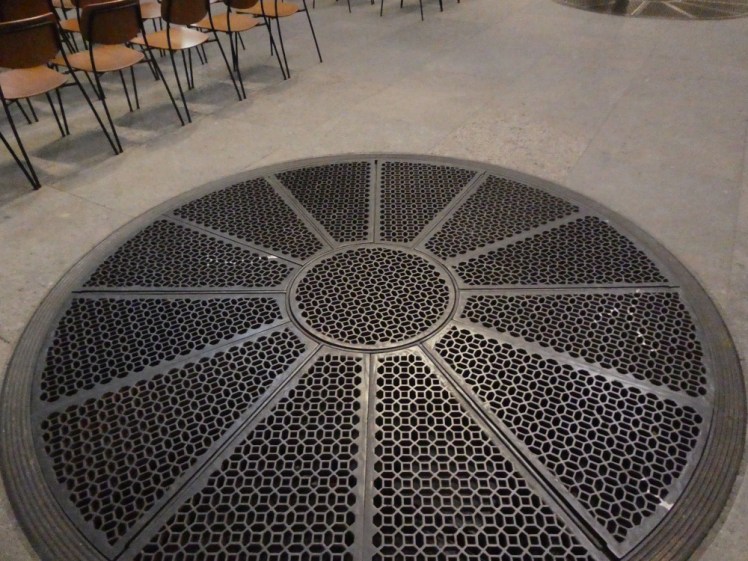
First of all, it’s free to enter! A cathedral of this kind would cost anywhere between £10 and £30 to visit in the UK. Medieval cathedrals take a lot of maintenance: they’re very old and most of them have very little in the way of foundations and other than visitors, no other obvious source of the income they so desperately need. I say it regularly; if I ever become a billionaire, I’m giving a big chunk of money to Winchester Cathedral. But to go back to Lausanne. By the time I got there on Saturday morning it was snowing lightly and had been most of the night so I was all dressed up in thermals and fleece and coat and big scarf and hat and the first thing I really realised when I went inside was that Lausanne Cathedral is hot. Its porch looks a bit ancient and rough and there’s massive thick curtain instead of door between it and the main body of the cathedral, keeping the heat inside. Most cathedrals, being huge cavernous spaces with thick stone walls, are freezing cold all year round but this one appears to have some kind of hot air system with huge circular vents in the floor at the west end of the nave and it’s impossible to take in any details of the cathedral when you’re that overheated. So job one is to take off all your layers!
My photos from 2005/06 of my brief visit here show it as quite dark. I took that to mean I probably visited one evening, probably on the way home from somewhere else but then I looked more closely at them when I got home and realised I’d taken all the same pictures of the stained glass that I took in 2026 and if they’re glowing then I must have been there in daylight. And indeed, all of 2026’s photos are pretty dark as well. Lausanne’s cathedral is very beautiful and it doesn’t feel particularly dark when you’re there but it is quite dark.
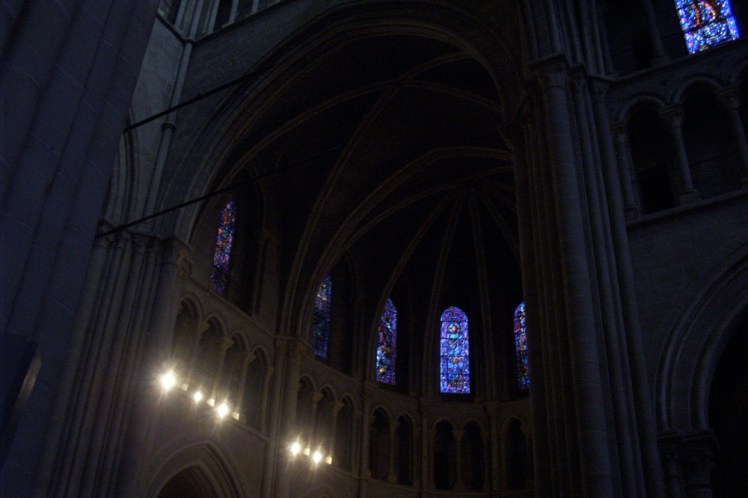
It took about a century to build between around 1170 and 1275, which is a pretty standard timeframe for a stone medieval cathedral. Like all medieval cathedrals, it’s been expanded and renovated and restored over the years but, contrary to the title of this series, it’s never had a major disaster. Look a bit deeper into most cathedrals and they’ve almost all had a catastrophic fire or collapsed tower at some point in their history. The worst Lausanne’s seems to have suffered is the Reformation-era whitewashing that almost all surviving cathedrals suffered. Look at somewhere like Sainte-Chapelle in Paris, look at the colours and the patterns and the beauty. That’s what everything Gothic used to look like before decoration and gaud suddenly became extremely unfashionable. An arch in the south transept was restored in the 20th century so you can at least have an idea of what the whole place used to look like.
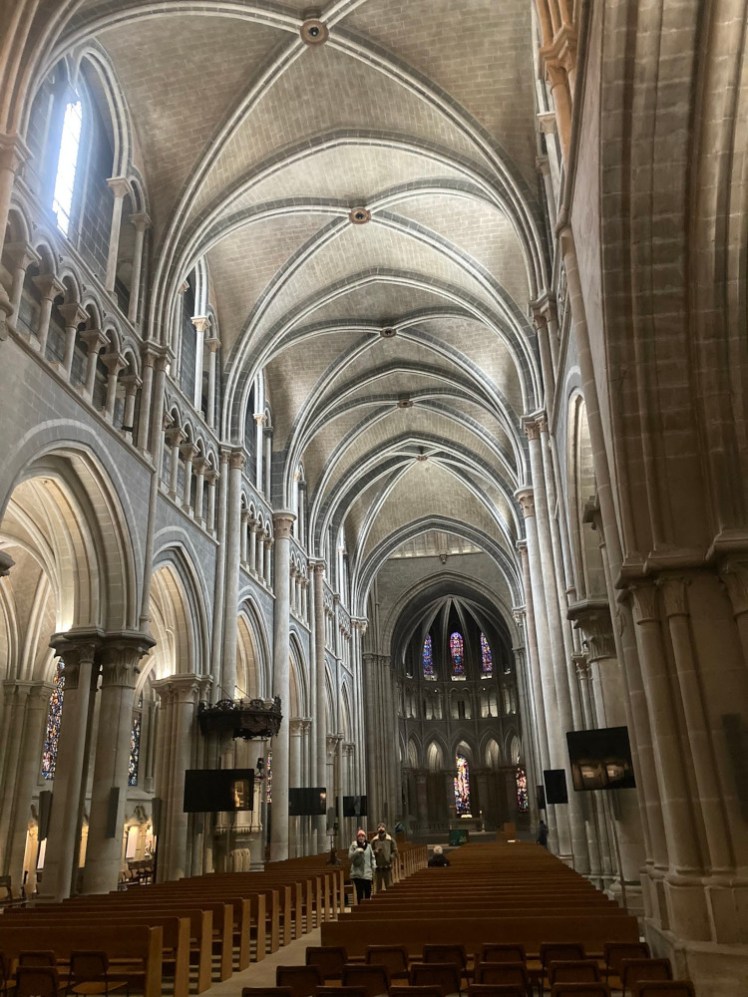
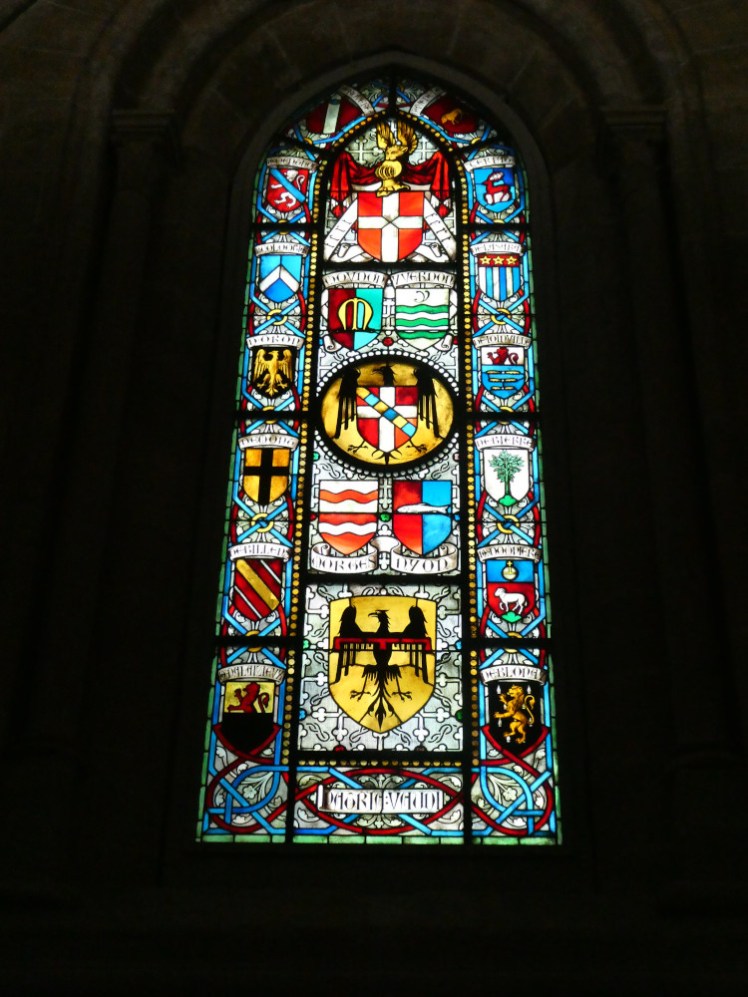
The nave is very beautiful in a very simple early Gothic style, not quite as soaring and spectacular as the Perpendicular variant would become, but clean and handsome. Its pillars are slimmer than you’d see in Norman churches but they haven’t yet reached the incredibly delicate and slender kind that you’d see later. But it’s the stained glass that I think makes it special. The south aisle has an entire series of windows dedicated to the coats of arms of the cantons, regions and communes that it serves, or has served over the years. It currently belongs to Evangelical Reformed Church of the Canton of Vaud but as I said in the Chateau de Chillon blog, this region has variously belonged to the Duchy of Savoy, Berne canton and Vaud over the more than eight hundred years of its existence, so the windows, in a way, probably depict some of that history.
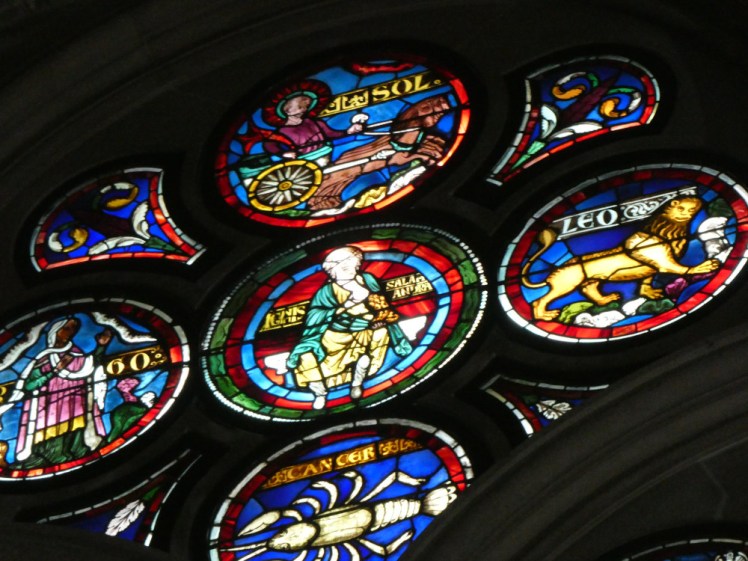
But what’s really spectacular is the rose window. Large works of stained glass in cathedrals generally depict Bible scenes – the full life cycle of Jesus is popular, obviously. But Lausanne’s is zodiac-themed. They represent the four seasons and the four elements and apparently include four rivers of Paradise and eight winds but if you’re not an expert at interpreting rose windows way up above you where you can only really see them clearly with a pair of binoculars or the good zoom on your camera. Actually, I’d looked at it and admired it but it was only when I went into the little shop that occupies the ground floor of the tower that I discovered close-up postcards and photos of it and realised what was actually on it, and the zodiac is definitely more noticeable to the modern, ignorant eye.
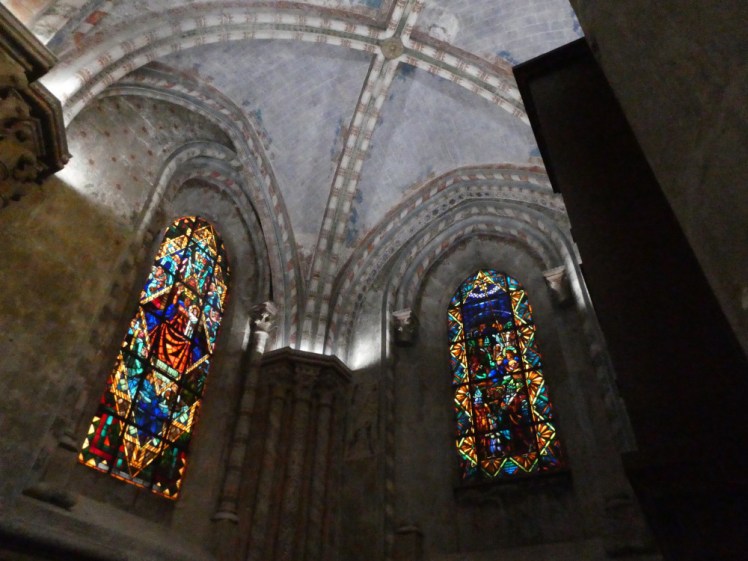
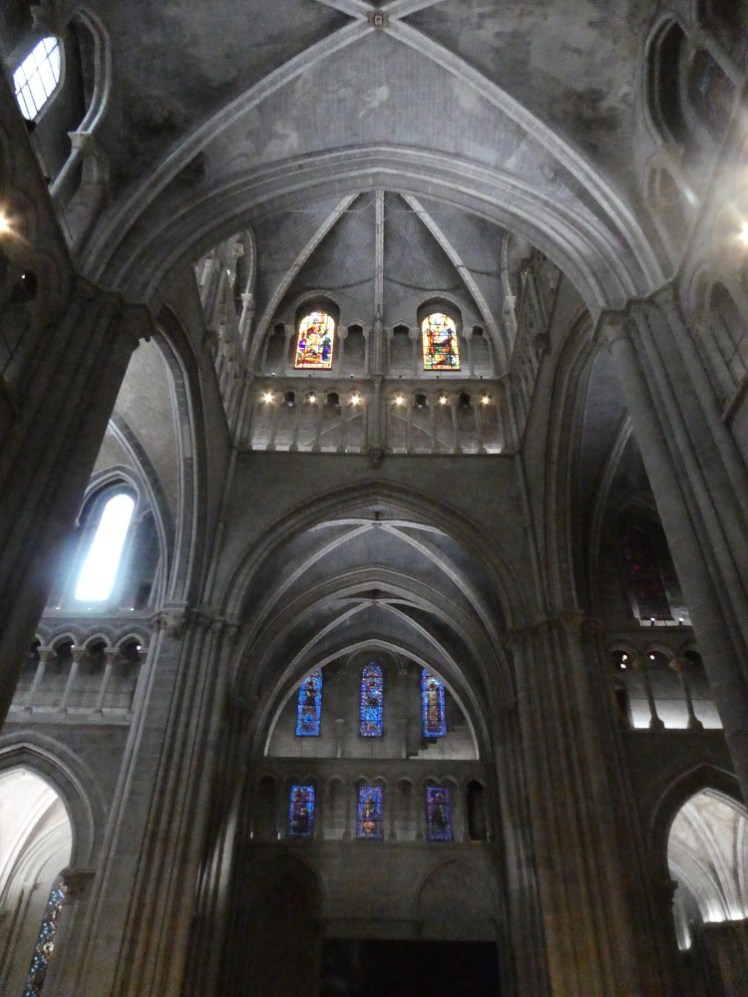
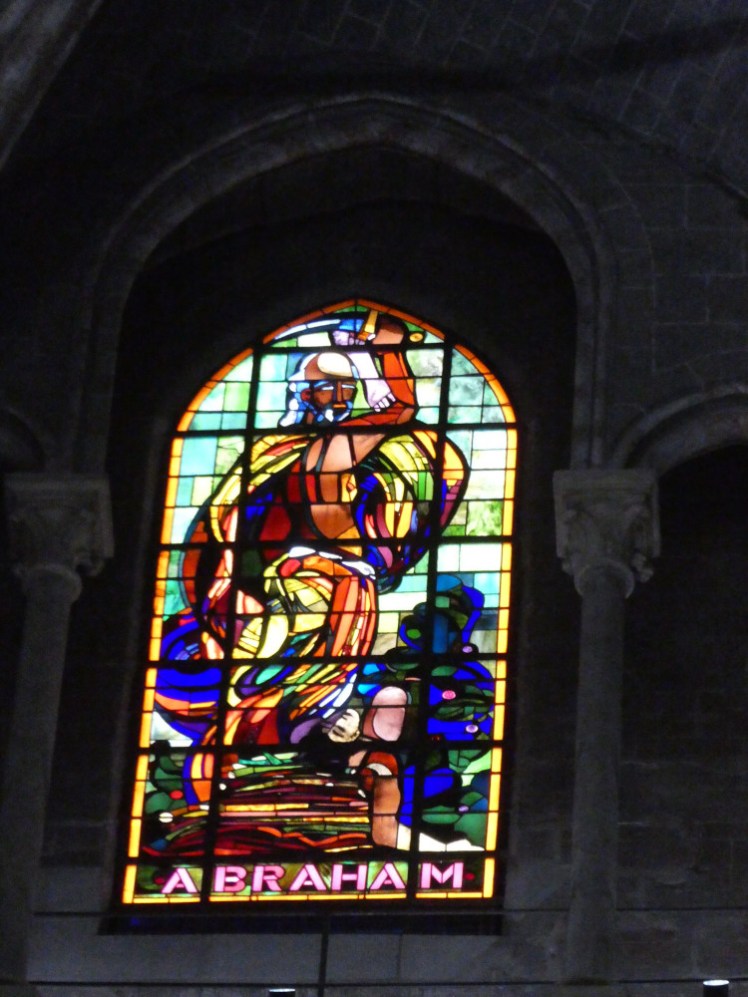
There are some good windows in the ambulatory, the walkway behind the altar at the east end – colourful, more traditional in style but probably not medieval. Medieval windows tend more towards the yellow end of the scale, which I think is more about centuries of dirt and discoloration than any actual ancient preference for yellow. But my favourite windows are the ones hidden away up in the crossing tower where not everyone is going to look up and notice them. These two are a bit more modern. One depicts Abraham (thank you for putting his hand across the bottom!) and the other appears to be Noc or Noe. Noah? Noé is apparently French for Noah. It’s probably Noah. I just like how there’s this big dark grey tower, supported by four massive Gothic arches and then peeking out above them are these two golden windows letting in a little coloured light into the darkness.
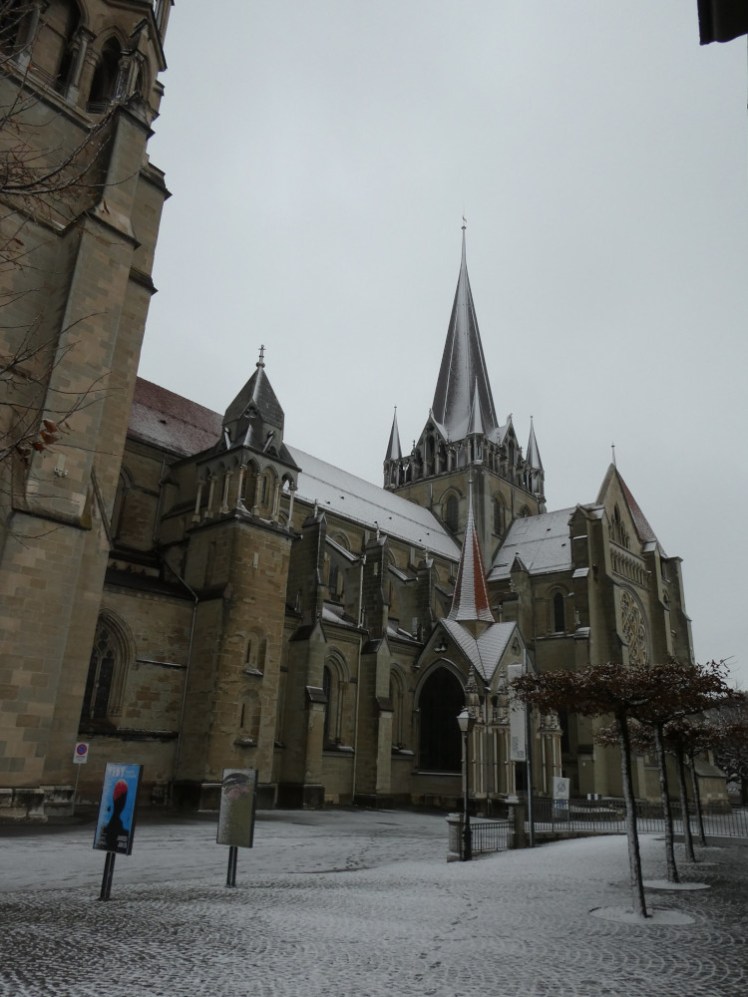
When I went back outside, it was to a definite increase in snow. I’d seen from the glassed-in south transept that a howling blizzard had raged for a little while and now Lausanne was blanketed in fresh snow. You forget how cold it is outside in an overly-heated building like that, so I piled on my layers, went to play in the snow and eventually, ended up on a train to Chillon.
 I Am A Polar Bear