For the last few years, I’ve often taken a film camera with me on trips. Nothing exciting, either a 90s holiday camera from eBay or a really light plasticky new camera once the 90s one started misbehaving. There are no settings except flash on/off and the 90s one doesn’t even have that. I made it a little harness from electrical tape to cover the always-on flash. But when I went to Iceland this summer, I had hold luggage, which meant my hand luggage was lighter than usual, so I took Miranda, my grandad’s late 60s/maybe early 70s SLR with me. Strictly speaking, she’s a Miranda Sensorex Mark I (or maybe II, it’s been a while since I did the reading), so obviously she’s just called Miranda. She weighs a ton and she’s a semi-professional SLR with removable lenses, which is utterly alien to someone who’s only ever used a digital camera in auto mode.

Now, a tool is only as good as its user, or words to that effect. I know nothing about SLRs, digital or old-fashioned analogue. I don’t understand the settings. I don’t understand the blogs and videos that explain the settings. I used a light meter app on my phone & meekly obeyed what it told me and the results… well, some are OK and some aren’t terrible and some are terrible and the entire second roll failed because I didn’t load it properly. But here are the tolerable film photos from the first half of my trip.

This is one of those fun curiosities of film photos. It’s the first film on the roll and half of it was exposed to light as I loaded it, so the sky gets torn off in this picture, which I really like. I assume the redness is also due to light damage. I’m mostly just really impressed that I managed to catch the eruption on film.

Another Strokkur eruption, this time at full stretch. The colour is very different, a lot darker than it is in reality but I was metering for an open sky, so the light will be very different when the column of water shoots up.

This weird light leak shows up several times, but not every time. It makes me wonder exactly what setting I was using to produce it. In this particular picture, it kind of looks like a spotlight on Litli-Geysir, which is a small hole in the ground filled with furiously bubbling boiling water.

Now, this is a pretty good one. My big camera and my lack of expertise mean that pictures taken in bright light definitely come out best. I like how saturated this is – more saturated than it is in real life.
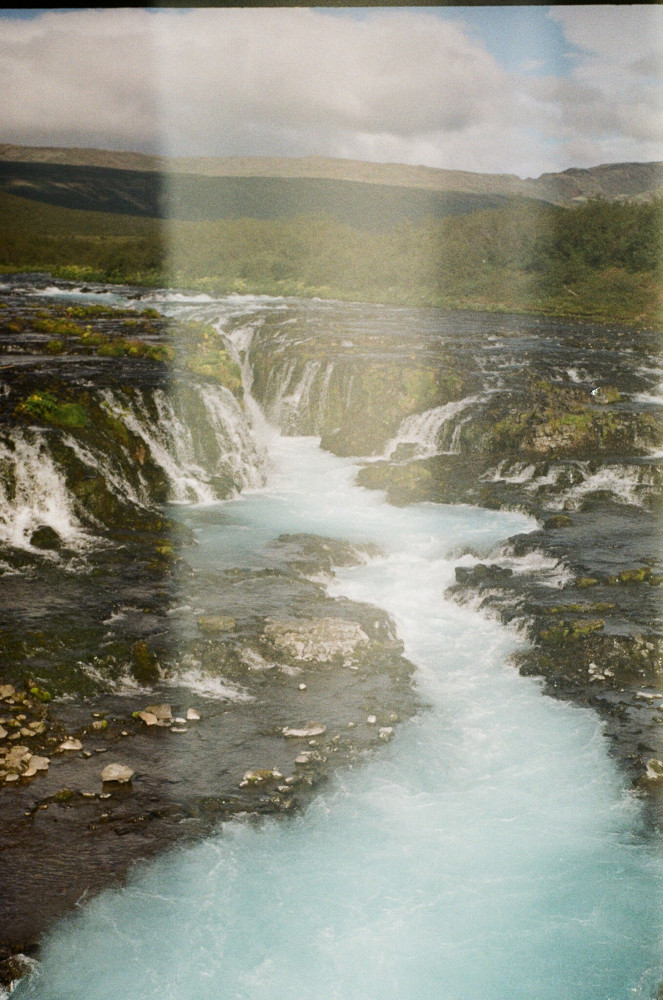
Here’s that light leak again. It’s almost identical conditions to the previous photo so what has changed for this to happen?
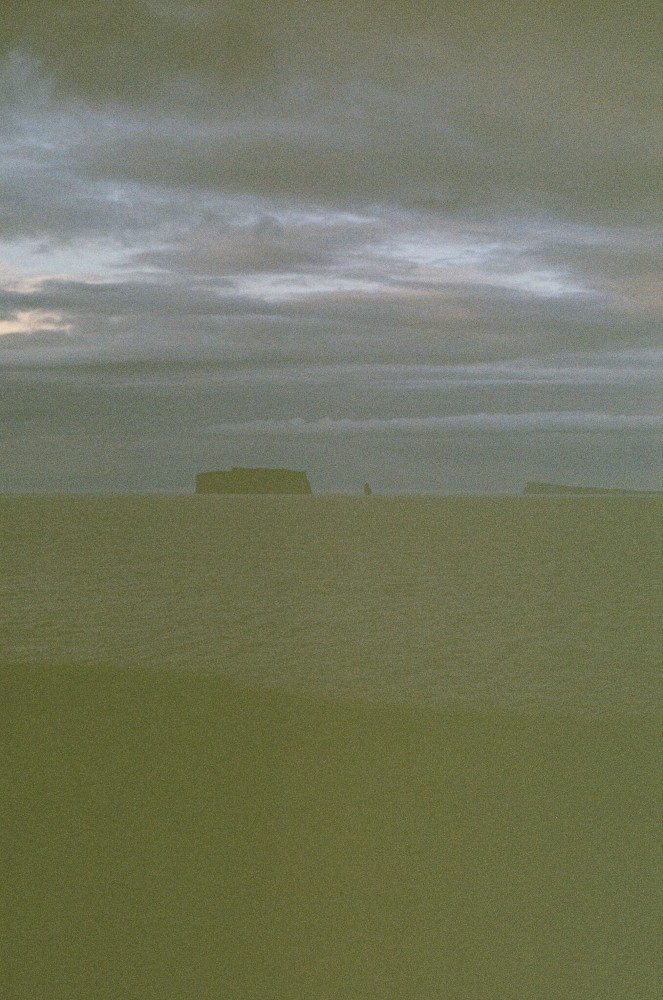
I wondered if it was a bit late in the evening and a bit dark for the film camera and I was right. This is Drangey from the shore at Grettislaug and around 900 years ago, a saga antihero swam across from it.

This is a canyon I found by the side of the road on the way to Akureyri. Perhaps it was a slightly cloudy day, which might explain why this is a little darker than is ideal but we’ve got the light leak going on again.
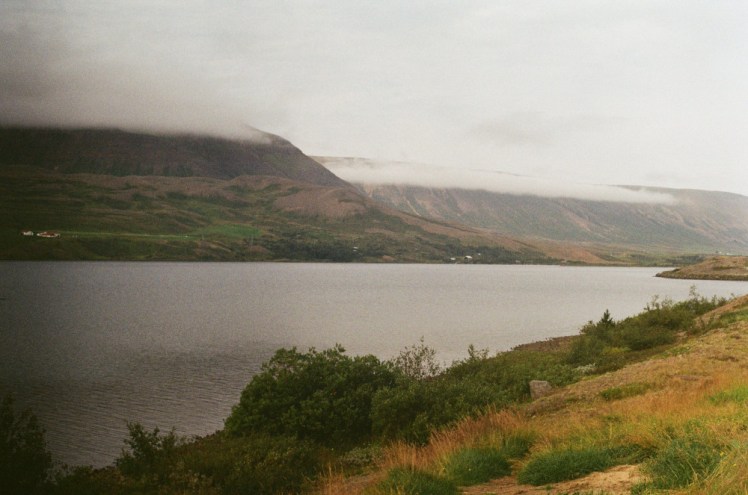
Again, it was quite cloudy and grey this morning, as evidenced by the cloud sitting on the mountain opposite, but I didn’t think it was so grey that this picture would come out so dark and orange.

This is browner than I’d like and with visible vertical grain but we’re not quite at the light leak thing. This is Goðafoss from a slightly dramatic angle, showing more of the cliffs than the waterfall.
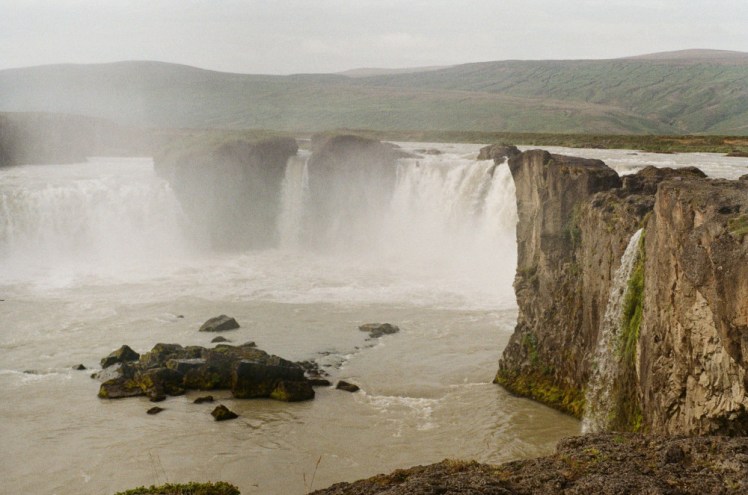
Goðafoss again, this time from a little further back and showing more of the falls and the mist coming off them.

If you walk down from Goðafoss towards the bridge to see it from the other side, you’ll find these rapids as the river goes into a narrow canyon. Maybe it was just too early in the morning but no one had stopped to look at them and while they’re perhaps not as beautiful as Goðafoss, they’re an interesting thing to pause at.

The trouble with Ásbyrgi is that although it’s very beautiful and very wild and very green, the nature of it being in a horseshoe-shaped canyon is that you don’t necessarily get the light that a film camera needs, or you don’t get it at at the right angle, which is why the massive cliffs are silhouetted and the trees at the bottom are washed in lime green.

Now, Dettifoss is a good subject for a film photo, with all that light reflecting off the epic amounts of white water. You can just about make out the light leak across the picture but only if you’re looking for it because the waterfall is so bright, so detailed and so heavy and threatening.
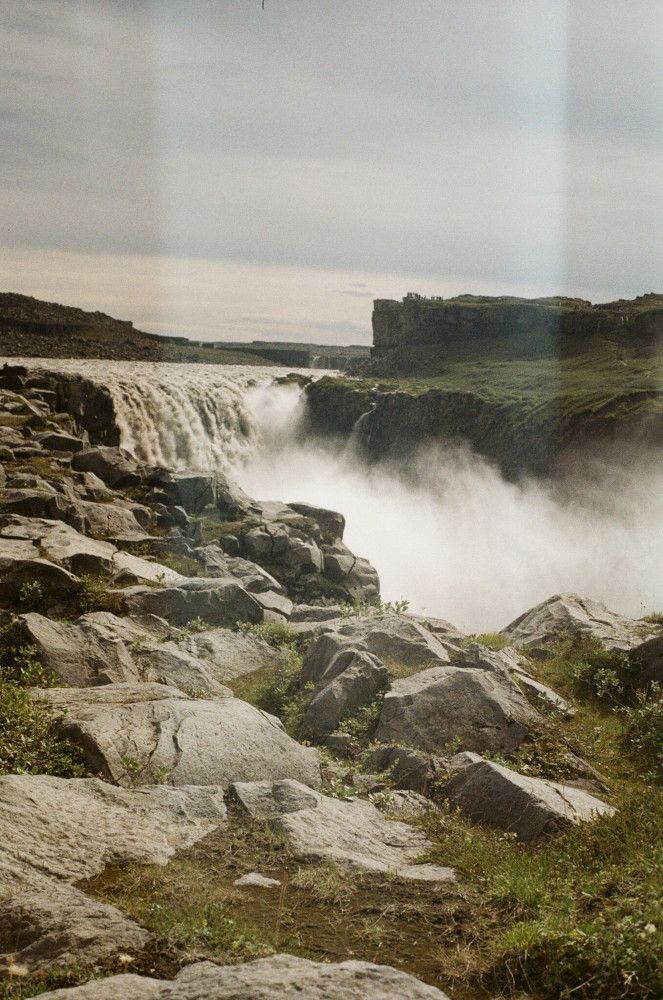
Dettifoss at full drama, and with that light leak. It wasn’t as dark as this and the colours aren’t entirely accurate but I think I like it more than the reality, which is a bit on the grey side.
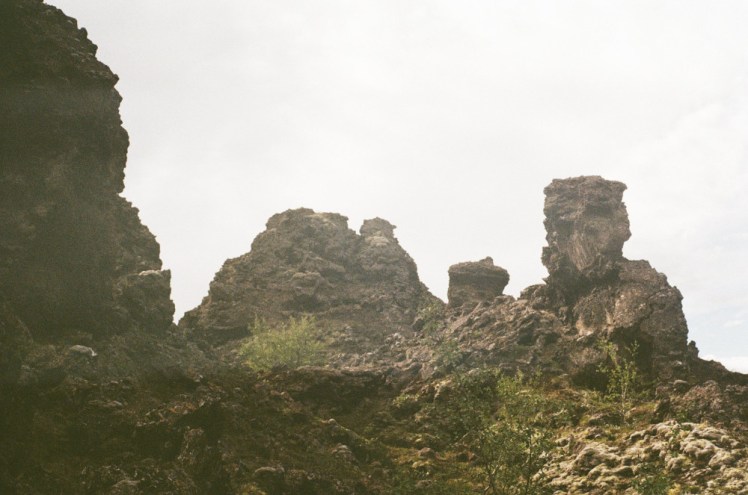
I actually have a lot of pictures of Dimmuborgir, most of which I’m sparing you. Dimmuborgir is a really weird lava formation made up of columns left over from chimneys formed within a swamp and now it’s a big expanse of birch forest grown among the lava.

A view across Myvatn from the car park at Dimmuborgir, demonstrating that this camera really does do best in bright open light, although the ground in front of the lake is a little on the dark and green side.
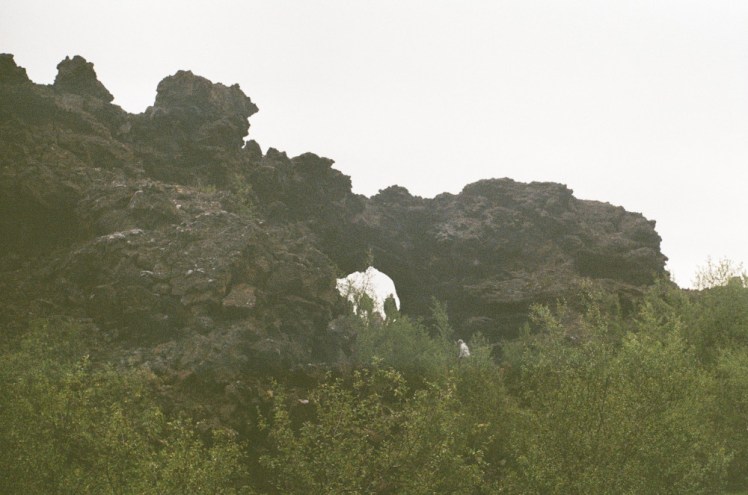
This is the place to take a selfie at Dimmuborgir but it’s also the place where tour groups will literally push you aside to get their turn, so I didn’t have time to take a film photo while I was actually there. This, from a little distance away, actually works better to show off the window, I think.
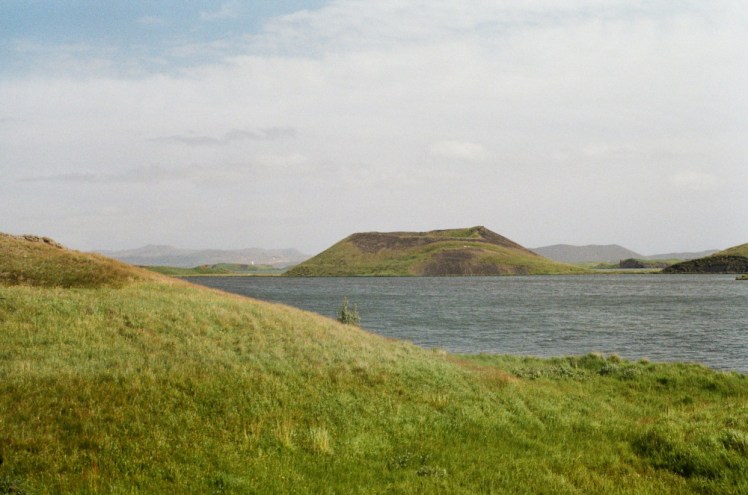
Blue sky, so a half-decent photo. These look like a cluster of little craters but they’re actually pseudocraters, bubbles blown up when lava flowed across marsh thousands of years ago. These ones are sunken in the middle, presumably under their own weight but smaller ones tend to remain fully round.

Oh, and it was going so well. There’s something about reasonable light conditions that causes this great big stripe across the photos.

In real life, this was a bright day and the mini lake on the edge of Myvatn was bright blue and the hills around it bright green, so while this isn’t a terrible photo, it’s so far from reality and the colours are so off.
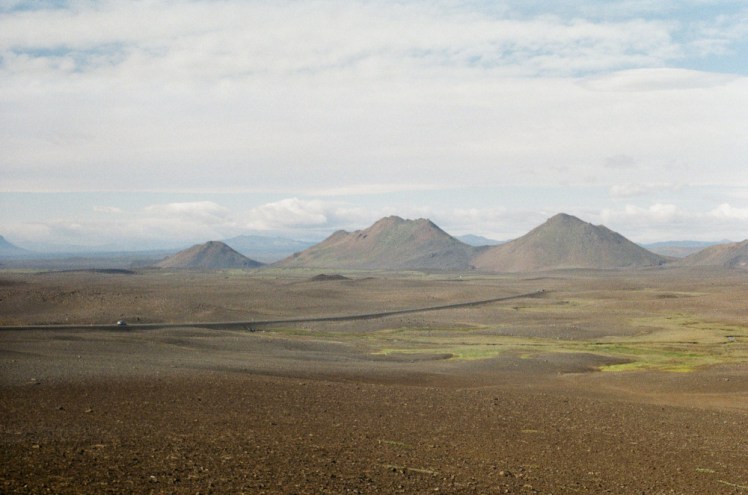
I took this photo with my film camera two years ago too. There’s a particular car park in a curve in the Ring Road across the Ódáðahraun, a vast, bare, barren, brown lava field which translates into English as The Desert of Misdeeds. For once, the film actually gives the landscape more colour than it has in real life and it almost makes me forget that it was almost too windy to stand up here.

See, here’s another example of vibrant colours in bright light but spoiled by that stripe down the middle, although it’s not quite as pronounced as it is in other pictures. I like this one, I think it might be my favourite of the film pictures. This is Stuðlagil from the path from the eastern car park, before you get to the “proper” canyon where it really narrows and you get the basalt columns and all the tourists.

More relatively vibrant colours but the saturation on the brown is a bit much, making it more chocolatey than it really is. If you look carefully, you can see how many tourists there are climbing around in the bottom of Stuðlagil.
And this is where the film ran out and I put the new one in so badly that it never rolled on and I didn’t realise until I got to 40 exposures and no sign of it running out. So that’s the moral of the story – even if you think you’ve loaded the film properly, make really really sure.
 I Am A Polar Bear