With Halloween just around the corner, it’s time to take you along to Knowlton Church, which besides being the most haunted Church in Dorset, is also one of the most interesting churches in Dorset.
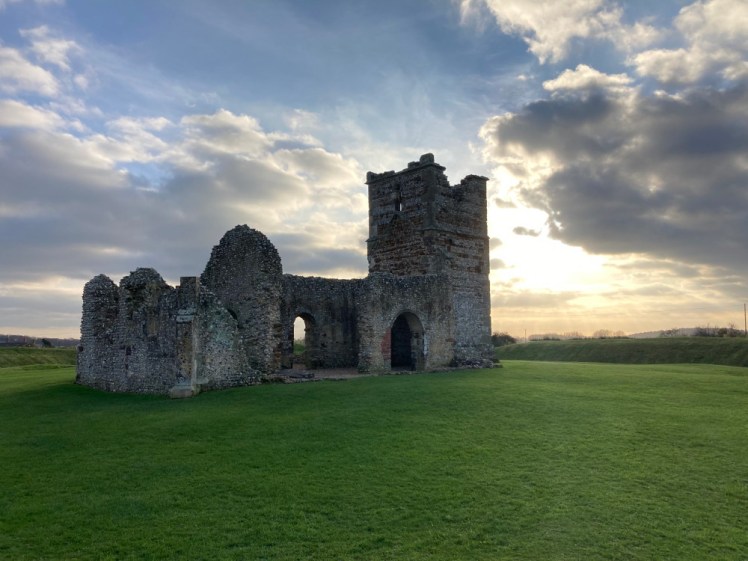
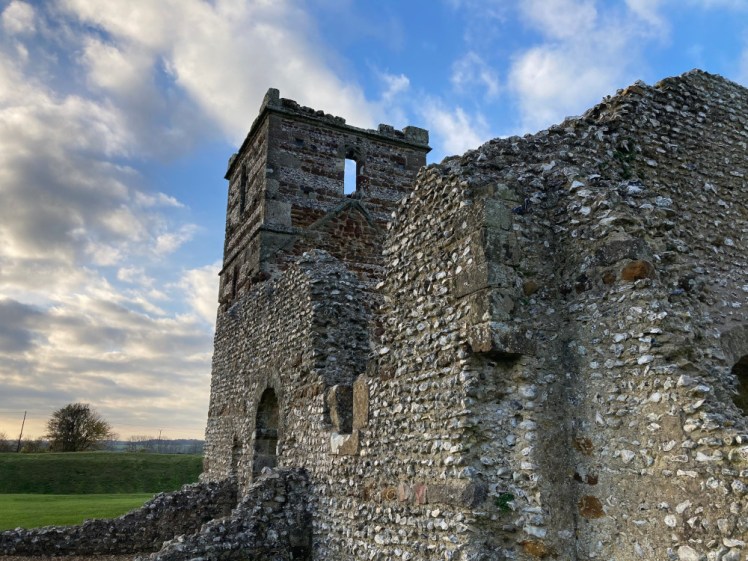
Today, it’s a ruin. The church that became the ruin was built in the 12th century in the Norman style, somewhere between Henry II and Henry III, around Robin Hood’s time, as Richard the Lionheart and King John come between those two, just to give you an idea how long ago the 12th century was. Historical figures have passed beyond history and into legend. By about 1175, England was building its cathedrals in the Gothic style (see Wells and Lincoln Cathedrals) but the new architectural style probably hadn’t stretched from the magnificent and expensive showpiece cathedrals to small country churches by that point. Knowlton was in use as a church for about 500 years and had a new tower built at the west end in the 15th century. It was built to serve a nearby hamlet that was obliterated by the Black Death, leaving the church with no congregation. Its fate was sealed by its roof collapsing in the 18th century.
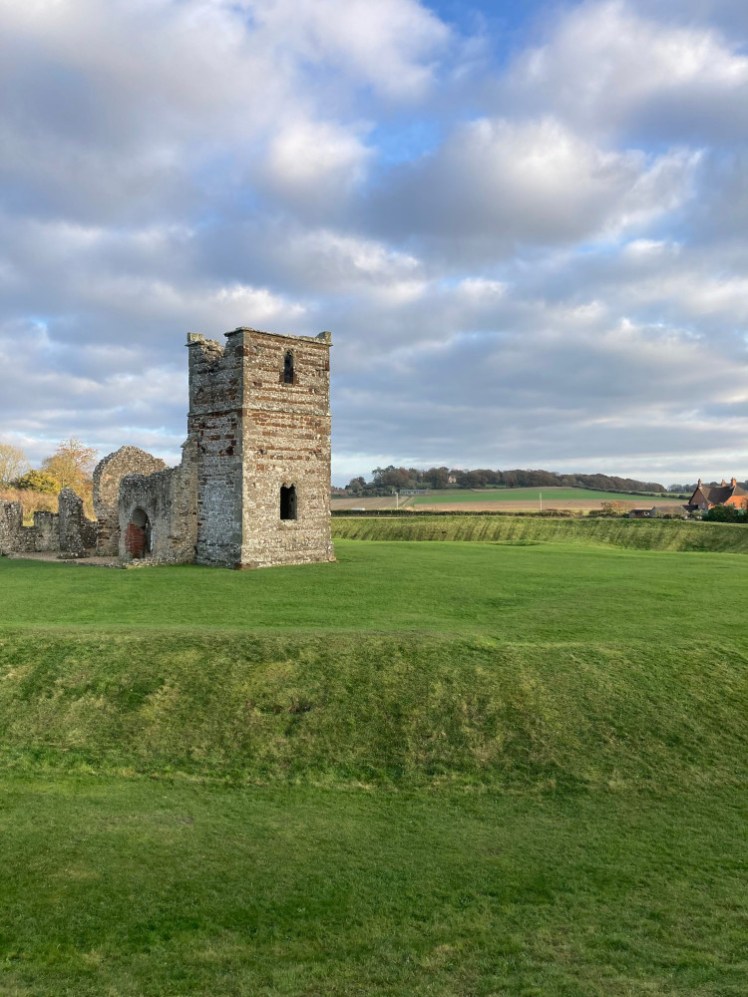
So far, so ordinary. But what’s not ordinary about Knowlton Church is that it’s built inside a 4000-year-old Neolithic henge. Not a circle of standing stones but Bronze Age earthworks, a ditch and a raised rampart. There are several similar earthworks around – there are three or four other henges around the same field and just next to Church Henge is a clump of trees that are enclosed by the larger Great Barrow. Besides the smaller henges there are a few smaller barrows too. No one really knows what they are or why they were built so we fall back on “ritual” but to my (utterly uneducated) eye, they look like miniature versions of hillforts.
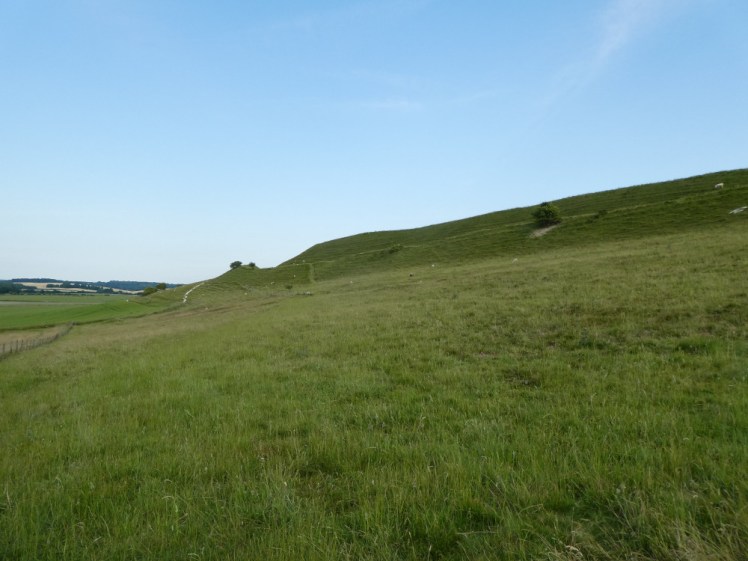
Dorset abounds in hillforts. The biggest and best known is Maiden Castle at Dorchester, 19 hectares of hill, ramparts and ditches, now grass-covered but once bare shining white chalk. It’s the largest hillfort in Britain and possibly the largest in Europe and it’s just 26 miles from Knowlton. There’s also the huge Hambledon Hill in North Dorset, 11 miles away, and even closer is Badbury Rings, just 6 miles away. Maiden Castle, Badbury Rings and Church Henge are built in the same way, with entrances between ditch and rampart at east and west, where there would once have been a heavy wooden door, although due to the shape of the natural hill, Hambledon is rotated north-south. While the hillforts were defensive structures, cities of the time enclosed safely within fortresses, it doesn’t seem possible that Church Henge could have repelled anything bigger than a cat. “Ritual” it is, then.
Barrows are generally burial mounds but they’re more often rectangular humps than rings and they don’t normally have ditches. Undoubtedly some of the so-called barrows nearby really are barrows but I don’t think Church Henge is one of them.
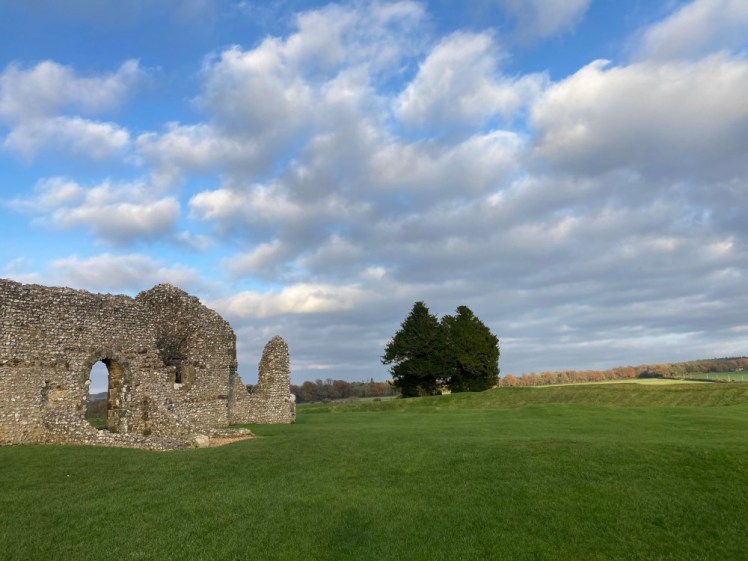
What’s certain is that there was some significance to building a modern church within an ancient henge back in the 12th century. In Iceland, you might just about take it as a symbol of the adoption of Christianity over pagan beliefs, but Christianity came to Iceland at the turn of the 11th century, literally overnight following a decision made at Parliament in the summer of 1000. In England, Christianity crept across in dribs and drabs between about the 2nd and 6th centuries and was firmly settled by the time Knowlton Church was built. It makes it a curiosity, anyway, the Christian church within the pagan earthworks.
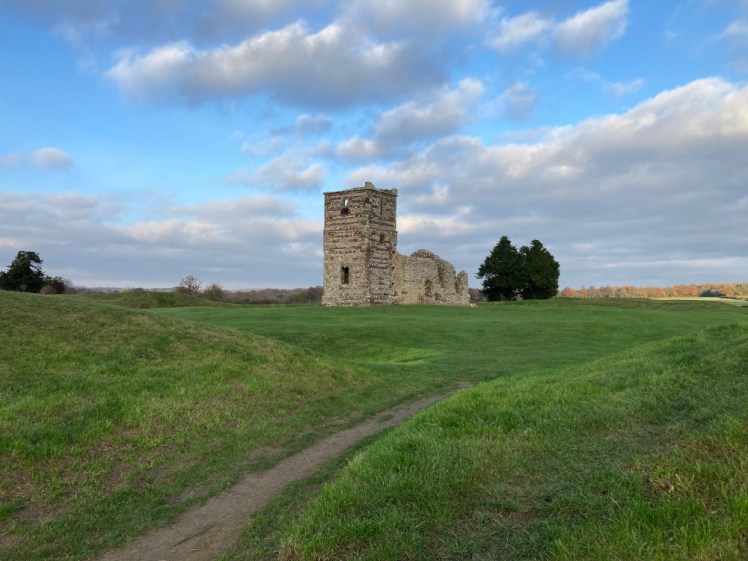
As for the haunting, well, apparently there may or may not have been worship on this site for four thousand years. That’s going to trap a spirit or two, although I’ve never seen anything worse-looking than myself there. Besides the barrows, there was an Anglo-Saxon graveyard here, with at least sixteen burials in chalk graves. Ghosts said to be seen here don’t sound either particularly Bronze Age nor Saxon – there’s the traditional ghostly horse & rider galloping straight through the solid stone of the church, the traditional ghostly face peering through the tower window, the traditional wailing nun kneeling outside and, of course, a tall man dressed in black. Figures dressed in grey lurking in doorways barely visible in photos. Unexplained lights and voices. The usual. The sort of thing I can write with massive levels of scepticism under the harsh artificial light of an autumn evening indoors but which would have me jumping and squealing in terror if I was standing in the henge right now. I don’t believe in ghosts but I bet they’d suddenly feel very real if you were alone in the dark.

I will not be there at Halloween; I’m too much of a chicken. But if you fancy popping along as the veil thins as the month goes on, do leave me a comment if you see anything weird!
 I Am A Polar Bear