Reynisfjara, on Iceland’s south coast, claimed its latest victim last week. There have been six deaths, all at roughly the same place, in the last twenty years and at least twelve near-misses which have involved emergency rescues. I could talk for an entire blog post about the inadequacy of the signage (when I last visited, you had to walk past at least six signs before you even glimpse the beach; now there’s one and since the second one explaining what the first one means blew away in a storm, that one just causes confusion) and the fact that a lot of tourists simply don’t understand how dangerous the sea is but that’s not what this is about. This is about the fact that doing your research and being prepared is being massively hindered by the fact that tourists are rapidly renaming Iceland.

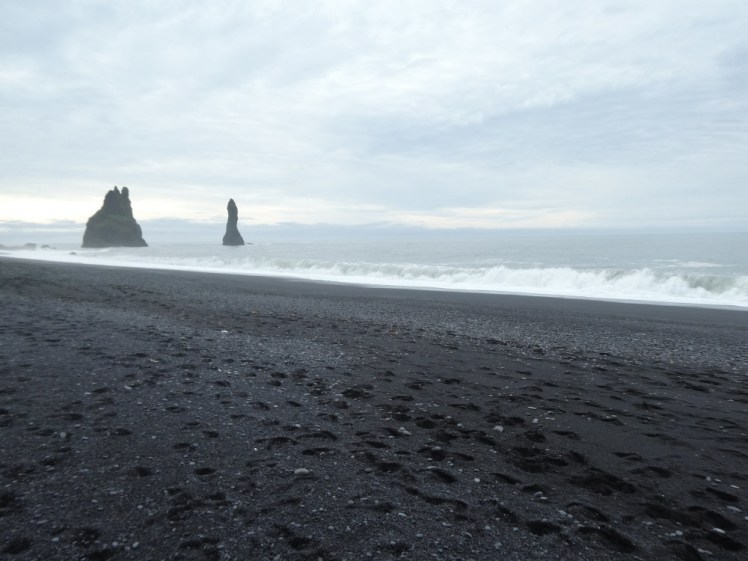
Reynisfjara has a phenomenon called “sneaker waves”. There are actually a few beaches with this phenomenon; none of them have anywhere near the trouble, perhaps because this is one beach where the cliffside scenery means people’s attention is permanently turned away from the ocean. Sneaker waves “sneak up” on you. They’re very big, they’re very powerful, they can yank you right off the beach and you have no idea when they’re coming. This is one beach where you can’t just dip your toe in, or play the old childhood game of pretending to run away from the waves washing on the sand. You might get lucky but you might get dragged into the sea, never to re-emerge. There are two main causes of these waves. The first is the unbroken line all the way up the Atlantic, allowing waves to gather a lot of energy with nothing to break it. The second is that the beach shelves away steeply, meaning that although the top of the wave is at beach level, the bottom of the wave could – even on an ok day – be ten or twelve or twenty feet below. That’s a lot of wave and it claws at you and pulls you under. If you’re really lucky, don’t die within ten minutes of hypothermia and keep your head, you might be able to “float to live”. You won’t be able to swim back to shore. The current simply won’t let you.
I’m a member of an Iceland travel group on Facebook. The number one topic of conversation is usually “I plan to give tips to everyone in USD and they should all be grateful because our currency is the best in the world!” but the number one topic in the last week or so has become Reynisfjara. Exact subjects range from “Tourists are so stupid!!!!” to “Here is my uninformed opinion” to posts which just ooze smugness that go something like “I’m a better tourist than everyone else because I know it’s dangerous and I’ll be keeping my distance, look how much better I am than you”. Posts of all kinds are then derailed by people asking things like “Which black sand beach is this?”, “I don’t know what a Reynisfjara is” and “I can’t find Black Sand Beach on Google Maps” and I rapidly realised people have no idea where to start with their research and it’s partly because half the world has decided to rename things.
Tourists, by and large, are lazy about research. The things I see in this Facebook group – and this is a group of people who are doing research, albeit by just asking other people what they should see and where they should go and what they need to know – are mind-boggling. I saw someone who was driving the Ring Road and had no idea that Jökulsárlón, probably the biggest attraction in the country outside the south-west, even existed. How do you plan a Ring Road itinerary without ever stumbling across “the glacier lagoon”? It’s unfashionable to read guidebooks anymore – makes you look like a tourist, apparently, as if the winter coat on a warm sunny day, the brand-new unused hiking boots and the camera held permanently out don’t. So people take their advice from Instagram and TikTok – I see something pretty, where is it? There’s no interest in “what is it?” or “why do people go there?” or “is there anything I need to know before I go there?”.

Those that do bother with finding things out in advance get hopelessly confused if the names keep changing. Yes, I know, tourists see Icelandic names and it trips the panic response in their brain. Too long, too foreign, too hard. Not even going to try. Make up a new name that we can pronounce and with no weird letters! But this is what it can lead to.
It infuriates me that Breiðamerkursandur is now known as Diamond Beach. Diamond Beach simply wasn’t a thing only a few years ago; someone happened to stroll over there, saw the ice on the beach, named it that and it just caught on. I will pointedly refer to Skólavörðustígur in Reykjavik and pretend I’ve never heard the words “Rainbow Street”. But those two are mostly just annoying. Renaming Reynisfjara to “the black sand beach” is actively dangerous – as we’ve seen from these Facebook posts, people don’t know what they’re seeing.
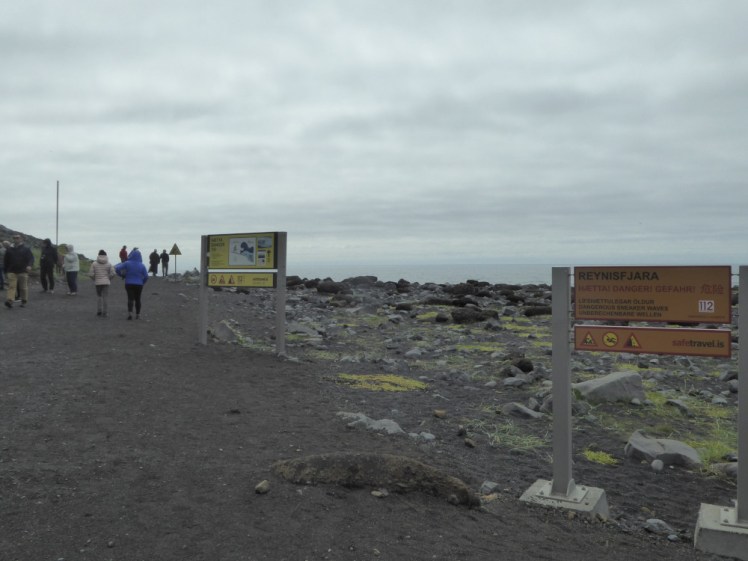
Maybe they hear that the Black Sand Beach is really dangerous but when they arrive, all the signage says Reynisfjara, so they assume this isn’t the dangerous beach. The signs are hardly helping to correct that assumption these days. They hear that a black sand beach is dangerous but when they arrive in Iceland, all the beaches are black sand and rather than jump to the conclusion that means all beaches are dangerous, they decide their odds of stumbling across the dangerous one are vanishingly low and stop being careful. Or they hear that Reynisfjara is dangerous but – like the lady above – have no idea that Reynisfjara is even a place. They don’t connect it with the dangerous black sand beach they’ve heard about because they understand beaches and don’t understand long weird foreign words.

There’s a lot that needs to be done at Reynisfjara. The signs need to become overwhelming again – I can’t get over the fact that as awareness of the danger has grown, the signs have dwindled from almost too many to almost nothing. There needs to be a presence – a ranger or someone with some authority – to order the tourists away from the danger at least during daytime during the summer. Apparently the subject came up and the authorities promptly went “We never talked about that” rather than “we are doing this immediately”. The witnesses to the latest fatal incident pointed out the lack of proper rescue equipment. At Jökulsárlón and Breiðamerkursandur and even at Dyrhólaey, there are rescue lines, marked by bright green signposts. They feel like an extremely optimistic gesture but after reading the article about exactly what happened that day, it might be a gesture that actually saves a life. Closing the beach altogether might be the best idea – just at the other end of the very same beach, below Dyrholaey, there’s another beach prone to sneaker waves and that’s just been closed off. End of problem. The trouble with Reynisfjara is that tourists want to see the basalt columns, the caves and the puffins and, not to be cynical, the cafe probably wants to continue hoovering up tourism money and whoever owns the car park wants the continued revenue from that.

But a small thing would be to drop the tourist nickname, to actively encourage use of the Icelandic, even if recognising and trying to spell, and worse, pronounce Reynisfjara (ray-niss-fyar-a) is scary. It’s a lot less scary than being sucked out to sea because you didn’t realise this was that black sand beach.
Drop the tourist fake names. Using real names saves lives.
 I Am A Polar Bear