After the eruption in Iceland the other week, I was speculating on what to tell my colleagues about it at the weekly meeting, where we give a nod towards watercooler chat on between “what I did last week” and “what I’m doing this week”. I wanted to tell them about the eruption because it’s something that interests me and something that may affect my upcoming travel plans. And as I thought about, I realised I was probably going to have to explain that it’s not “a volcano” as some of them will probably be picturing. And so this post was born.

Volcanic activity and a volcano are two different things. Volcanic activity is when anything that originates from magma reaches the surface of the Earth, be that lava, steam explosions, emissions of toxic volcanic gases or just heat bleeding through. A volcano is a mountain from which these events emanate – most commonly the release of magma or ash but also sometimes just gases of one kind or another.

There are various kinds of volcano but generally they’re made up of layers of solified lava. Their shape depends on the kind of lava and the circumstances that they were formed under. For example, the stereotypical cone-shaped volcano is formed of fairly thick, sticky lava that flows more slowly. A shield volcano has long gently-sloping sides and are created by thinner runnier lava that spreads and runs away. A flat-topped volcano was probably formed under a glacier, where the mass of ice physically prevents the volcano growing upwards into a point. Other flat-topped volcanoes might have had their points “filed off” by a later glacier, which is nature’s giant sheet of sandpaper, rather than have been formed underneath one.
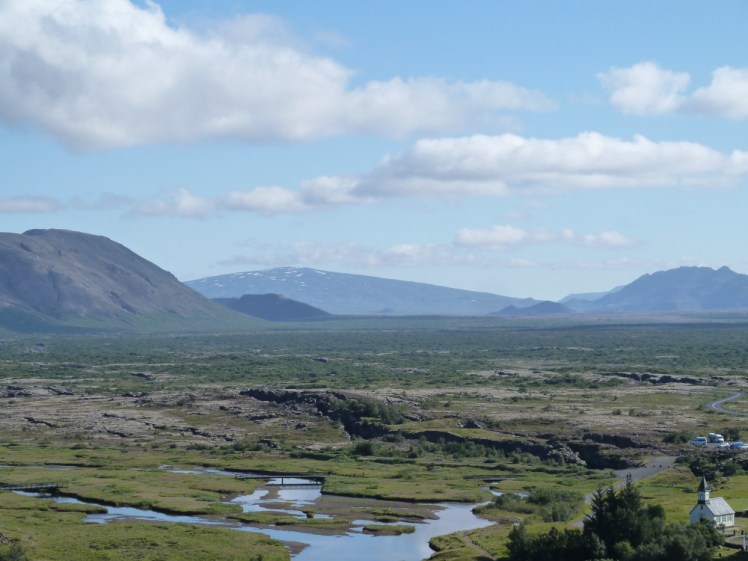
Eruptions like the ones on Reykjanes over the last four and a half years are fissure eruptions, where the ground has split open over an almost perfectly straight line under the pressure of magna forcing its way upwards. Picture a sausage being fried. As it heats, maybe the filling expands and then it tears open the sausage skin and the insides expand outwards. That’s a fissure eruption. They often send up fire fountains as the lines are made up of many separate holes that may or may not tear and join up. Sometimes these fountains will start to build little mounds of lava around them, which solidifies and builds up and up as lava is ejected and thrown onto the mound. It doesn’t take long for that mound to become a crater. The Lakagigur eruption of the 1780s was a fissure eruption some 30km long, which grew a line of relatively small craters that you can still see today. The most recent eruption barely lasted 48 hours but in that time, it started to make craters.

How do we know when a volcano or a rift is going to erupt?
By and large, we don’t. For a start, there are far too many volcanoes and volcanic regions on the planet to be able to effectively monitor all of them. Some get more attention than others. There are a set called Decade Volcanoes which have more than a million people living within their danger zones and a history of explosive eruptions. These are enough of a danger that they’re closely watched. Many nations observe their own volcanoes. Iceland is lucky in this regard. It’s a fairly tiny area with finite number of known volcanic systems, some of which are regular and reliable, by volcanic standards.

You see, as a society, we know nothing about volcanoes. We’re like a year-old baby with a jack-in-the-box. The baby is old enough and experienced to recognise that something is going to happen when it sees the box but it’s still going to jump and shriek and giggle when the jack springs out. We know what volcanoes are and we can recognise some signs of an imminent eruption but it largely still takes us by surprise.
Iceland, as I’ve said, is something of an exception. Its collection of volcanoes is small enough that watching them all is manageable and they’re regular and repetitive enough that science can recognise the “symptoms”. What’s more, it’s practical to be able to monitor them to be able to detect these symptoms in the first place. There are instruments on and around all of them.
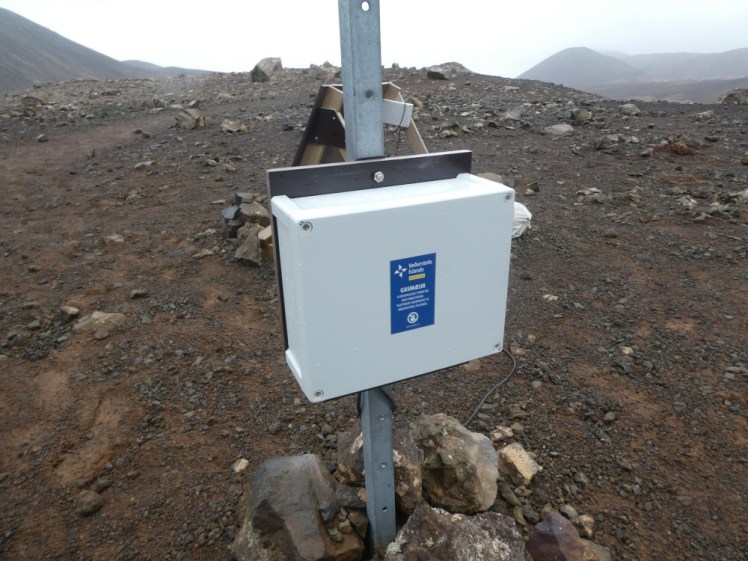
Symptom one is uplift. Bloating, if you will. Magma moves from deep within the Earth’s mantle towards the surface and this movement of molten rock or gases causes the area immediately above it to “inflate”. GPS instruments can detect that a volcano has grown a millimetre in the last week and so they get extra attention.
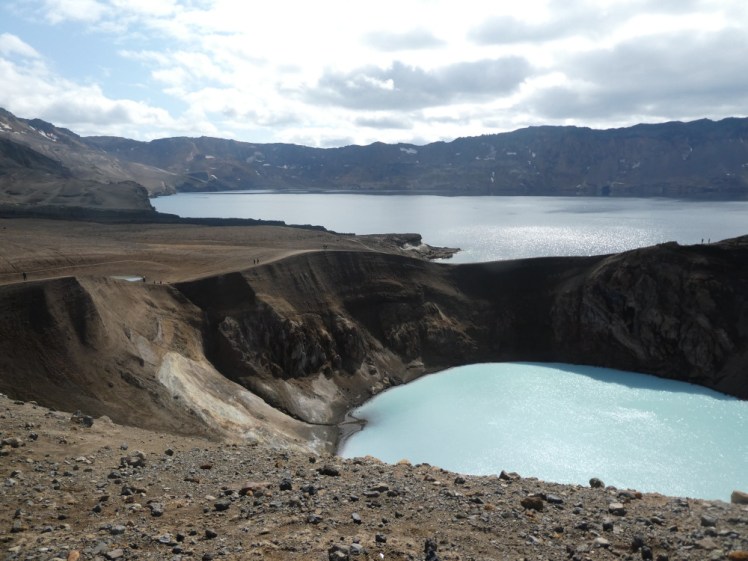
Symptom two is earthquakes. This is the ground fracturing as the magma pushes its way forcibly upwards. Eruptions on Reykjanes are usually heralded by earthquake swarms – dozens, of not hundreds, of earthquakes in a very short space of time. The more intense – in either number of earthquakes or magnitude, the more likely the magma is almost at the surface and about to break through as an eruption. On Reykjanes, volcanologists can by now pretty much pinpoint the location of an eruption an hour or two before it starts by following the earthquake swarms. A swarm doesn’t always mean an eruption but an eruption has always been preceded by a swarm so far.

Many other volcanoes will have similar warnings. The difference is that for many reasons they may not be monitored so closely, or at all. Many more won’t be so considerate as to give a warning. Some will cry wolf – give so many warning swarms followed by no volcanic activity that people don’t know when it’s time to take it seriously.
So we know a little about volcanoes but not a lot and we don’t always have the resources to apply what little knowledge we do have. We certainly can’t forecast them more than a few hours ahead. Even volcanoes that have shown repetitive patterns can suddenly break those patterns with no warning and for no apparent reason. In a century or so, we’ll look back at our scrappy understanding of volcanoes in the same way that we look back at medicine now: it’s less than a hundred years since we were treating bacterial lung infections like TB in all seriousness with fresh air, early nights and wholesome food. Our idea that volcanoes are unpredictable in every way will look quaint one day. But for the time being, that’s how it is. Humans don’t yet understand volcanoes.
 I Am A Polar Bear