In the early hours of yesterday morning, the twelfth eruption in the Reykjanes Fires, the period of eruptive activity ongoing since 2021, started up. It’s the ninth in the vicinity of Grindavik and the Blue Lagoon and we’ll see what chaos it causes. I’m actually starting to write this on Wednesday morning ready for the usual Thursday afternoon publication so right now, I know very little. The Blue Lagoon appears to still be open although all roads leading to it are closed – at least, there’s nothing on the website or Instagram suggesting anything is out of the ordinary right now. Staff have been permitted to return to the Svartsengi power station but essential staff at a major piece of infrastructure are a very different priority level to tourists at a spa.

I’m looking forward to the flood of “will my flight be cancelled because of the ash cloud???” posts on my new favourite Iceland travel Facebook group. Everyone’s point of reference is the Eyjafjallajökull from 2010, which did produce an ash cloud of epic proportions. Anyone who’s been paying attention during the last four years, however, should know that the previous eleven eruptions in the area just don’t make ash and this one won’t either – it simply doesn’t have the conditions to do so and there is no freak of nature that can make a twelfth do it unexpectedly. Lava needs to mix with dirty ice and there is no ice.

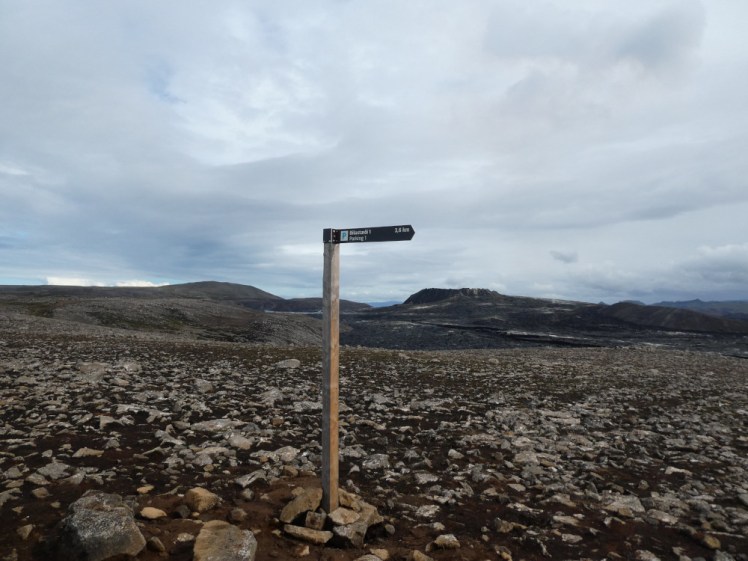
The next question – which has already been asked three times by this point mid-morning on Wednesday – is “Are there any tours that we can go to visit the eruption?” and the answer is firmly “no”. I don’t entirely know why. Well, I do. The first three eruptions in this series were all up in the mountains well away from any vital infrastructure. ICE-SAR, search & rescue, were quite happy to indulge any tourists who wanted to hike up there, to the point that they scraped out a path and a car park and stood along the route keeping an eye on things. With these ones so close to the power station, the biggest tourist attraction in the country and a major fishing town, they’ve got better things to worry about than looking after tourists, like building and rebuilding defensive walls, rebuilding roads, evacuating local inhabitants and workers and so on. They just don’t have the time or capacity to look after idiot tourists.

But there’s also the geography of it. The first three happened in little valleys with natural viewpoints from nearby hills and ridges so you could see it very well without getting too close, like spectacular theatre shows. The Sundhnúkagígar eruptions are mostly happening in fairly flat land where the best place to see the lava is by pretty much standing in it, which the authorities obviously do not want, and neither do you. Earthquakes are breaking roads open and trying to swallow Grindavik in the south, in the west the lava is flowing across the road that runs north-south, the road to the north is a major dual carriageway and to the east is nothing but mountains, so there’s nowhere safe and convenient to park, or to scrape out a new track and car park – and believe me, having hiked out to the 2022 eruption, if there was any possibility of making this accessible to the public, they’d have done it. Nine eruptions in, if they haven’t created a way of getting tourists to it, there’s going to be a good reason for that.
And last, while these eruptions aren’t producing ash, the levels of toxic gases are currently very high, which is another big reason why so much of the area is closed, so if you were thinking of using your imagination and ingenuity to get near this eruption, think again.
If you want a tour, your best option – your only option – is to get onto one of the helicopter companies. They’ll probably all be sold out by now but you might find, if you’re on your own, that one of the trips has a single seat waiting to be filled. At the moment, helicopter.is has an eruption tour – marked as a visit to the inactive volcano because they haven’t updated their website very quickly – at 65,900kr, which is around £400/$537. It’s a 35-minute tour from Reykjavik with no stops but if I had the chance to fly over an active eruption for £400, I’d jump on it.
From my point of view, I’m inclined to see this particular eruption as an inconvenience rather than a wonder. I’m going to Iceland in ten days and I’m hiring a campervan at the airport. I’m a wuss about driving in the vicinity of Reykjavik – I’m a country girl and while Reykjavik is small, it’s low-level and so it sprawls more than it should and covers a relatively huge area. I don’t love navigating dual carriageways and roundabouts and junctions and traffic lights and so I’ve always avoided the Big Steam by taking the road south across Reykjanes to Grindavik and driving along the south coast road until I can wind my way up to Hveragerði. It feels like a road trip along the California coast, give or take that it’s usually a bit cold and grey. A huge chunk of that route is currently closed because of the volcano. I can get round route 43 to Grindavik by going round the western end of the peninsula via the likes of the Bridge Between the Continents but that doesn’t help with the fact that fourteen miles of the road beyond Grindavik are closed. I may be able to come down the 42 via Kleifarvatn if I want to double the length of my journey, or take the 417 and 407 and come out on the Ring Road just south of Reykjavik or I might have to put on my big girl pants and make my way through the capital.
Or, if this one is anything like the one back in April, it could be all over by lunchtime and all the roads will be rebuilt and open by bedtime and I’m worrying over nothing.
Inconveniences for other people: well, of course this is going to be yet another worry for the people of Grindavik, although at this late stage, I assume they’ve either moved out and left it behind or it’s becoming something in the way of “just a natural hazard that we don’t even bother worrying about anymore”. I’m not going to speak for them. I’m going to speak for all the tourists who were planning to go to the Blue Lagoon this week and recommend my post “Which is the best geothermal lagoon to visit in Iceland while the Blue Lagoon is closed?” Spoiler: it’s probably the Sky Lagoon, but that is quite small and regularly sells out on days when it’s in competition with the Blue Lagoon so you’re probably out of luck if you’re only now going to switch when the competition is closed.
Myvatn Nature Baths is probably the best direct competitor to the Blue Lagoon but it’s literally the other end of the country so probably not a realistic swap for most people. If you’re driving the Ring Road and intended to visit the Blue Lagoon at some point, it might be a good idea to forget that and to include Myvatn Nature Bath in your itinerary instead. Otherwise, Laugavatn Fontana and the Secret Lagoon are both on the Golden Circle and relatively close, or you could just go to an ordinary outdoors geothermal local swimming pool, which is something I do every time I’m in Reykjavik. Sundhöllin is lovely and very conveniently located downtown or Laugardalslaug is a bus ride away (take the 14 towards Verzló and get off at Laugardalslaug) and that’s wonderful.

Just to clarify: other than a couple of airlines that had a moment’s kneejerk panic on Wednesday morning, this isn’t going to affect flights. No ash, no problem. If your pilot is really nice and ATC agree, you might get your flight adjusted by a couple of degrees so you can look down at it from the air instead of missing it by two miles but that’s the only difference the eruption is going to be able to make to your flight.
If you were planning to go and see the cooling lava from any of the previous eleven eruptions, that’s off the table for the moment. The previous eight are literally underneath the current one and the first three are within the area inaccessible because of closed roads. I’ll do what I always do in these circumstances and recommend that you go to the Lava Show at either Vik or Reykjavik to see real live lava under controlled circumstances – I think it’s great. Otherwise, the entire island is made up of solidified lava, so if you’re just looking to see it in the form of grey rock, you can see it literally anywhere and everywhere, although I appreciate that the fresh-ish stuff is more exciting. Take a trip out to Heimaey and climb Eldfell and when you get to top, scrabble half an inch of dust away and you’ll find it’s still warm underneath from the eruption of 1973.

But leave the current eruption and the authorities alone while this eruption blows over.
 I Am A Polar Bear