“Grockle” is a word you’ll rarely hear outside England’s West Country. It means a tourist but in a derogatory way. Not the kind who prop up our economy, adore our scenery and appreciate our cider but the sort who clog up roads and car parks and leave their bottles on the beach. Tourists can be a force for good, or at least lawful-neutral but grockles are bad. That said, I did once hear an old lady from Cornwall scold someone for using the word, since the south west is powered by tourist but I stand by tourists and grockles not being exactly the same thing. You might also hear the word “emmet”, especially in Cornwall. It actually means “ant” in the local dialect, presumably because too many tourists in one place look like a swarm of ants.
So, how can you not be a grockle and how can you be a good tourist?
Only park in car parks
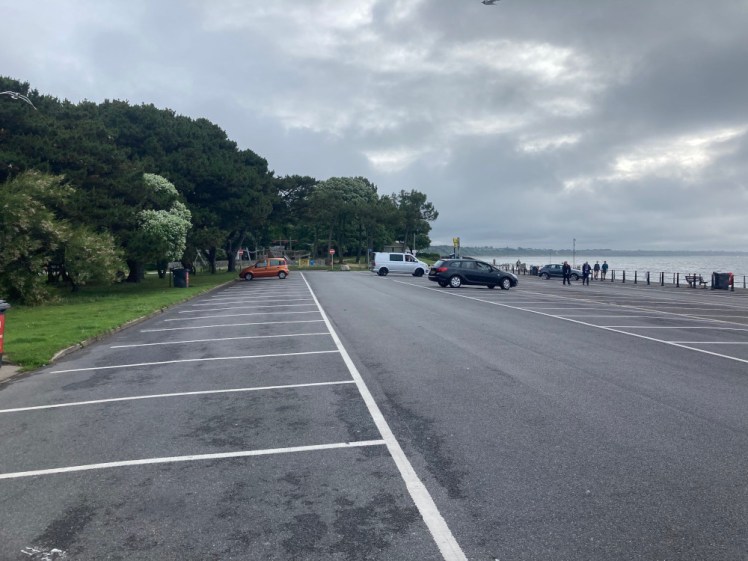
That sounds pretty obvious but it’s a growing problem all over the country. People arrive to visit a specific place and if the car park is full, they’re staying anyway. They park on verges, in narrow roads, on roundabouts and even on other people’s drives. They’ve travelled all this distance to come here and nothing’s going to stop them. When challenged on “you literally can not park there”, they tend to snarl things like “I can do what I want” or “It isn’t your beach” or “you need my tourist money”. This does not endear tourists of any kind to the locals. If you can’t park where you want to go, you need to find somewhere else to go. If you want to go somewhere popular, you need to be there early. Plan on arriving anywhere before 11am at the absolute latest.
Put your rubbish in bins or take it home with you
A couple of years ago, BCP Council declared a major incident over the amount of rubbish left on the beach. Of course there are bins provided but an entire town recycling plant would struggle to deal with the amount of bottles, cans and packets that tourists can get through on a single sunny day. Bins fill up very quickly and they can’t get emptied fast enough. If you can’t find a bin with space in it, you need to take that rubbish away with you, not just leave it where it is or pile it up next to the bin.
Don’t use disposable barbecues
I know, freshly-cooked sausages or kebabs on the beach with a beer sounds amazing but the little disposable foil barbecues are such a fire hazard. You hear a lot about Dorset’s coastline and its green hills but what you don’t hear is that in between is a massive band of heathland and this catches fire so easily. You’ll see signs all over Purbeck declaring high fire risk and banning use of barbecues but it doesn’t stop the grockles. The Wareham Forest fires of 2020 were so big that they’ve got their own Wikipedia page, was probably started by a disposable barbecue and took 150 firefighters and 28 fire engines seventeen days and half a million pounds to completely extinguish. If you must cook your own food, do it at your accommodation on a proper barbecue.
Don’t put disposable barbecues in bins
If you’re too arrogant to take me at my word – don’t use disposable barbecues! – then at least use some common sense. Don’t ever use them in dry vegetation and don’t go putting them in bins while they’re still hot. The South West already has a problem with litter; don’t go making it worse by setting fire to bins. Oh, I know you didn’t mean to, you were the rare tourist trying to be tidy but you didn’t use your brain. Absolutely, dispose of that barbecue once you’ve used it but dispose of it safely. Make sure it’s stone cold and there’s not so much as an ember still gleaming before you bin it. Have it somewhere reasonably fireproof like on the beach and bring back a bucket of sea water to thoroughly extinguish it – we’d rather have the bins full of wet coaly-oily slurry than on fire.
Respect the sea

There was an incident a few years ago with a grockle and an inflatable which ended with her screeching that the beach didn’t deserve to be called a beach because it wasn’t safe. No. Beaches aren’t. A beach is a bit of sand or shingle between the land and the sea, not a place to swim. Some of them you can swim at but not all of them. It’s a bonus. Inflatables are inherently dangerous and best kept to pools. If you’re going out on a paddleboard or hiring a kayak, you need to wear a buoyancy aid at all times and you need to recognise offshore winds that are likely to blow you further and further away from land. If you’re swimming, you should swim either at a beach with lifeguards on duty or go with a local group who know what they’re doing and are familiar with that particular stretch of sea, like the Blue Tits. If the sea is producing waves with white caps, don’t go out. If it’s windy, best not to go out. If it’s rougher than a swimming pool but not at white caps yet, at least understand that you need to take a lot more care. Check the tide – enormous amounts of water can come pouring in very quickly around Devon and Cornwall’s north coasts in particular and you don’t want to either get smashed by the tide coming in or hauled out by one leaving. If no one else is swimming, take the hint.
Don’t keep buying beach tat
Everyone who comes to a beach in Dorset, Devon or Cornwall buys a plastic foam bodyboard and then bins it at the end of the day. Everyone who comes to a beach with a small child buys another plastic bucket & spade which ends up in the bin. Apart from the fact that this fills up bins very quickly, being bulky, we’re trying not to buy too much disposable plastic stuff in this day and age. Many beaches these days have large boxes where you can leave your stuff for someone else to use tomorrow or where you can pick up the stuff you want to use for the day without having to buy it yourself – a kind of beach library for toys and boards to have a life longer than a single day.
Don’t camp on the beach

For one thing, it’s generally not allowed to camp on the beach and you’re trying not to be a grockle here. Be a good tourist who does what you’re told even if you don’t like it. Spend that money on a local campsite which has actual toilets and don’t use the beach or the prom when you find the public toilets either overwhelmed or closed for the night. But mostly – you’re a visitor and so you have no idea what the tide is going to do overnight. Do you really want to wake up trapped in a tent with a foot of seawater that’s rapidly rising?
Find somewhere away from the tourist trail
There are certain towns and certain beaches that get absolutely overrun by tourists. By 8am, all the parking spaces have gone and you’re not going to enjoy that beach because if you move your foot, you’re going to touch the person trying to sunbathe next to you. On the other hand, there are miles upon miles of beaches grockles haven’t discovered yet; so many interesting towns and villages that aren’t on absolutely everyone’s to-do list and it only takes a little imagination and even littler research to find these places. You’ll have the peace and quiet away from the city you were dreaming of, you’ll have discovered somewhere that the hoards don’t know about and you’ll have pictures with scenery in them rather than thousands of visitors.
Use sun protection
I’m getting into the petty now but grockles have a reputation for being lobster-red for a reason. They tend to abandon any kind of responsibility once they come off the A303 or the M5 and that includes getting sunburned from head to toe. Don’t look like an ignorant burnt grockle; use a decent sun cream and reapply it at least every two hours, don’t lie out in the sun at midday, wear a hat and please occasionally put a shirt on!
Spend that tourist money on the locals

One thing grockles often grunt is about how the south western counties need the tourist money and therefore we should all bow down to them as they shower their money around. Well, spend that on the locals! It’s of no benefit to Cornwall, Devon or Dorset for you to spend your holiday at chain pubs, restaurants and shops. Get your fish & chips at the local independent shop right on the beach, get your beer from the characterful little pub in the village, buy your souvenirs from a local craft shop, that sort of thing. Think about where you’re spending your money so at least half of it is staying in the local area.
Think before taking a selfie
I love a selfie as much as the next person but I’ve also heard a lot of horror stories along the lines of people stepping backwards off high places because they’re looking at their phones rather than what they’re walking on. By all means, take the selfie, but make sure you’re not going to fall off the cliff while doing it.
Remember that people actually live and work in the west country
It’s very easy to see this very rural part of the countryside, with its old-fashioned villages and its gorgeous beaches, and regard it as some kind of holiday park, where nothing’s real and you can do whatever you want with no consequences. In a way, we mind what you do less than we mind your attitude. Drunkenly stumbling around Bournemouth at 9pm, avoiding getting run over by inches, is deeply annoying when you’re trying to just go about your business but acting like the entire region is your playground where you can do what you want because it’s your holiday is just insulting. We’ve already resigned ourselves to having to go to the beach between October and March only but you don’t seem to realise that we’re catching the fish for your fish and chips, we’re staffing the pubs and shops and we’re the RNLI volunteers who are going to have to drop everything to come and rescue you. Take the locals away and the grockles are going to find themselves in an apocalypse pretty quickly.
Go forth and enjoy your trip

Do enjoy your trip; this part of the country is very special and we’re always glad when people enjoy it properly, without becoming a menace or a hazard.
 I Am A Polar Bear