Today is Wednesday 23rd April and I just got my film photos from Pula back – I only got home on Saturday and the film didn’t go in the post until Monday, so I was astonished at the speed of it this time (with my black and white Iceland pictures, I waited four and a half weeks, whereas this was under 48 hours). I was even more astonished that a) they’re really good qualities, not a duff one among them b) there are 27 of them – I thought the film ran out somewhere around the 12th exposure but it did take quite a few before it started counting and I swear it was higher than 12 the day before it ran out. I think this is the first time I’ve got through an entire roll of film on one trip and not had to spend time using up the last half a dozen when I get home – no, it’s the second time, I used up all my black & white photos of Iceland in December, although it turns out I haven’t done a post on that.
Of the 27 photos, 12 are of Pula Arena, either from the inside or the outside. I’ll spare you the full twelve but the Arena is so amazing that even though you’ve seen it in two blog posts so far in the last fortnight, you need to see it again.
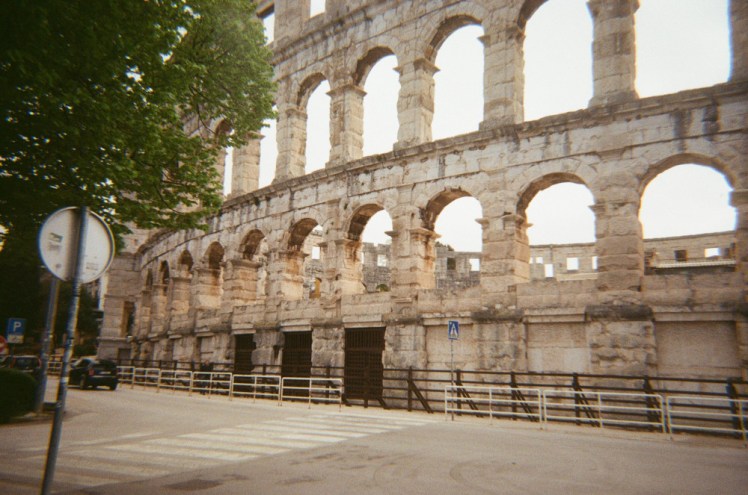
Pula Arena from the outside, my first photo from this roll before I was certain whether it had rolled along enough to actually capture the photos. It’s got that slightly grainy, slightly out-of-focus, slightly golden tint to it that film photos do tend to have. It’s nice and bright, nice and sharp (as these things go) and really shows off how thin and fragile this 1900-year-old amphitheatre is.

Pula’s cathedral, which I never got a good look inside, as the only time it was unlocked was while there was a service going on inside, which isn’t a great time to wander in and start taking photos. From this angle, you can’t really tell that the bell tower is actually completely separate and at least ten feet away from the main building, nor that it’s several centuries younger.
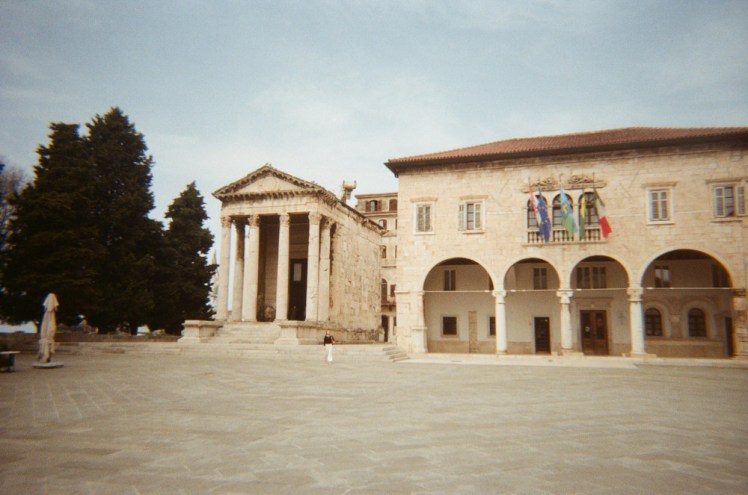
Oh, proper gold! This is the Temple of Augustus and the City Hall in the unusually quiet Forum, a square in Pula that’s been a square for at least two thousand years. The film makes the yellow-white stone both in the buildings and in the floor glow slightly in a way digital could never.
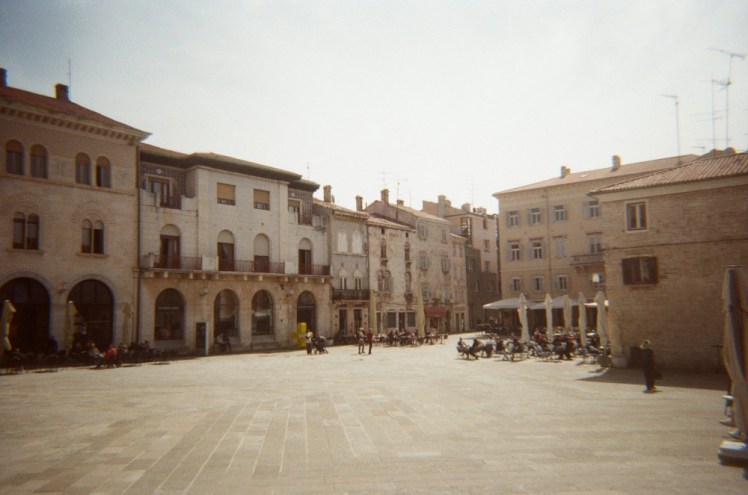
The Forum in the other direction, probably taken if not directly into the sun then into more sun than I would love. It’s still early enough that a lot of the tables and umbrellas that will be out later are still packed away and the square is quieter than it normally is.
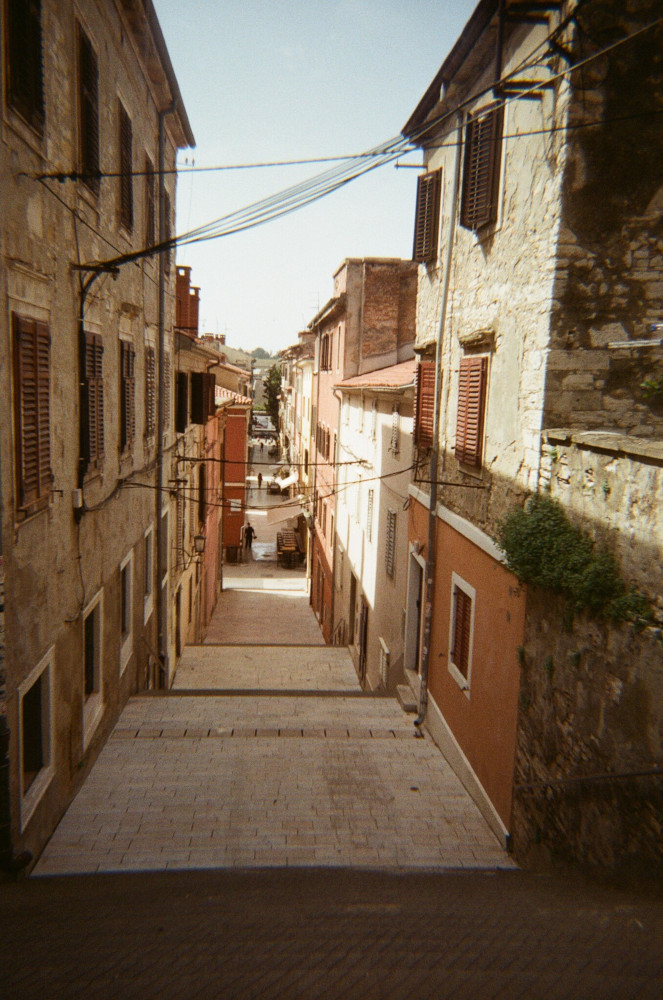
I like this one, it reminds me of Dubrovnik – the stone Mediterrean streets going downhill to cross other streets and turn into alleys lined with cafes. It’s a bit shadowy for true greatness and although it makes no sense in context, it would look characterful if it had some washing hanging up between the buildings. I like it nonetheless.
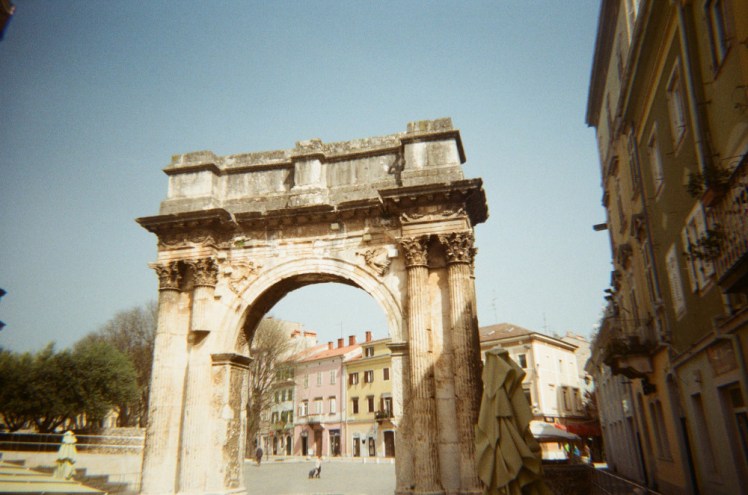
The Arch of the Sergii is another Roman relic and film somehow makes it look even more aged and dirty, which makes me realised what a miracle it is that it’s still standing, and on a major thoroughfare where 21st century humans are casually walking underneath all day every day and have done ever since it was constructed. Despite how dirty it looks, the sun on it is almost making it glow.

This is a view from the roof of the Kaštel, the Venetian fortress. You can tell from the weird angles of all the walls that this is a star-shaped fort (albeit a four-pointed one) and the cannon poking in from the right says that this place means serious business. This is one picture that hasn’t come out gold-tinted – in fact, between the flag and the shape of the trees, you’d think there was a howling gale. There isn’t, but the sky is definitely cloudier and heavier than in the other pictures.

Here’s a view from up on the fort – the Mediterranean terracotta red roofs and golden-yellow buildings of the old town utterly dominated by the modern industrial ugliness of the shipbuilding island that blocks the city’s views of the enclosed bay. I quite like a certain amount of industrial ugliness and I quite like this but imagine how beautiful Pula’s sea views could be if it wasn’t there – headlands reaching out from both sides to almost but not quite touch in the middle, small islands rising out of the turquoise waters.. and now, you get to see a ferry being dismantled by cranes instead.
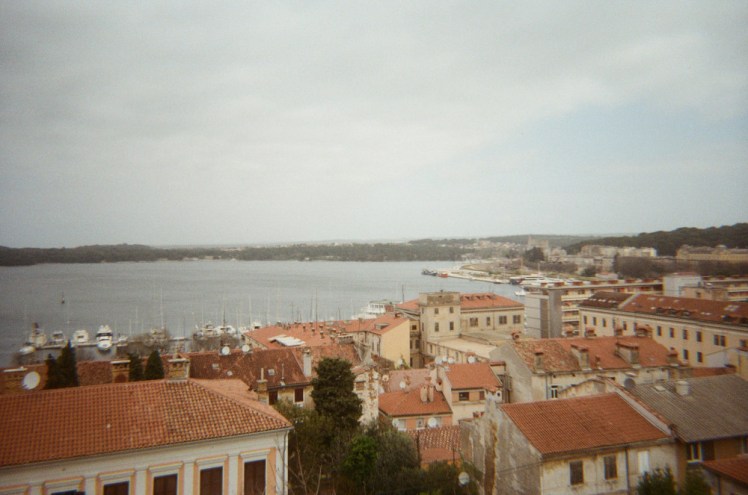
Here’s a better view from the fort, this time looking north over the red rooftops, over the harbour with its little marina of sailing boats and a bit of bay that’s mostly free of industry, although you can see the station in the middle of the picture, which is a broad rail yard that probably used to serve the docks. The rails running south from it are now overgrown and set into pavements and roads and the only trains, I believe, are passenger trains running north into Istria but the station remains undecorative. However, you can hardly make it out and the bay and the city are quite pretty.
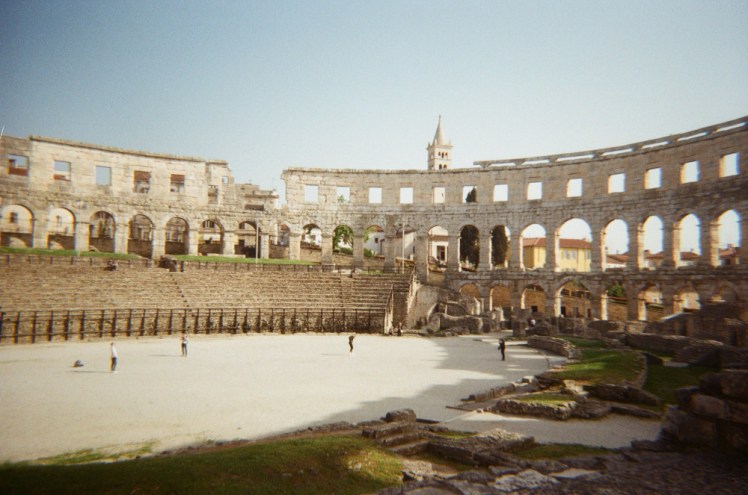
Ok, let me indulge myself in Pula Arena. This was taken from the blocks on the west side, presumably the supports that once held up the seating. The stone was pillaged by locals for building houses and churches over several hundred years before someone decided that they really should be preserving their local incredible Roman artefact. The seating on the east side survived and that’s what’s showing in my photo, the lower level (according to the windows in the outer ring) filled up with tiered seats. The arena floor is a white gravel oval with people taking photos and playing games in it.

And this is pretty much the opposite photo, taken from the seats looking towards where I took the previous photo. In this one, you can see how tall and thin and fragile the outer ring is and also that it’s got a “tower”, crumbling a bit at the top. Apparently Pula Arena is quite unusual in that all four of its towers have survived but I stood in the middle of the floor looking around and counting two on the west side and no others, unless I’m just no good at recognising towers. Seeing it from here, realising how thin it is, it’s kind of astonishing that this thing has survived 1,900 years.
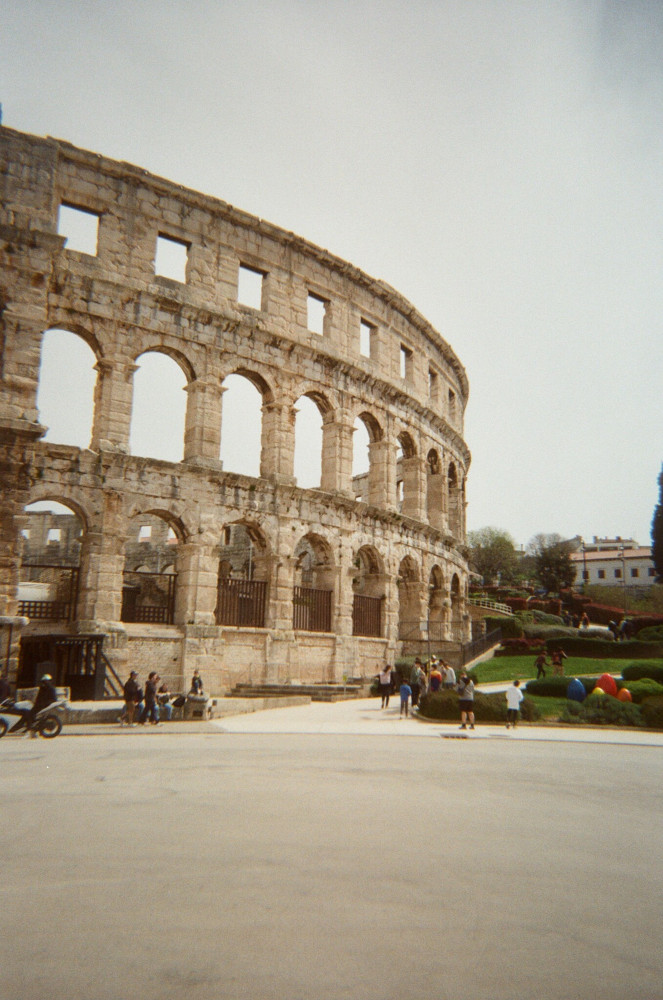
One last Arena, this time showing it just casually existing in Pula, merging into gardens that climb up from street level at the front to seating level at the back. There are a few tourists hanging around and if you look carefully, there are some giant eggs nestled into the gardens because it’s Easter week

Away from Pula and over to Brijuni – I still have nine more film photos of the Arena but you don’t want to see another nine. This is the land train parked next to the remains of a church now turned into a cafe and gift shop, looking beautiful in the sun and the shadows of the tall trees growing down each side of the road.
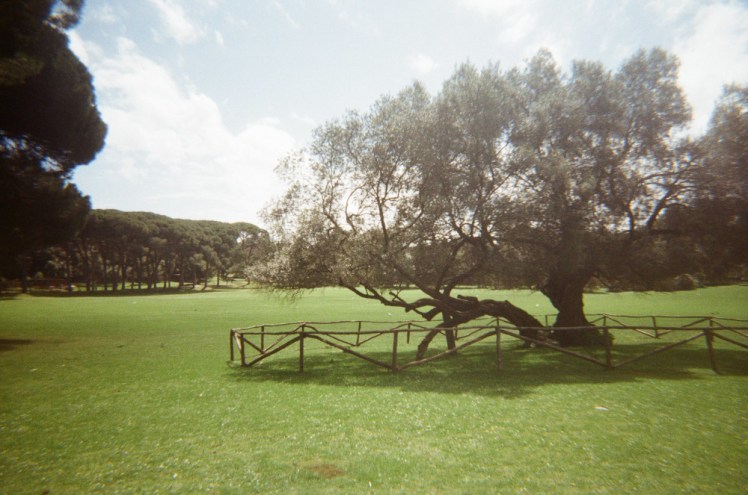
And now I’m in a green meadow in direct sunlight, the film photos have lost that golden tint and become vividly bright! This is Brijuni’s 1,600-year-old olive tree, which still bears fruit and can produce 4kg of extra virgin olive oil a year, even at its advanced age.
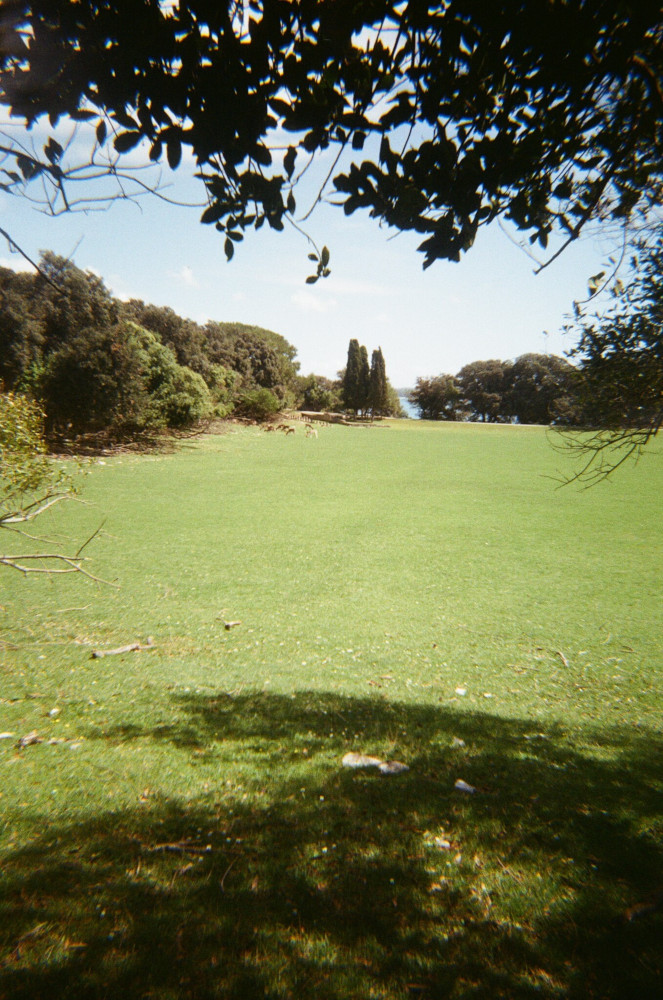
I’ve got two of these, portrait photos taken across the meadow, which are a bit different but not different enough to justify showing both, so I’ve picked this one because it has a hint of blue sea visible in the distance. Again, nice vivid colours rather than the golden tones seen around the city. This astonished me – I thought I still had plenty of photos on this roll because the counter was pointing at 12 but the first ones of the outside of the Arena, half a dozen of them, were taken before the counter reached Start. I wasn’t sure whether they’d actually taken, so I nearly went back and retook them. Thinking I had plenty left, I therefore hadn’t bothered bringing the spare roll of film out with me so the pictures end abruptly here, even though Brijuni could easily have provided me with plenty more pretty film pictures.
 I Am A Polar Bear