Well, ultimately, it’s because I’m a revolting hipster at heart. Why do I like 35mm film and how do I use it? Because I do like it – I don’t use it as much as I should but it makes my little heart happy and I always seem have half a dozen rolls scattered around the house, waiting to be used, even though I claim I don’t stockpile the stuff. As to the why, I can talk about childhood nostalgia and delayed gratification and even novelty but honestly, if I look deep down into my heart, there might be a little voice whispering ever so quietly, “You think it makes you look like a more interesting and artsy person than all the sheep taking photos on their phones”.
Of course, if I really loved 35mm film, I’d manage more than 10 photos on film per trip – I so rarely get through a whole roll of 24 exposures in a single adventure, which is why I only got my film pictures back from Germany and Poland (July/August 2024) the week before last (January 2025). On the contrary, I took 1700 digital pictures, plus 1300 digital pictures from Budapest vs a big fat zero film pictures despite taking the film camera out with me every day. I’m not ever going exclusively film but it’s hard to remember to alternate two different cameras.
Why did I start doing it?
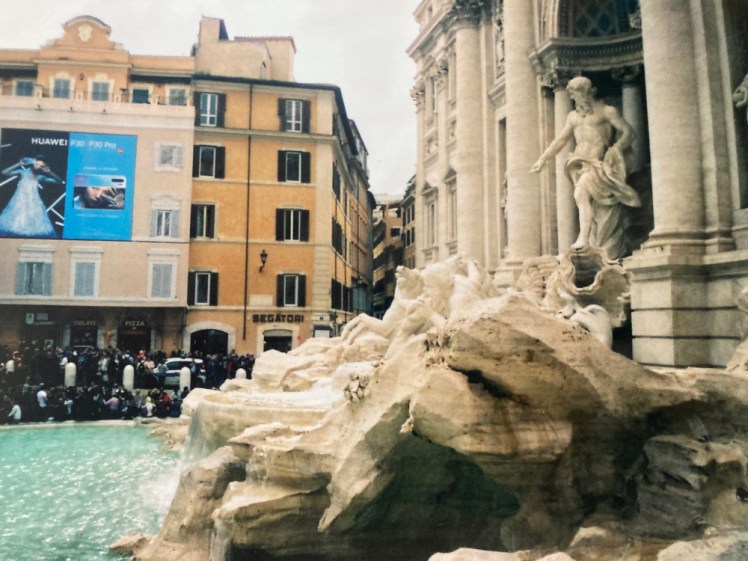
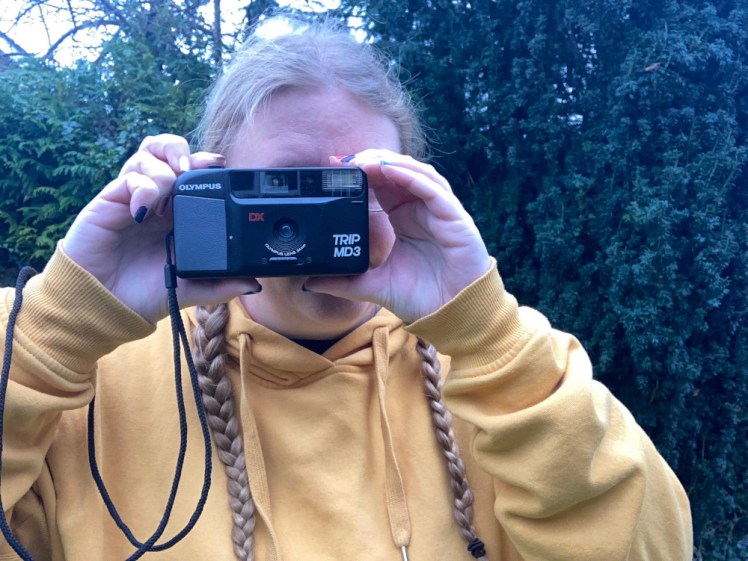
Somewhere around 2018, three forgotten rolls of film resurfaced from probably my late teenage years. I spent the princely sum of 99 British pennies on a 1998 Olympus Trip MD3 point-and-shoot film camera from eBay, plus £2.90 postage and used those rolls on photos of Rome and Russia in 2019.
That might have been it had Lucy Moon not also picked up film photography around the same time and started doing irregular blogs and videos about it. The blog is long gone but the videos, which don’t actually go back as far as I thought they would, are still there. I like Lucy but as an East London, beige, Peloton & coffee YouTuber, this felt like something that separated her from the other beige lifestyle girlies whose lives bear no resemblance to my own and honestly, it’s something I wish she’d lean into a bit harder. So I watched her videos, I read her blogs and I bought more film. The fact that a single roll of film costs double the actual camera definitely means “got the camera, might as well use it” is economically bad maths.
Why am I still doing it?
Got the camera et al. No, I like it. I think I kind of like it as an art form, as an alternative way to document my travels. Everything shot on ISO 200 kind of looks like your childhood holiday photos and everything shot on ISO 400 has a pleasing brown graininess to it. I don’t often order prints; only if I’m making a scrapbook but I tend to get 200 on gloss paper and 400 on matte, which just adds to the effect.
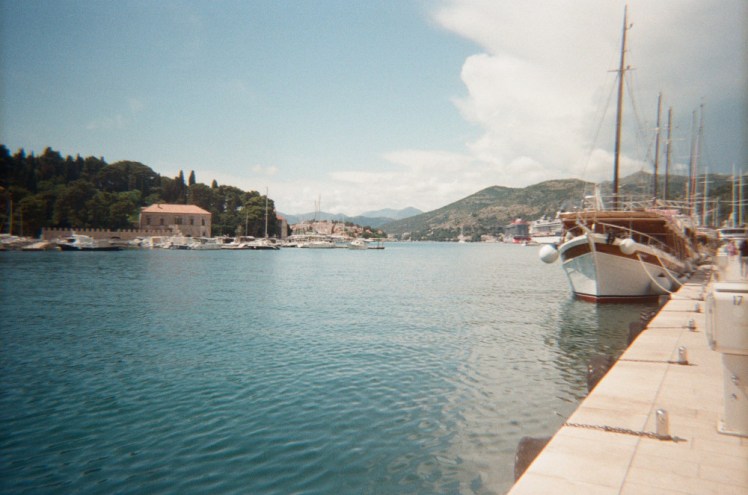
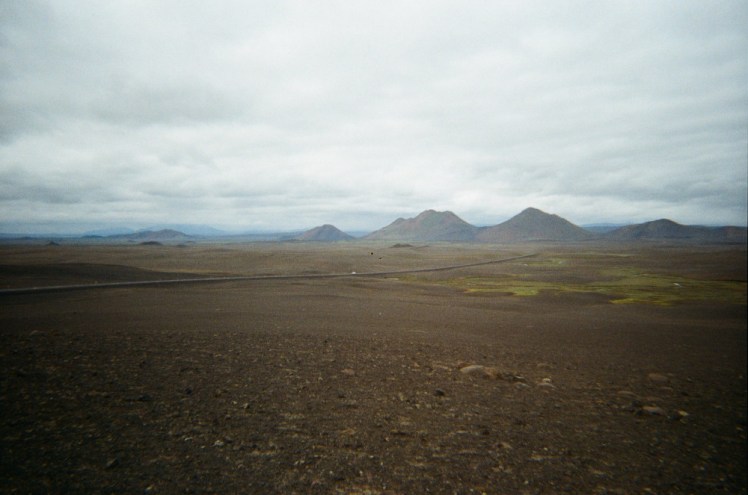
I mentioned delayed gratification earlier. With film, you don’t get to see how the pictures turned out until quite some time later. There’s no scrolling, checking and retaking. It’s all just luck. Maybe if you’ve got an SLR and know how to use it, it’s less luck and more judgement but my camera is the type my grandparents would have understood – point it at the thing, realise the lens cover is closed, open it, click. Discover weeks later that your thumb is over half the photo. Actually, I don’t love this part of the process. Normally I send off my photos, they reach the lab two postal days later and my pictures are emailed later the same afternoon. Using up the pictures and finding the prepaid envelopes are the slowest part of the process. But my last batch, which was extra-exciting because it was black and white, took four weeks and a day because they moved all the lab equipment in December and built up a massive backlog, so the pictures of Iceland received on December 23rd finally pinged into my inbox on January 21st, leaving me obsessively checking my emails for weeks. I will say, the colour set I sent off in the same envelope only took two and a half weeks.
What camera do I use?
I have four film cameras. You can say “Oh, Julie, you fool, you bought four obsolete cameras for three rolls of forgotten decade-plus-old film???”. No.
I bought two cameras. As I said, the first was £3.89-worth of 90s camera but eventually it stopped working, or maybe just didn’t enjoy the cold of an Icelandic winter. I assumed it was the battery but a new battery didn’t fix it.
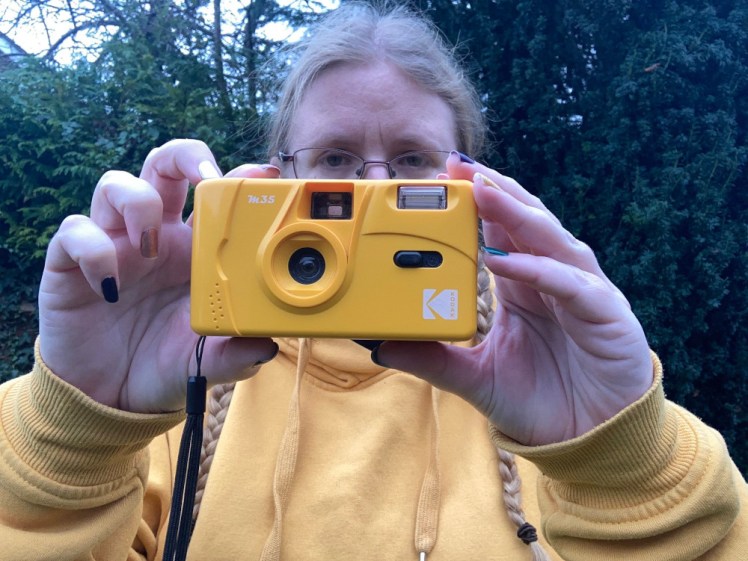
So off I went to Amazon and bought a yellow plastic Kodak M35 camera for £22.97, brand new this time. It’s a lot lighter than the Olympus, light to the point of feeling like a plastic toy. It even makes an unsatisfying click when you press the shutter button, like a toy camera for a toddler to pretend to take photos. But it’s real and it works and it’s what I’ve used for the last couple of years.
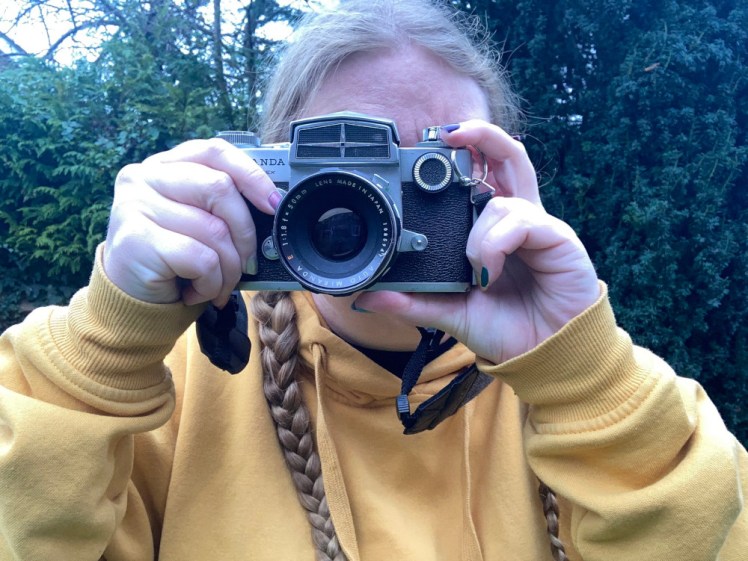
The other two are ancient things found up in the loft in the last year or so. The first is a Miranda Sensorex, 1.3kg of late 1960s semi-professional SLR which has got my grandad’s metaphorical fingerprints (and probably actual ones too, although it’s too late to confirm it with him) all over it. It still works, other than the built-in light meter (let me tell you the story of 50-year-old mercury corrosion and the quest for a 21st century replacement battery…) but because I can’t adjust the exposure correctly and because I know nothing about how to use an SLR and because it weighs a ton, I don’t use it nearly as much as I intended to when I first found it. It does make a wonderful noise when you press the shutter button, though – which is housed, very usually, on the front rather than the top.
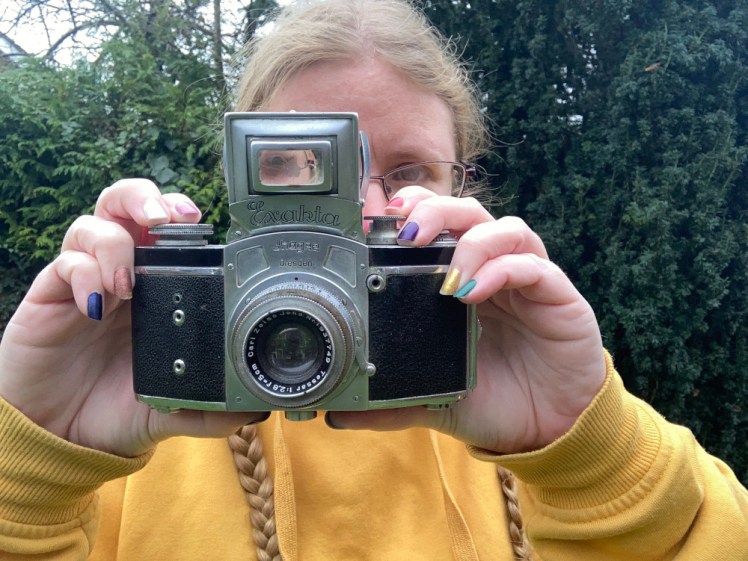
The second is a (German) Ihagee Kine Exakta circa 1936 or 1937 which was probably my great-great-uncle Harold’s although my grandad, who would only have been in his early teens at the time, could have bought second-hand it later on – although if Uncle Harold bought it new, I’m having difficulty envisioning German cameras selling terribly well in London in the years immediately before the war. I can’t get the Exakta to work and I haven’t got around to taking it to someone who can fix it – not sure whether I even want to get it fixed because I don’t think I’m ever going to use it. I’ve got the Kodak for simple clicky-clicks and I’ve got the Miranda for if I want to be technical (if I ever take a course in how to use the thing!).
How do I take film photos?
See, when I say “I shoot 35mm film” in my best pretentious voice, what I really mean is “I take film photos the way your nan did in the early 90s”. There are no settings whatsoever on my little yellow Kodak camera. I point it at what I want to take a photo of, I back off because it comes out so much closer up than either my digital camera or my phone, and then I press the button while hoping I’ve got my fingers out of the way of the lens. There’s no adjusting anything. There’s no zoom, there’s no autofocus, there’s no manual settings. I thought my digital camera was just point and click but this thing really is. You even have to manually wind the film on with a little wheel after every picture. My Olympus did that automatically but neither the Kodak nor the Miranda do.
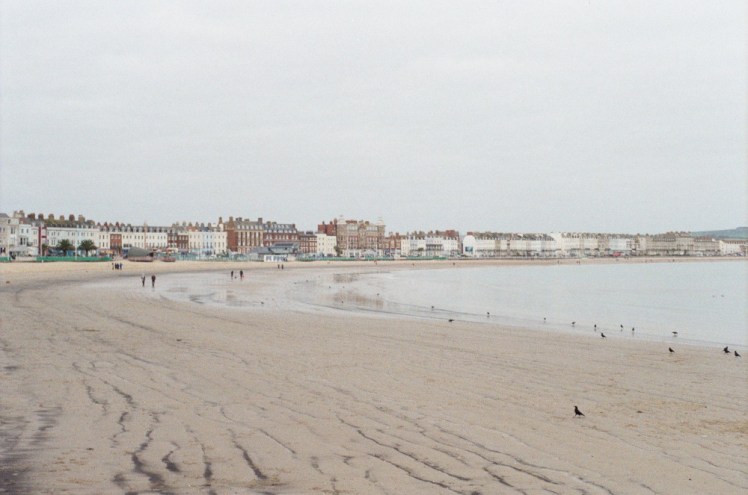
I quite like to use expired film. 35mm film has a shelf life. I think it’s generally about three years. It’s not like milk, it’s not going to turn disgusting overnight if you don’t use it by the use-by date but it’ll start to deteriorate, depending on how it’s stored. Strictly, it should be kept in the dark and the cold – ideally in its black plastic container in the fridge. I don’t. For one thing, I don’t tend to stockpile film, I just buy it as and when I want it, although I keep looking up and asking myself how and why I’ve got six new boxes sitting on my desk. There’s no saying what expired film will do. The colours will sometimes go a bit funny, the saturation and contrast might change, it might have weird deformities pop up on it. If you take a look on the likes of Vinted, people deliberately buy expired film because they enjoy the (potential) effects it can produce.

Those three original rolls must have been pretty badly expired but I had no idea. Nowadays, having acquired a few more rolls of expired film – no idea where it came from; I have never deliberately bought expired film but I have no record of purchasing these two and their expiry date doesn’t make sense for either ancient re-discovered film nor new post-2019 film – I save it for maybe things like “I’m going to the beach and instead of taking photos on my phone today, I’m going to use an entire roll of distorted discoloured film”. Pristine, new, in-date film for travels, please. I love the potential for interesting effects from expired film but I don’t want to risk it on documenting a trip.
How do I get my pictures developed?
Well, unlike the last time I was regularly taking film photos, you can’t drop the film in at Boots and pick up a set of prints an hour later anymore. If you’re lucky, you can still drop them at Boots but they’ll send them away rather than doing them on-site and you’ll have to go back to pick them up a week or two later.
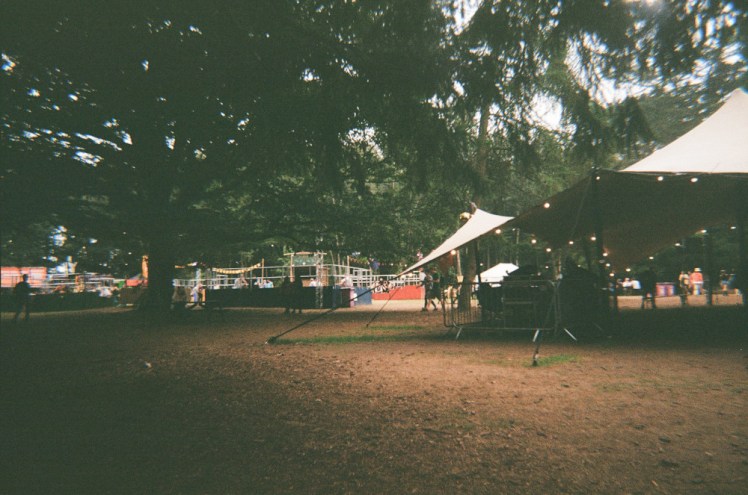
So, I use a service called AG Photographic, which is in North Shields. The first time you use them, they give you a label to print off and stick to your own envelope but after that, they send you an envelope for next time. I place an order for film development, write the order number on the envelope, pop the film in and drop it in the post. You can either have the film scanned and sent to you by email or you can have it printed or both. I usually just get the scans, unless I’m making a scrapbook because otherwise, I have very little I can conceivably do with a packet of photos. You can also get the digital pictures sent to you in the post on a CD. I do have my Russia photos on CD so I can put it in the front of the massive scrapbook I made from that trip but otherwise, I just get them as a download link.
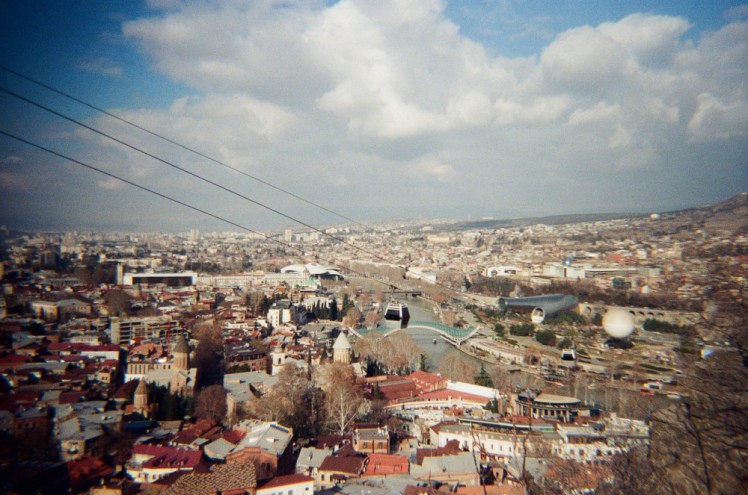
They generally arrive at the lab within a day or three of dropping the film in the postbox, depending on what time of day I do it and which postbox I use – one picks up at 5pm and one at 9am, so I lose a day if I pick the wrong one. It tends to arrive shortly before lunchtime and I get an email telling me the film has arrived and then I tend to get the scans at some time in the afternoon but it can be the next day or even the day after that. If I’ve had them printed, that takes a couple more days. If I don’t get prints, I’ll still get an unexpected envelope, literally, in the post a few days later, and I never know what it is until I open it – it’s the padded envelope to send the next batch in, along with the negatives.
How much does it cost?
Ah. Film photography is an expensive hobby. A two-pack of ISO 200 Kodak Gold is about £20 and ISO 400 UltraMax about £25, so we’re talking £10-13 for a single roll of film. For a roll of film to be scanned and uploaded is £11.99 plus £5 shipping (that’s for them to receive the film and to send out the next envelope), so that’s a total of £27-30-ish for one roll of film from beginning to end. You begin to see why our parents only ever took photos on holiday rather than haphazardly of everyday life, why they made one or two films last the entire holiday and why digital photography was such a revolution.
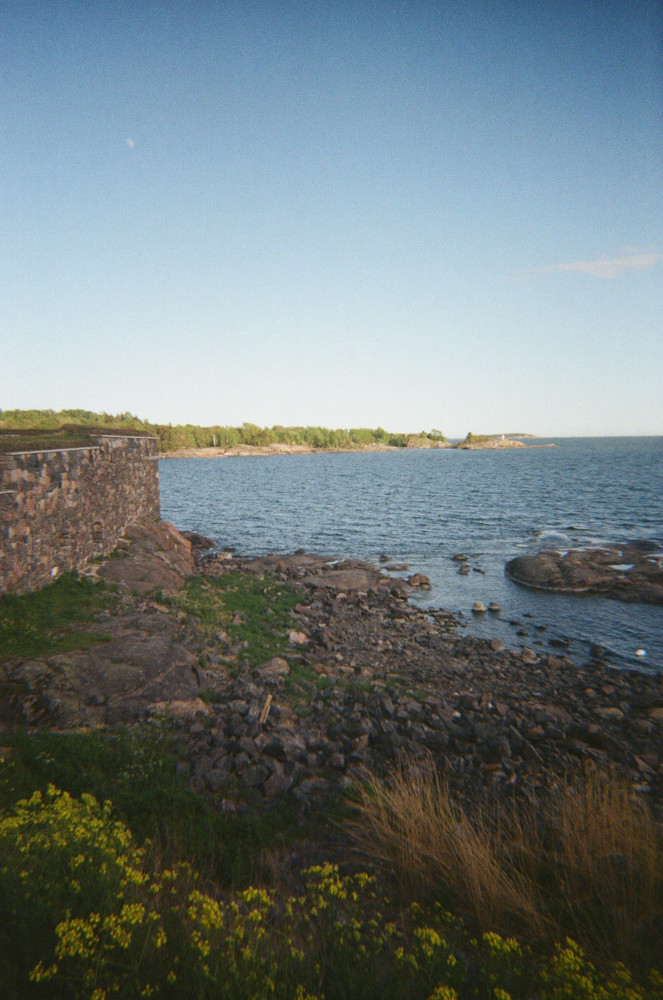
You also mentioned black & white film
Yes, film comes in many formats, many sizes and it comes in colour options too! Black & white film is generally cheaper than colour but it was quite a lot more expensive to process, to my surprise. I’m not a big black & white film photographer. I did that for my Rebel Photographer badge, which required me to experiment with various photo formats. But I enjoyed it, give or take the misgivings when I remembered I’m not just taking 35mm film photos but monochrome ones. Oh, I’m an insufferable hipster! I was very excited to take them, trying to look at the light rather than at the vivacity of the scene and very excited to get them back. And after that four-week wait, they were terrible! Not black and white at all but very dark, grainy greyscale.
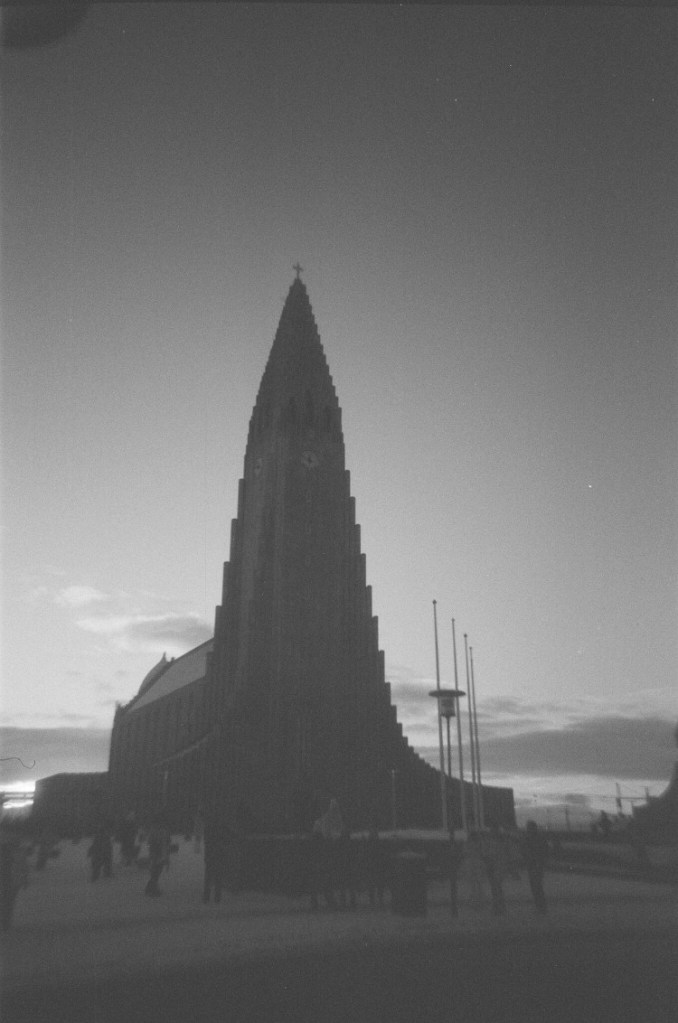
Can you take selfies with film cameras?
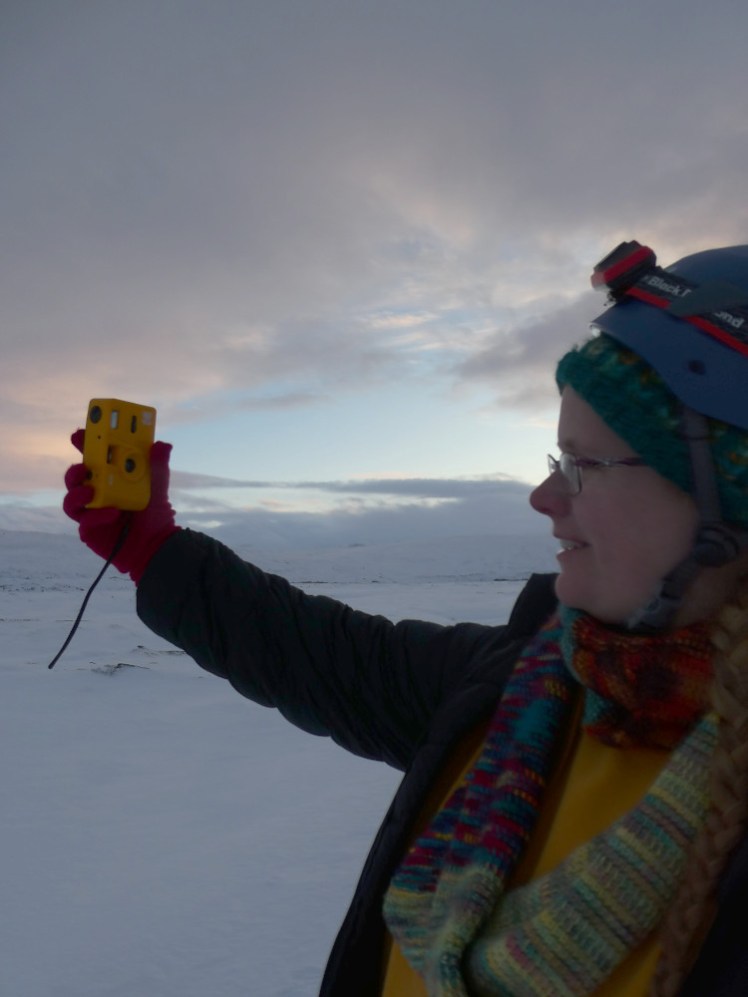
Yep. I mean, how well it comes out depends on the camera. I can’t see what I’m taking, so I can’t angle it correctly, I can’t make sure I’m in focus or making the right face and I don’t even have a timer on that camera, so all I can do is point it at myself while pressing the button and hope for the best.
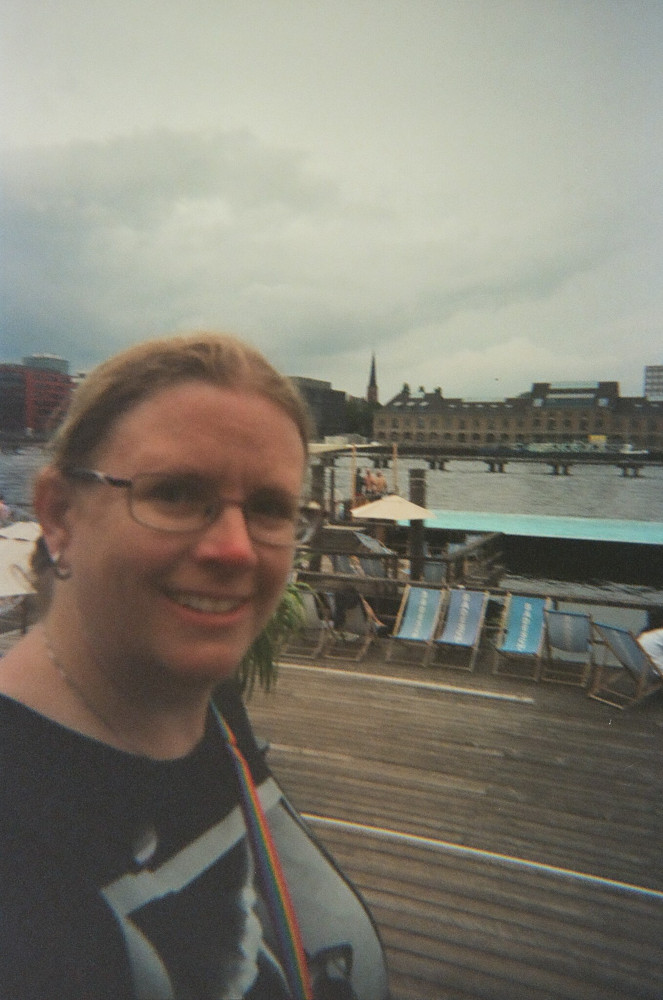
The big Miranda does have a built-in timer but it’s so big and heavy it’s impossible to use one-handed. If I can find somewhere suitable to put it, I have taken timer selfies with it before but the average “hold it at arm’s length and pout” selfies don’t work with the Miranda. I’ve done it before with the Kodak so I know it does work with that one.
Is it really worth it?
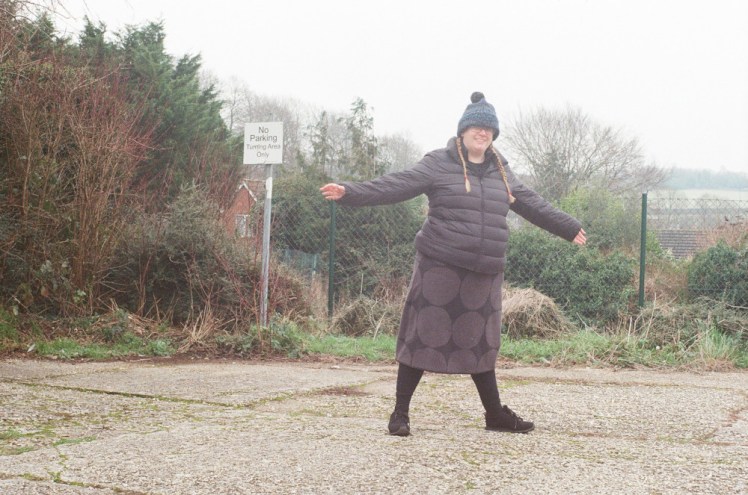
Look, as I’ve gone through this putting the pictures in, I can see they’re of really varying quality. That’s partly down to use of expired film, whether by accident or on purpose, partly down to experimenting with the Miranda and with black & white film, partly due to my own ineptitude – I still have a lot to learn about the kind of light different films and different cameras like – and partly just down to the peculiarities of film photos in the digital age.
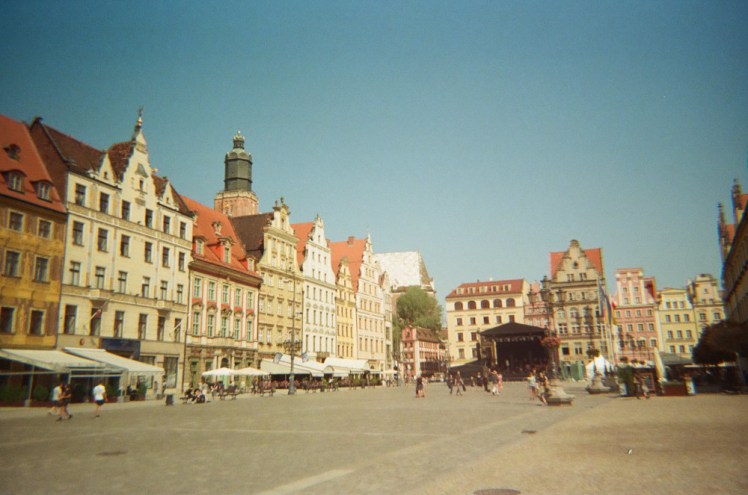
Yes, I think it’s worth it. It’s quite expensive but I’m mostly only using it on my travels, plus the odd half a dozen to use up a film that would otherwise have to wait another six months, which means I’m acquiring a film archive of my local area by accident. But travel is really my only major vice – I don’t drink or smoke or gamble, and what I’m spending twice a year on film is what you’re spending in a week on beer or wine. I think it’s fun, I think it’s novel and I do enjoy the excitement when that email comes in telling me there’s a download link ready for me. So yes, I like film photos and I’m going to continue taking them.

 I Am A Polar Bear
Excellent post! You’ve got the bug, now go expose fresh film to some light. Good luck!
LikeLike
I did that by accident back in the summer when I thought a roll had wound back and hadn’t. Not sure I’m brave or skilled enough to do it on purpose!
LikeLike
Use the Miranda, get a light meter if the camera one is not working and get that Exakta repaired! Now that camera is a real nice bit of kit ! Yes that is some camera, it would have cost an arm and a leg back in the late 1930’s. What you have got there is a bit of history, the first ever 35mm SLR camera made, it is fantastic. Oh and forget the out dated film, get some fresh, give the cameras a chance to perform. All the best.
LikeLike
Thank you – the trouble with the Miranda is that it’s so heavy when I’m used to modern pocket-sized cameras and phones but I do definitely want to use it more. I’ll look into repairing the Exakta.
LikeLike