If you haven’t noticed, a new volcanic eruption started on Wednesday night. Honestly, I’m kind of surprised it’s still going – out of the previous nine eruption, three were over in little more than 48 hours and this one lost power very quickly. But it’s still going, and if it stops by the time this is published, someone will read it when the next eruption comes along! You want to go and visit the eruption. I get it, I do too. Eruptions are incredible things and tourists and locals alike are always drawn to them. But volcanoes are also colossally dangerous and you have to do it safely or you risk both death and annoying the local authorities, among them ICE-SAR. ICE-SAR is Icelandic Search & Rescue, the people who will come and fish you out of the volcano, and they’re volunteers. They’ll come and get you but inwardly they’ll be cursing you because they could be sitting cosily at home or at work and instead they’re out in the freezing cold risking their own lives around the volcano for some idiot tourist.
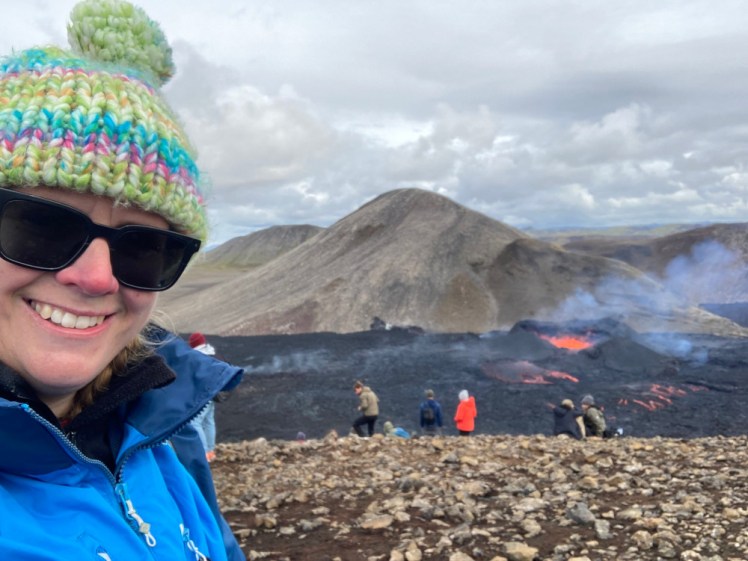
So, how can you visit without upsetting them?
Visit the eruption from above
The best but most expensive way is to do a helicopter tour. You’ll be with a qualified pilot and guide who will give you incredible views, likely from incredibly close, without ever actually letting you get anywhere near the lava. A couple of issues: yes, it’s very expensive. helicopter.is is selling a tour right now for 65,900 ISK, which works out at £375 / €451 / $470. Which actually isn’t too bad, especially considering the demand and potential for surge pricing – I’ve been looking at helicopter tours around Reykjavik and around glaciers and thinking that the cost of those tours is a deposit on a hefty house. You do need to book two tickets, so it’s no use for solo travellers but it’ll get you up close to the volcano and without putting you in a position where you need to be rescued.
Visit the eruption with a tour guide

Ok, there aren’t actually any tours that I can find for this particular eruption. It’s all too changeable and it’s inconveniently close to major infrastructure and frankly, the authorities don’t want tourists going anywhere near it at the moment, even corralled by professionals. That’s a pretty good sign that “how to visit the eruption” means “this one is not one to visit” but let’s be more general about it. For example, when I went to Meradalir in 2022, which was more or less confined to a small crater in a small valley 14km from the main road, there were companies like Reykjavik Excursions running hiking tours out to it. In this particular case, they were recognisable by the nice orange bibs they had to wear! Tour guides will know about things like managing tourists in relatively remote mountain landscapes, how to get to the volcano, how to appreciate it safely and so on. I’m a big proponent of tour guides and this is absolutely one case where it’s your best option.
Listen to the authorities
If you don’t want to use a professional or you don’t have the option, you can always just go there yourself. Now, in the case of the current eruption, and the previous six, the authorities’ advice has been “please stay away”. The first three were in the middle of nowhere, where a mere mountain hike could bring you to a nice viewpoint. They built car parks and scratched out paths and extended the mobile network to make it easier and safer because tourists were going to come either way and it was easier on ICE-SAR to control the tourists than try to rescue all the ones that sneaked in.

But the last ones have been right next to a medium-major road branching off from the nearest thing Iceland has to a motorway. The lava moves fast, is unconfined, is threatening the power station, the country’s biggest tourist attraction and an entire town. The authorities have better things to do than herd tourists right now. As long as tourists stay away, the eruption isn’t particularly threatening to lives – this is no Vesuvius – but the way it’s devouring infrastructure and the way it’s spreading means there’s no easy or safe way to access it. Plus recent tectonic activity means a lot of the roads are either badly torn up with literally nothing holding them up above chasms underneath, or buried under fresh lava. So if ICE-SAR says “please stay away”, then please stay away.
But if the next volcano is more like Fagradalsfjall or Meradalir and is relatively accessible, they’ll be more likely to have good advice. Things like “the weather is terrible at the moment, you will get hypothermia and die, please come back another day” or “the hike is fairly strenuous, please wear suitable footwear and have plenty of food and drink and warm clothes” or “the volcano is giving off a lot of toxic gases today, try again tomorrow”. These people know what they’re talking about. Please listen to them.
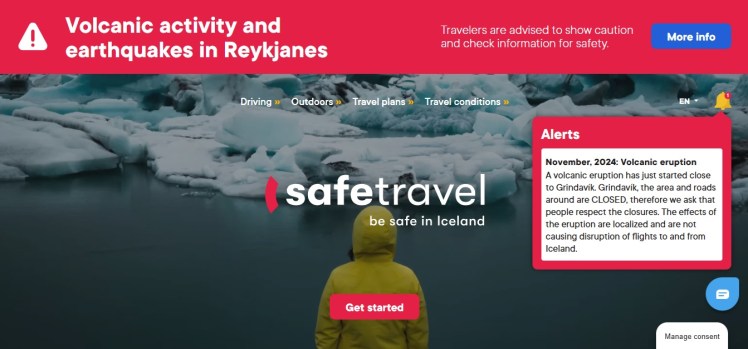
You’ll find it on safetravel.is. During an active eruption, it’ll probably have a red banner across the top and it’ll probably have a red alert box to the side, so you should have no problem with no knowing where on the site to find the information.
Be prepared
If you’re going lawfully to the volcano, following ICE-SAR’s instructions, then you need to be prepared. Icelandic summers are not like many other summers and Icelandic winters can be terrible. At this time of year, it will be pitch black by about 5pm and remain so until well into the morning. Another month and the sun won’t come up until 11am. That gives you a very short window of light. Plan to have completed your volcano adventure during that window and make sure you have a reliable source of good light – not your phone torch – in case of unforeseen circumstances. Make sure your phone is charged and take a portable charger, if you can, but be prepared to be in a signal blackspot, so do your utmost to prepare yourselves to not end up in a situation where you’ll need it.
You’re likely to end up hiking a fair distance, possibly across mountains, so you’ll need good boots and you’ll need a reasonable amount of experience. If you’ve never set foot anywhere that hasn’t been tarmacked, this isn’t for you. Wait for a better eruption. Take as many extra clothes as you can physically carry, being prepared for battering rain, heavy snow or unexpected hot sun – in all seasons. Icelandic mountains can snow hideously even in the height of summer. Been there, seen it. If you think I’m exaggerating about the spares, you’re not experienced enough to be trying this. Waterproofs, warm layers, hats, gloves, dry socks, everything. Take enough food, take spare food and take some more spare food. The same goes for water. As much water as you can carry. Leave your itinerary with Safe Travel – if anything goes wrong and you don’t check in afterwards, they’re the people who will come and find you, so they need to know that you might need to be found.
And of course, don’t even think about going if ICE-SAR has said not to! This is the key message and I don’t think I can get it across thoroughly enough.
Be ready to abandon your plans

Weather conditions change very quickly. It might be delightful when you set out but if a wall of rain suddenly comes down or a fog or a storm starts up, it’s better to turn back immediately and try again another day than to be stubborn and die trying.
Volcano conditions also change very quickly, which is why ICE-SAR will only tell you it’s safe when they’re really sure it’s going to be safe. Vents close and new vents open suddenly and what was next to the eruption can become part of the eruption with absolutely no warning. Quick-flowing fluid lava can hit a bump in the landscape and start pouring in the opposite direction and volcanoes can start belching toxic gases that they weren’t releasing a couple of minutes ago. You probably can’t outrun the lava and you probably don’t want to try, not across the sort of wild landscapes it’s currently erupting on. Fissures crack open and especially if it’s snowy, you might not even know they’re there until you fall in. See a fissure ahead, stop and turn around.
Leave older lava alone

With seven eruptions basically in the same place over the last year, it’s easy to see older lava and assume it’s cold and solid because it’s not glowing and crawling across the landscape. Actually, this is newborn fresh lava and it’s almost as dangerous as the variety that’s still moving. The lava at Landmannalaugar is still boiling water ten metres below the surface 500 years later. The top of Eldfell on Heimaey is still hot enough an inch down to cook toast more than fifty years later. Lava less than a year old could still be several thousand degrees just below a fragile surface. The weight of a tourist on it could be more than enough to smash that cold lid open, plunging you at least knee-deep into lava that’s pretty much as hot as the stuff coming out of the Earth a few hundred metres away and at best, if you’re really lucky, that’s bye-bye leg. Don’t walk on any lava less than several hundred years old. Don’t touch lava less than several hundred years old.
Get a good camera
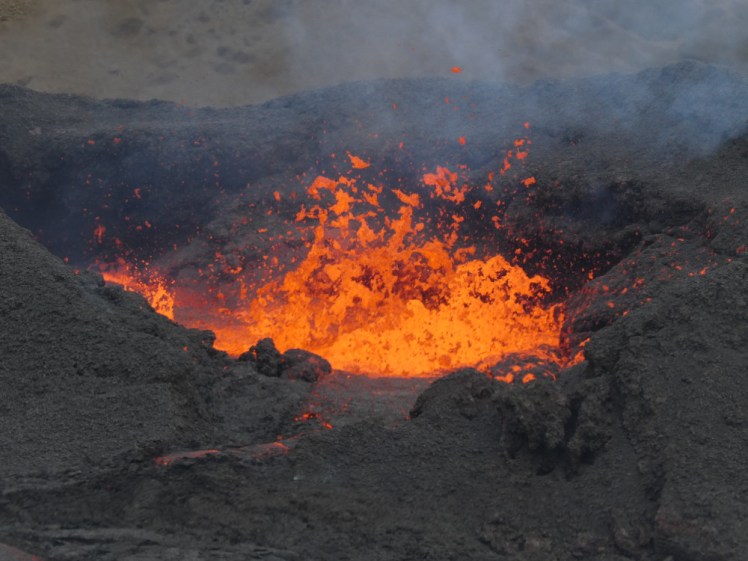
It’s far better to keep further away from the lava and take pictures with a good zoom than to get closer up so you can take photos with your zoomless camera. I’ve had quite a few people disapprovingly tell me these photos are too close. They’re not – they’re right up on the hillside well out of reach, but my camera has a 20 or 30x optical zoom, which means I can get all the close-up pictures my heart desires without putting myself anywhere near danger.
Go on a tour to an older volcano
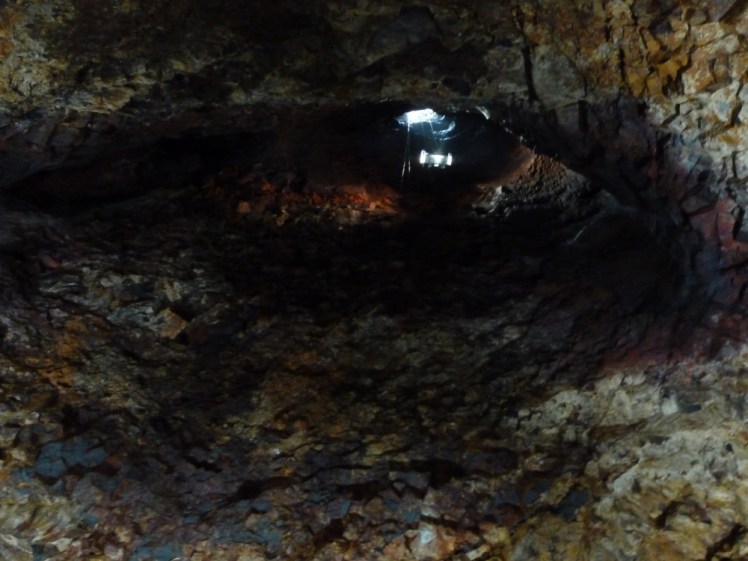
You don’t need to go to the current eruption! Iceland has loads of interesting volcanoes that are safe enough to visit! For a really exciting adventure, try Inside the Volcano, further east but still on the Reykjanes peninsula, where you can descend into the empty magma chamber of a volcano in a window-washing basket. Go over to Heimaey and climb Eldfell. Take a trip up to the north and visit Leirhnjúkur, where the lava still steams gently in the rain following the Krafla Fires of the 1970s and 80s. In the summer, if the local roads are open, park on the southern side of the Reykjanes peninsula and hike out to Fagradalsfjall or Meradalir. These are all options that will get you up close and personal with volcanoes without exposing you to fresh hot lava still pouring from the Earth.
 I Am A Polar Bear